Faithful Friends: Pastor Antonny and Sandy

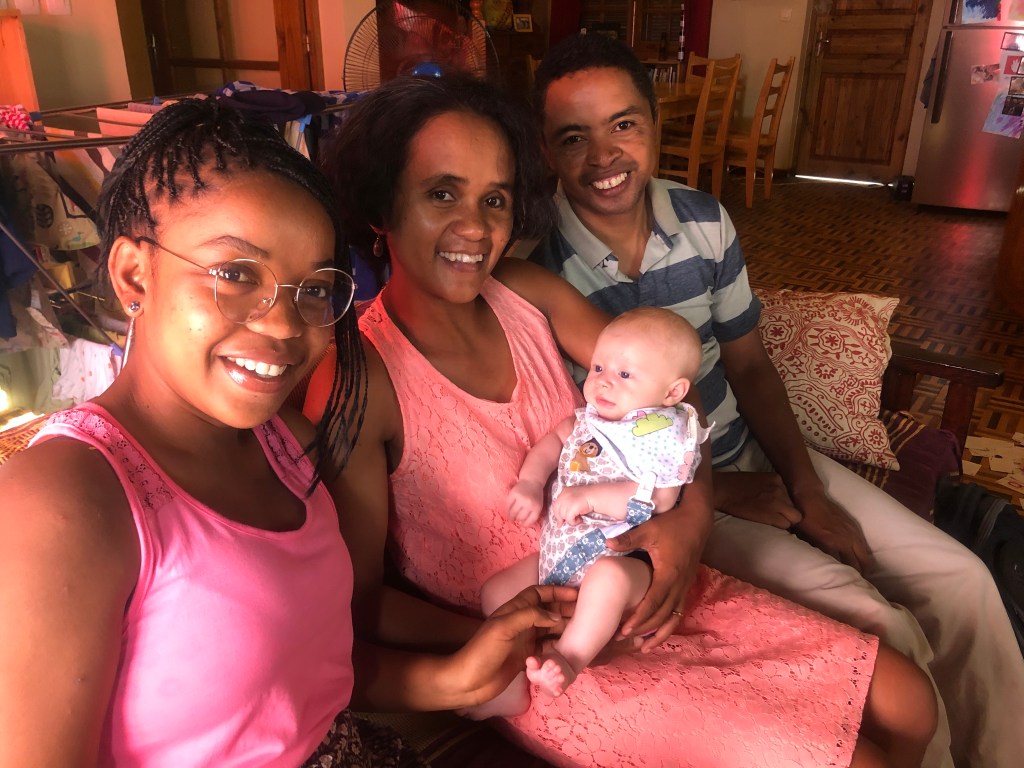
Once a month we’d like to introduce you to one of our friends here in Madagascar. This month we’d like you to meet Pastor Antonny and his wife Sandy.

In 2013, Antonny and Sandy moved here to Toliara to answer God’s call to pastor one of the local Baptist churches here. Since then, they have faithfully served the church and the community. They’ve worked to learn the local dialect here in Toliara, as their original language is the “Official Malagasy” of the capital region. They have also shared regularly in our ministry to the Mahafaly area. During the two years we spent teaching church history stories and doctrine to the Mahafaly leaders, Pastor Antonny regularly prepared lessons and taught the curriculum. He and another pastor traveled to visit and teach the Mahafaly while we weren’t in the country. He and Sandy also taught and shared their testimonies during the marriage focus we did in 2018.

Pastor Antonny and Sandy also teach and lead weekly at their church, guiding the believers there in faithfulness to God’s word and service to their community. Sandy is discipling the teachers in the children’s ministry. They also have a ministry to the Masikoro people north of Toliara.

When we started putting the dialect Bible stories on the radio, Pastor Antonny and Sandy suggested that we put a phone number at the end of the broadcast for people to call if they had questions—and offered for this to be their phone numbers! Since then, upwards of 15 different people have called or texted with thoughts and questions about the stories. Many have requested visits and discipleship. Pastor Antonny has been following up on each one, as COVID restrictions allow. We praise God for this precious couple who are partners with us in God’s work here in the Toliara region!

Please pray for Pastor Antonny and Sandy and their daughter Chantal as they continue to serve God here in Toliara. Please pray specifically that those who hear the stories would put their faith in Jesus. Pray also for Pastor Antonny’s and Sandy’s interactions with those who call them after hearing the radio stories, that the people wouldn’t be surprised or confused that they aren’t from the south. Pray for mutual understanding. Pray for more believers to join in the follow up. Pray for God’s care and blessing over Pastor Antonny and Sandy and their family. 

Recipe Thursdays: Spanish Tortilla

A few years ago we had the fun of attending a big meeting in Spain! We had a great time—we got to see a bit of both Madrid and Barcelona. Some highlights of the trip:

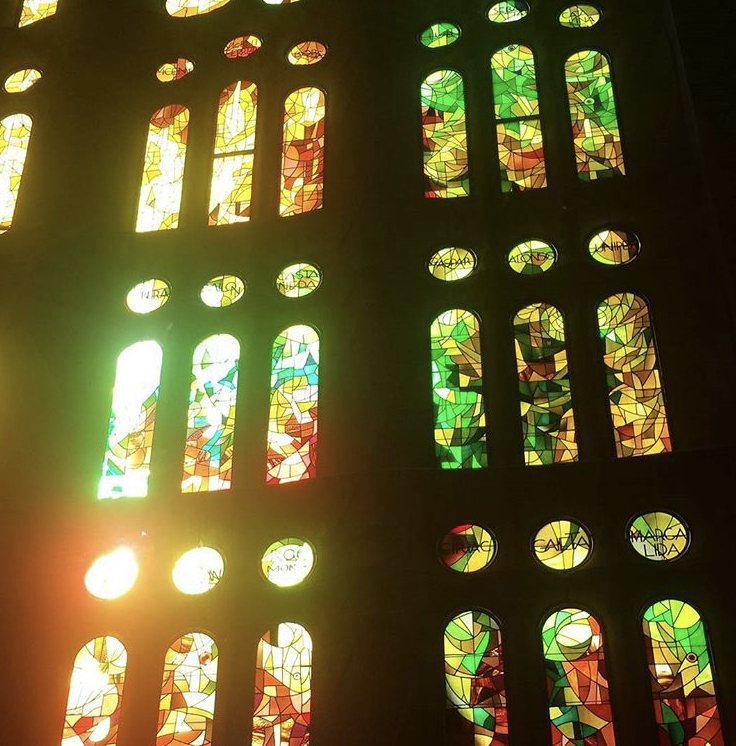
  • the Basílica de la Sagrada Família—This is the most incredible cathedral I’ve ever seen! I wish we could have spent much more time there. 
  • Delicious hot chocolate with churros—a must-try if you’re in Spain, in my opinion!
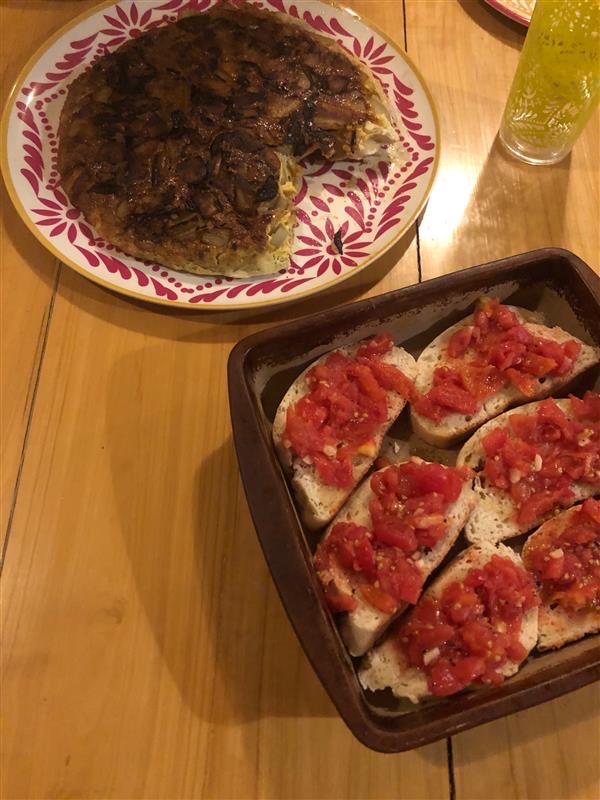
  • the Spanish tortilla—this filling and tasty potato dish became an immediate favorite. I thought we would never be able to reproduce it at home, but this easy Spanish tortilla recipe has made it a regular part of our monthly meal plan. We also do the tomato mixture and fresh bread with it—using that French bread recipe again! 

Now we’ve got some dear friends in Spain, so I hope we can eventually visit again! At least we can enjoy some treats from there even if not there in person! 

the beautiful Sagrada Família
Enjoying some hot chocolate and churros!

Clean Hands

Who feels like they’ve washed their hands more in the last six months than the last 6 years combined? Probably an exaggeration—still, between COVID-19 and a newborn, disinfecting groceries and dirty diapers, daily wiping surfaces and soaked spit rags, my hands have been chapped and red for a few months now. With all the washing and disinfecting, I’ve been pondering what makes something clean or dirty. Tell me if y’all can relate . . . or if I’m just crazy and need to study germs more! I wipe a door handle with a bleach rag, then I grab the door handle to wipe the one on the other side . . . now do I need to wipe the first handle again? What if I washed my hands, but then turned on the light before wiping the switch? It’s like that funny video that went around where the guy has to disinfect his whole environment before washing his hands. 

And then I wonder—is my ratio of bleach and soap and water on the rag right? Is my hand soap strong enough? If I wipe my baby’s bottom with baby wipes, could I also use those same type of wipes to wipe down groceries? Or are only Chlorox wipes enough? When is the dirty chain broken? When does a cleaning agent come into enough contact with dirtiness that it no longer cleanses? 

Now, get ready for the turn. It’s a little cheesy, but it made me think. Some of you already know where this is going. Spiritual cleansing works this way too. In Christian circles and in the Bible, the language of cleansing is used to describe how God takes away our sin. Our sin in Scripture is at times compared to dirtiness, and at times compared to illness, infection—and it is the cleansing of Jesus that removes that. 

The story of the bleeding woman is one of my favorites. This story comes right in the middle of the story of Jairus in the book of Mark—which is another favorite—you can read why here. the story of the bleeding woman, a woman approaches Jesus secretly who has suffered for twelve years with a bleeding illness. She has visited doctors, tried all kinds of remedies, spent all her money and ended up even more sick—and broke!—than at the start. She’s hopeless . . . except for a tiny possibility that maybe this Healer she’s heard about can make her well. 

She’s apparently afraid to approach Him openly—maybe because her illness would have made her “unclean” in Jewish culture, maybe because she’s a woman, maybe because it just felt shameful and embarrassing. According to Jewish law, she should have secluded herself . . . because everyone she bumped into in her effort to get close to Jesus would have been rendered unclean by contact with her (Leviticus 15:19-30). Our current concerns about the contagion level of COVID might give us a glimpse of what people felt interacting with this woman. In my description above, her condition is the ultimate dirty rag . . . literally everything she touches gets dirty. She is desperate, though, and risks it. She weaves her way through the crowd, reaches out, touches his clothes. 

Then an amazing thing happened. This woman’s touch did not defile Jesus. In fact, at the moment of contact with Him, she was healed!  “And immediately the flow of blood dried up, and she felt in her body that she was healed of her disease” (Mark 4:29). His power of healing and cleansing superseded her contagious uncleanliness. Jesus’ goodness wasn’t threatened by her sin or her sickness. She posed no risk to Him; rather, proximity to Him would eradicate “immediately” the disease that had held her captive. 

This story reminds me that my sin is like the woman’s sickness, and like germs on a rag. Even the slightest little bit can contaminate my whole self. “For whoever keeps the whole law but fails in one point has become guilty of all of it” (James 2:10). Recently, God has been exposing us as a couple to our blindness in the area of racial injustice. We have more to learn than we could have ever imagined—and as we go along, we’re forced to face our sinful thoughts and actions. We’ve got a lot of listening, learning and repenting to do. Only the grace of a Savior who will never change, never lose even a smidge of His beauty and glory and love, no matter what untapped depths of ugliness we bring to him, can walk us through a journey like this. Hopefully more on this topic later—but I’d like to listen a lot more first. 

At the same time, the story reminds me that Jesus—His life, death, resurrection, and presence in my life, are un-contaminable . . . I have no sin too ugly for Him, no struggle He can’t transform. The reality of His presence in my life makes me clean in His eyes, and makes me daily more clean and healthy as I surrender more of my life to Him. By His grace alone, then, I can carry that cleansing, healing Gospel into the heart of disease and lostness and watch Him transform the world, starting with myself and, I pray, touching those around me. 

Recipe Thursday: French Bread

I’ve always been intimidated by homemade breadmaking. I can do all the breakfast breads—you know, banana bread, zucchini bread, chocolate chip pumpkin bread—love all those! But anything involving yeast makes me super nervous.

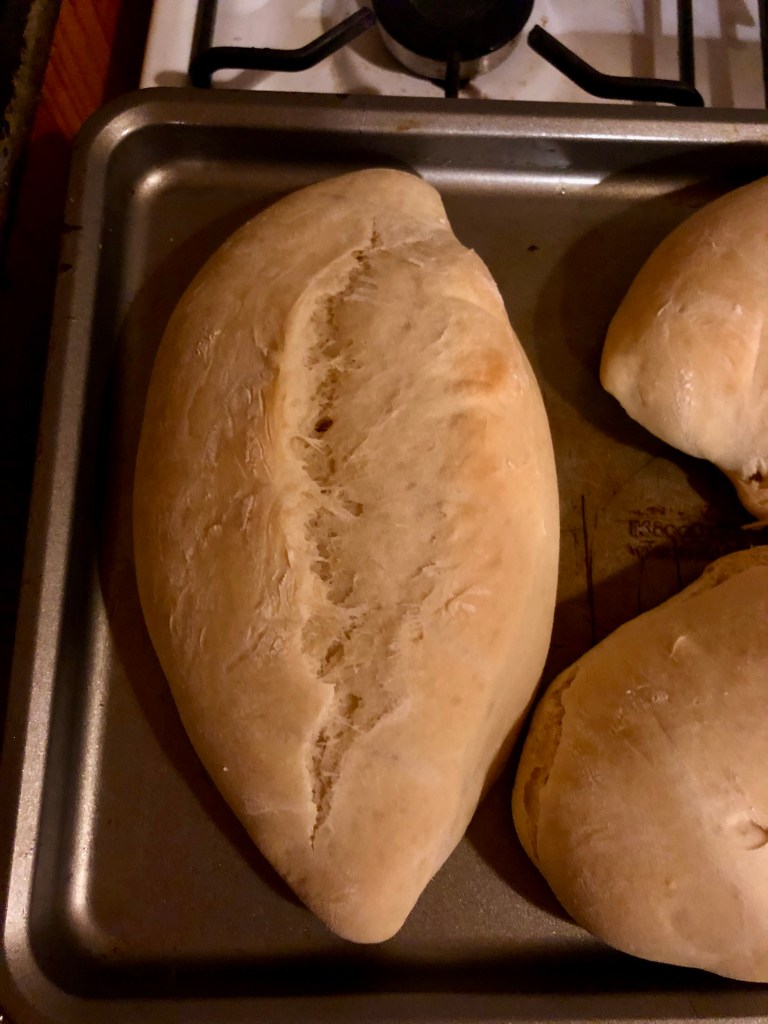
However, a friend linked to this French bread recipe on her Facebook, and I decided to try it out. It’s delicious!! And so easy! This recipe is awesome—though we have left off the egg on top after the first time around. 

The best part is that Chyella can help me. She helps with all the ingredient-adding and mixing, and then at the end she gets her own tiny loaf that she gets to make her own “cuts” in. It’s been a fun project especially during the COVID-19 shutdowns!

Mahafaly Bible Stories: Creation

Much of our work since coming to Madagascar in 2009 (Tessa) and 2011 (Nathan), has been in crafting and telling the stories of the Bible in the Malagasy dialects local to our area. The one tribe with whom we’ve worked most closely and the longest is the Mahafaly.

It has been an education just grappling with Scripture verse by verse with our Mahafaly friends, and watching them take in and then re-verbalize the stories in their own vernacular. Suddenly, the stories come alive for them. And while we think all of us should be doing the work to ingest, digest, and then retell the story of the Bible in our own local culture and parlance, we also wanted to give you all the chance to hear how your brothers and sisters here in Madagascar retell those stories. These are familiar stories. But we hope you see how the Mahafaly have made them their own. These are translated from Mahafaly into English, I’ve adjusted them only slightly for our ear.

These are not the stories of the white man or Americans or Westerners. This is the story crafted by God himself, about the origins of humanity, and the end of evil. And as such, all of our stories are wrapped up in this one.

Creation

Hello, it’s me, the Traveler, and I have a story to tell you. It’s a story from a book of holy writings called the Bible. This book is a collection of many stories, and they have all been brought together to tell the whole story. It is the story of our ancestors, and our story. Let me tell it to you.

The first story I must tell you is . . . Creation!

Back when all was very still and quiet, there was nothing there yet—nothing at all moving around, no people like us. But the Prince of Creation was there. He spoke. He made the world we see around us today, just by speaking it. 

He said, “There is light!” and there was light, and also dark. He called the light, Day, and to the dark he gave the name, Night.

He said, “There is water!” and there was water. And the Prince of Creation saw that what he was doing was good. 

Then, the Prince of Creation said, “The water is gathered together and the dry land appears! There are trees and growing grass!” And the trees and grass began to grow as the new, dry land appeared, as the waters pulled away. This land was called, Earth, and the gathered waters were called the Sea. And the Prince of Creation saw that what he was doing was good.

The Prince of Creation said, “There are stars, a moon, and the sun!” And they all appeared. Prince of Creation saw that this too was good.

He said, “There are animals in the water, jellyfish and whales, all different kinds! There are flying birds like hawks and bats and animals on the ground like chameleons and sheep, all different kinds! And these appeared. And the Prince of Creation saw all that he was doing was good. 

Then, the Prince of Creation said, “I am going to make a human.” So he did. The Prince of Creation made a human, but he created him in a different kind of way. He did not use just his word. He took some dirt, and then molded it. When he was done, he blew into it. It came alive, and started moving! This was the first man.

The Prince of Creation called the man, Adam. That’s the name he gave him, which means, Earth. Then the Prince of Creation took the man and put him in this one, green rice field that was there beside many rivers. Now, in this beautiful field, there were many trees there. Also, in the middle of this field there were two special trees. One tree was a tree that gave life. The other tree was a tree of knowledge—both of the good and the bad. 

“Ah, yes,” said the Prince of Creation, “Eat the fruit from all of these trees here. But the one tree there in the middle of the field, the one that gives knowledge of the good and the bad, don’t eat the fruit from that one. If you do eat it, you will die.”

But now, the Prince of Creation saw that Adam was alone. “Ah,” Prince of Creation said, “This is not good, for the human to be alone. I will find him a fitting partner who can add to him. So the Prince of Creation brought by all the animals to Adam. He brought the dolphin and the lemur, the zebu and the parrot. But none of them seemed to fit as his partner. So, with that, the Prince of Creation put Adam to sleep. Then, he took a bone from Adam’s side. And with that, the Prince of Creation made another human. It was the first woman. He brought her to Adam. When Adam saw her, and that she was a human like him, he said, “Ah, yes! Her bones are from my bones. She is flesh from my flesh.” So he called her, Eva. That is the name he gave her, which means Life.

Now at this time, Adam and Eva (Earth and Life) were still naked together, but knew nothing of shame. The Prince of Creation saw that this was good. Everything the Prince of Creation had made there was so good! 

The Prince of Creation blessed the humans, saying, “Multiply and cover this earth! Everything that moves here on earth belongs to you all. They are under your care as Masters and you must take care of them.” 

Then, the Prince of Creation saw that everything he had done was good. He had finished his work there. Six days it took for Prince of Creation to finish all of that. Then, he rested. And he also blessed this day when he stopped and rested with his creation.

And that is the story of how the world we see around us was created. It’s from the holy writings—the Bible. 

Living Stories

I was coming back from dropping off some groceries to a local pastor of ours. I stopped at a roadside market stand to get some veggies to take home. I was shooting the breeze with the owner of the stand when a fight broke out beside me. I had heard the voices raising beside me before the blows and the threats started. A local pousse-poussedriver (rickshaw) had walked away with a mandarin without paying for it. He was still nonchalantly eating the last few slices as the woman who owned the adjacent stand rained down blows and abuse. You could tell he knew had been caught, but he defiantly yelled back that no one had seen him pay for it and if she didn’t like it she could call the cops. They were starving after all!

Sidebar: No one wants you to call the cops here. There’s no telling who they’ll take away and they’re probably going to walk away with more bribe money from you than you lost in the first place.

The other vendor, the woman’s brother, turned from me and began shouting at the guy too. But the offender just stood his ground, bristling as he shouted louder and gestured harder. Things were escalating and, as so often happens, a large crowd was forming. This is in the middle of the Corona Crisis! No one was wearing a mask—except me—and social distancing doesn’t really exist here. [Although, since then, masks have become mandatory here for all.] Plus, I’m a foreigner, with more money than most, in a volatile situation, where anything could happen. It was the moment when my instincts scream to pay quickly, get back in the truck, and drive away.

But something else happened. As at other times, it wasn’t so much that I directly chose as that something made me aware of another choice I then knew was the right one. I pulled out a dirty, old bill (what amounts to $1), and handed it to my vendor. “Does this cover it?” I asked. 

He never answered. He just stared at me for a minute, then quickly nodded as he grabbed the bill and waved it in the air. “Hey! It’s paid for! It’s paid for!”

I was moving before really thinking about it. The two were now wrestling each other in a ring of bystanders. They hadn’t heard what had happened yet. I pressed forward with the vendor, and with several others we separated them. The vendor explained to his sister that I had paid for the mandarin. The pousse-pousseoffender looked a little confused. I looked around at the crowd and then at the thief, and said as loud and as clear as I could. “Look! All of us have done wrong. This guy’s theft has been taken care of. But only God can take care of the wrong we have all done. Repent and turn to God. Only he can take care of our curse (the comprehensive word for sin and evil here).”

The crowd was slowly breaking up. The vendor asked me who I was and where I went to church, thanking me. What had been a brawl diffused instantly. As I walked back to my truck, I knew something amazing had just happened. I had almost missed out. I had looked at COVID-19, a gathering crowd, money in my pocket, and my status here as liabilities. I was almost willing to miss out on life for the cost of one measly buck. Instead, God taught us all something. I’m so grateful. And haunted. What else have I missed for less than that? How much more could I see God do if I was willing make less of all my privileges?

Here in Mada, there’s a distinction drawn between stories (tantara) and living stories (tantara velo), the first being any old story and the second being something that actually happened. We use this distinction pretty often with the Bible. We tell Bible stories here not just because we admire their quality as great stories (which they are!) but as tantara velo, living stories that actually happened in the lives of everyday people. 

I’d like to think of this as my tantara velo: that amazing, unplanned moment when the story of Jesus bursts through the pages, through a heart, and lands on two feet, walking and talking in front of a local market stand.

We Wait

There’s a trembling in my bones
that shudders to the beat
of a windstrung song and shouting throng
and a hundred thousand feet.
For my Father comes in power
and he’s coming for the weak and waiting.

Will you come, Lord God, in quiet thunder
and echo throughout empty spaces
places
of decadence and desolation?
Will you come and burn with fire fury
the tears off of our faces?
For those who hear you coming
put our ears down to the ground to feel the earth shake
and wait,
we wait for you, our coming swift salvation.
The king of a thousand armies calling
in the thump and wink of a heartbeat.

Eyes forced and held open in an act of trust while
desert dust is flung in our faces and our eyes 
water freely
bleary and fainting
droplets hissing in scorn-filled heat.
Here together with arms held and up high,
forcing breath out weakened lungs
to the angry sky,
a "Hallelujah!" chorus is
our unified cry–
as we wait

Temple Complex

Why are the nations enraged?
When you tear down the DOW
flip the market upside down and say,
“This was supposed to be about prayer!”

How do the governments survive?
When the parasites filling up 
slick suits and nice ties—
pompous puppets—finally suck their people dry?

Where are the pretend priests—
the pastors and their staff protecting—
their teeth sunk deep, their bleeding-out sheep?
After all, a man’s gotta eat!

Can the gods among men,
even hear you when 
they kneel to crush? 
How can they hear you, if you can’t breathe?
Hands in their pockets, do they even care if you praise them?

Yet you, Good God and Shepherd, show 
to mend broken hearts with your own clothes
to walk with the weary through the shadow 
straight through to tomorrow.

Our sacred cows are slaughtered,
Lady Liberty led off in chains.
Left to choose between the narrow gait or Broadway,
we sit to entertain ourselves, (unfettered . . . unbothered).

Skyscrapers fuel the pyre.
Not one Yankee-doodle cobblestone unturned . . . unburned.
Hosanna, Hosanna! He comes with fire,
germinating his own empire,
fed by the tears of the crushed and perplexed
that profit and priest never saw,
fallen through the cracks of the temple complex.

Friday Family Updates: Work-Sheeps and the Midnight Cry

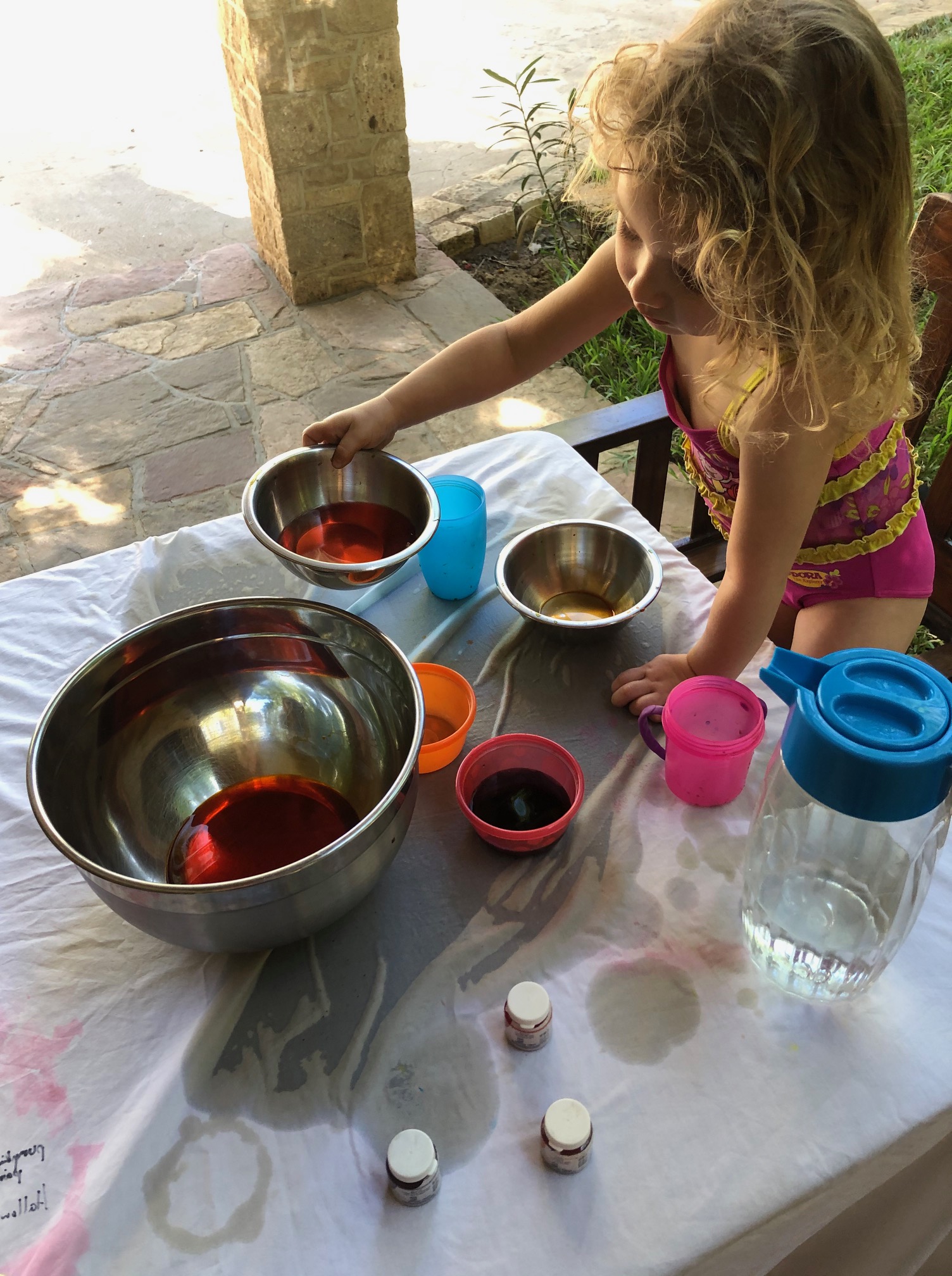
We’ll try to check in one Friday a month to give some fun family updates! Like many of you, over the last few months we’ve stayed in more, and developed some new family routines to help offset the monotony! Chyella has really missed the French preschool here. She’s definitely our little extravert, as between COVID and our trip to South Africa for Jairus to be born she has only attended the school about two months total! But she loves it and misses her friends there. We do daily “work-sheeps” to keep up her school skills, and a few weeks ago we had a play day with colorful liquids–took me back to my Montessori days!

Jairus is basically a bundle of cuddles and giggles. He’s a super fun baby, is VERY close to crawling, and seems to have a couple of teeth trying to pop through. He has challenged us in the sleep department, though. Chyella always has slept like a champ . . . Jairus has introduced us to what we call the “midnight cry” . . . and the 1am cry, and the 2am cry—you get the idea. But he makes up for it in the daytime with his abundant cuteness!

Nathan and I have been working hard on lots of projects for our work here in Toliara and also trying to make the most of this strange time. On the fun side, we’re watching through the Mission Impossible movies. On the challenging side, in light of what’s happening in the USA, we’re trying to learn and grow in the area of racial justice. We have a lot to learn. Be the Bridge has been an incredible resource for us.

Also, shout out to Nathan’s brother Adam who got married last month–congrats Adam and Lily! We were sad not to be present but were excited for them throughout the day and have loved all the sweet pictures. We’re so grateful for family and friends in the USA, around the world, and here in Madagascar–especially during this time.

Thanks for tuning in to our monthly family update!

Theology Tuesdays: Wisdom

Tessa and I are trying to communicate more regularly here on more of a schedule. So every other Tuesday we’ll start adding some theological reflections like this one. They say routine and schedule can add some semblance of order to our lives these days. We’ll see!

I’ve been doing what little I can, having a few people over here at the house to pray, reflect on God’s Word and work in the community. That has taken the form of crafting the biblical story of Job to broadcast on the local radio and some community development as we walk through the book of James together.

Job and ill-timed truths

Job has always fascinated me. As a former theatre junkie, it reads like a dramatic production to me every time. Maybe I’m trying to realize some of my dreams with this radio theatre venture now! James, however, I consider a more familiar book . . . except it’s kicking my butt right now. Both are steeped in the biblical, Jewish wisdom tradition. Along with Proverbs and Ecclesiastes, Job is a reflection on how to live. If Proverbs is the optimist and Ecclesiastes the pessimist, Job is the realist of the wisdom books.

We were reading through Job a month ago. It struck me how much more poignant the story is now. I imagined certain people sitting here in the slums or on the side of the road voicing Job’s cries of injustice. I could see their pastors shaking their heads at them, or the local Christian ladies dressed in their Sunday best doing their best to comfort them by telling them to repent so that things would go back to normal, rubbing salt in an angry wound. I could see myself, speaking platitudes about God’s care to them from a place of privilege and health while they wail and moan and dare to ask why this is happening to them.

Derek Kidner, one of my favorite scholars on the Hebrew Writings for his clarity, put something into words I’ve never noticed before about Job’s friends. It’s not that they’re wrong, per se . . .

“A closer look at the material shows that the basic error of Job’s friends is that they overestimate their grasp of truth, misapply the truth they know, and close their minds to any facts that contradict what they assume.”

Derek Kidner, The Wisdom of Proverbs, Job,& Ecclesiastes, 61.

The Bible has a category, an ensemble of characters even, that teach we can be technically right but contextually, relationally dead-wrong. To say it another way, if I could speak every language that exists, have the solution to every problem down to global poverty, have enough faith that I can actually physically toss mountains into the ocean, but don’t know how to treat people . . . I’ve got zilch, nada–I am nothing (1 Cor. 13:1-2).

How in the world are we any different than Job’s friends right now? It was startling for me to realize early on in this crisis that I did not need the barrage of spiritual encouragement sent my way. Faith over fear? Really!? As if a catchphrase will help me sleep at night or calm my pent-up three-year-old or suddenly open the borders of the country in which I feel stranded without help.

Then I thought about those around me. How many times do I do the same to them. Instead of sitting with them in their pain, I offer trite solutions. It’s not that “Faith over Fear,” or “God’s in control,” “She’s in a better place now,” or “All Lives Matter” are patently false statements. They aren’t. Neither are they helpful when someone is in pain.

Job’s friends all understand something true about God’s character. But then they misapply that truth and use it against one made in God’s image. And God makes it clear he is not cool with how they’ve handled the situation (Job 42:7-8). He calls their words of wisdom, “foolish.” They kept blabbing on about stuff they didn’t understand, making up excuses for God, it seems like, to help themselves feel more in control. Job gets his own remedial wisdom class, but he passes the test because he loves God too much to accept pat answers about him. He knows something’s up and he won’t rest until he figures it out and knows his relationship with God is solid.

The hinge of the book is chapter 28, where Job declares, “Behold, the fear of the Lord, that is wisdom! And to depart from evil is understanding” (28:28), which bookends the wisdom books at the opening of Proverbs (1:7) and the close of Ecclesiastes (12:13). This is wisdom distilled: Fear God, flee evil. But as we see with Job, this lesson is refined in the furnace not learned in the classroom; it will take our full attention to maintain the tension of standing in awe before the God of the whirlwind as we sit scraping our sores on the trash heap.

Too often, we fall into the trap of making excuses for God to make ourselves feel better instead of honestly wrestling with him. We either say he is too good to let us suffer (though it clearly happens) or we say he is obviously not good at all (which we clearly owe him our very lives!). But for those who say “maybe . . .” and try to push for answers, struggle to find real footing with God, we show only resentment. For some reason, we (and I am right in the middle of we) seem in short-supply of empathy, and it may be because, just like Job’s friends, we would be better off just sitting, listening, and not getting angry at things that contradict what we assume to be true of the world. In a context where, in real time, no one knows what’s really going on, it’s better to wrestle with God than lean on dogma. Because as Job shows, the world is a confusing place, and we don’t even know how much we don’t know.

James and double-talk

Speaking of being quick to listen, slow to speak, and slow to get angry (1:19), James stands out as the wisdom book of the New Testament. Reflecting on various proverbs, psalms, the storyline of the Old Testament and also Jesus’ “Sermon on the Mount,” James is giving the first Jewish church in Jerusalem Wisdom 2.0, in light of “glorious Lord Jesus Messiah” (2:1). He even references Job . . .

As you know, we count as blessed those who have persevered. You have heard of Job’s perseverance and have seen what the Lord finally brought about. The Lord is full of compassion and mercy.

James 5:11 (NIV)

I recommend James to you as a 2020 read, especially in light of the vitriol, double-talk, and double-mindedness that we’re seeing. James is concerned the church has double-standards:

  • They pray for wisdom, but don’t actually want to be given any (1:5-8)
  • They blame God for the bad without thanking him for the good (1:12-18)
  • They think everyone should hear their opinions, but don’t listen to any others (1:19-27)
  • They help out the upstanding, yet stand on the downtrodden (2:1-13)
  • They claim to follow Jesus, but never do anything for others (2:14-26)

And that’s just the first two chapters!

The wisdom of James is to not forget our history in the faith, the wisdom of God’s word, but to live our lives in gratitude before king Jesus. Re-verbalizing Jesus’ own teaching, his little brother says, “Say what you mean, do what is true, and love others like you want God to love you.” Most of the time, we say, do, and love only in a way that benefits me, myself, and I.

Last week, me and the guys were looking at James 1:19-27; this week we were in 2:1-13. Both times I’m struck by what I’ve never noticed there. James clearly is talking to a stratified congregation of Haves and Have-nots. He says it several times (1:9-11; 2:1-7; 2:13-17; 5:1-6). Let that sink in, because it permeates the whole book. I’ve never understood that being quick to listen, slow to speak, and slow to anger are conversation guidelines for Christians in different socioeconomic positions. But it clearly is, as some people were claiming to know Jesus yet hadn’t been listening to the needs in their own community. They were listening to the sermons on Sunday but they hadn’t visited with the poor (1:27). Is there a more Jesus-like thing to do?!

In 2:1-13, James lays down the law (literally), saying “Don’t have faith in Jesus and partiality.” Partiality, discrimination, favoritism, racism, they’re all talking about the same reality. And the passage that I have used as an apologetic for how all sin is equal in the eyes of God (2:10-11) is actually making a much different point in context. As Craig Blomberg, another of my favorite Bible scholars, writes:

Discrimination is sin and breaks the law. The word here for “show favoritism” is the verb from the same root as the noun in 2:1, again with the connotation of viewing people’s external appearances only instead of seeing them as whole persons.

Craig Blomberg, James; ZECNT

God hates our unequal treatment of any person as much as he hates murder and adultery. It doesn’t matter if they have Corona virus, it doesn’t matter if they are or are not wearing a mask. If we are going to take Jesus’ name, we better start treating all people as “whole persons.” Not to improve our position, not just people who agree with us, not just people who look like us. The “law of the kingdom,” as James calls it, is a law of freedom based on the mercy of Jesus who did not come to yell at us but loved us, even as broken people. At a deep level, James is saying to the extent we have a distorted view of others we are distorted ourselves. We have become double-minded.

Wisdom is the opposite. Wisdom is an integrative principle. It is the truth of the living God lived out in loving relationships between God and his image bearers. It is a truth that survives the strongest scrutiny in the worst circumstances, and it is a truth that pulls us together instead of fracturing us. It derives from the fact that how we love all humans has direct bearing on how we love God and even ourselves. But we’ll save that for another Tuesday.