Tessa always wanted to be a missionary and Nathan thanked God he wasn't. Now we're here in Madagascar, learning the fascinating stories of others and culture while storying through the most exciting story of all . . . God becoming a man to save the world!
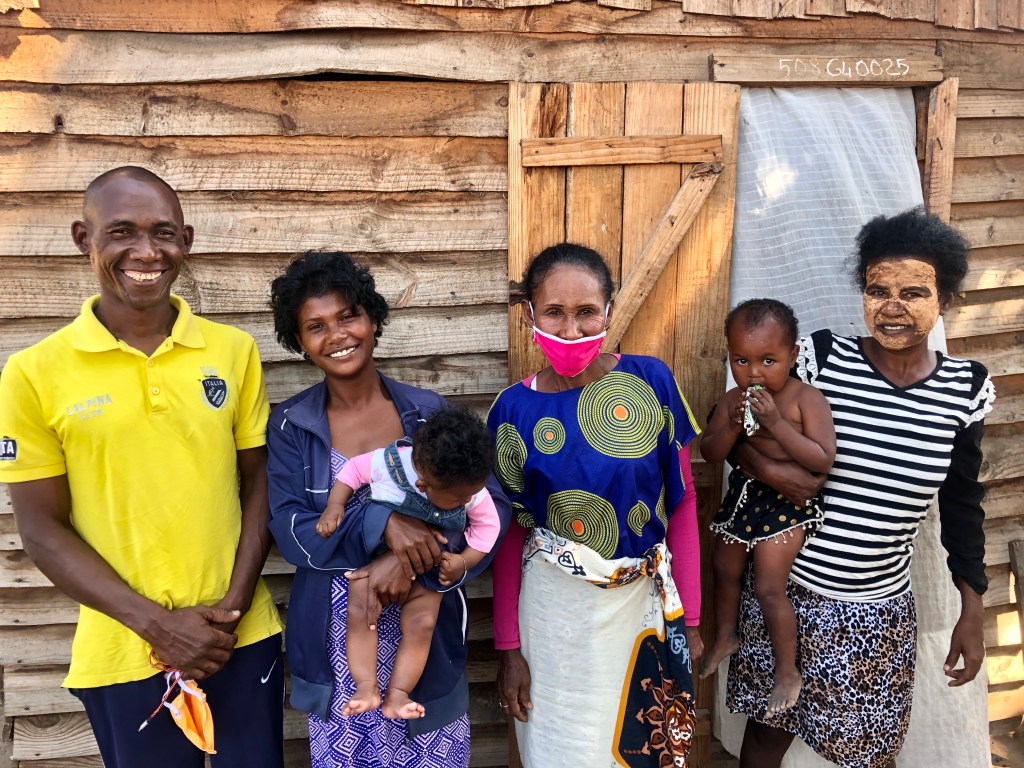
We’d like to introduce you to another couple we love and work with here in Madagascar. Oliva and Narindra are long-time friends of the Waller family, who lived and worked here for twelve years. Oliva and Narindra met in here Toliara and married. They felt God’s call to serve as missionaries to places in Madagascar where they saw a need for Gospel ministry. They spent time serving in Ambatondrazaka and at the Timote Mahatsara Mission Center, both in the eastern part of the island.
Oliva and Narindra have three children: Raitra (9), Idealy (7), and Mahatsara (4).
In 2018, Oliva and Narindra and their family came to Toliara for a month to help our team with a marriage focus. We loved getting to know them better during this time! They led workshops and Bible studies for youth and adults, and helped us host a marriage retreat for our Mahafaly leaders. Oliva and Narindra have a passion for church planting and counseling—seeing God’s Word spread to those who haven’t yet heard and seeing His Word sink deep into the lives of all for transformation.
Oliva has just finished his seminary training at the Malagasy Baptist seminary. Now, Oliva and Narindra are preparing to return to Ambatondrazaka in the eastern part of the island–north of the capital–to work among the Sihanaka people. They long to come alongside the churches there to help facilitate church planting and Gospel ministry.
Pray for Oliva and Narindra and their family. Praise God that, though their family was ill with Covid, they are healthy now. Praise God that their belongings have arrived safely in Ambatondrazaka. Pray for the challenges of moving in the midst of Covid-19. Pray for prayer and financial partners for them as they transition to full-time ministry in the Sihanaka area. Pray for God’s timing. Pray for the health of their marriage and for their children. Please download and check out the pdf below which tells Oliva’s and Narindra’s story!
Tessa here for a quick devotional! This week I want to share a Scripture that has become especially meaningful to me during this strange time of pandemic. Many of us are familiar with Psalm 139. I have loved these verses:
11 If I say, “Surely the darkness shall cover me, and the light about me be night,” 12 even the darkness is not dark to you; the night is bright as the day, for darkness is as light with you.
This is the version I was used to. However, back in March I heard someone read aloud these verses from the New American Standard Bible.
11 If I say, “Surely the darkness will overwhelm me, And the light around me will be night,” 12 Even the darkness is not dark to You, And the night is as bright as the day. Darkness and light are alike to You.
For some reason these minor changes shifted my idea of this Scripture, especially at an unprecedented time like this. I think I’ve always understood these verses to mean that God’s presence will make darkness light . . . I won’t notice the darkness because God is right there, lightening things up.
Though I’m sure this is true, after hearing it in the NASB, I have another impression. The verse ends, “Darkness and light are alike to You.” As in, it makes no difference to God if it’s dark or light, if things are easy or hard, if I feel happy or sad . . . He is the same (yesterday, today and forever) (Heb 13:8). He is always good, always powerful, always at work. His work in the world, His work in His Church, His work in our individual lives, doesn’t change. He is always working. Whether we feel frantic and terrified and confused and are desperately seeking Him, or we feel pretty good about things—He is the same. Whether we recognize sin in our hearts or are blind to it—He is the same. Whether we see the big picture of His work in the world or can only see our own individual struggles—He is the same.
Darkness and light are alike to You.
Psalm 139:12 (NASB)
I am praying during this time to see Him as He is, to let Him show me sin in my heart, to seek forgiveness, to have greater awareness of His work around me—because He has been and is working always, no matter what personal concerns I’ve been consumed with. I want to look up, and see Him.
Sitting with everyone there in that small hut I felt like I got a glimpse of the “real” Church. Throughout the history of the Church, people have always tried to narrow the thing down to its essence. What makes a church a church? Is it the bread and wine? Is it the Bible? I’m no closer than anyone else to figuring it out. But as I sat with a man who had just walked away from a dark life of what we would call witchcraft, I marveled at the simplicity and power of God’s people.
Michel, the man on the left in the picture above, is known here as a tromba, a medium for spirits. He’s been in contact with one of our local pastors before. They grew up together and Michel has watched as God’s Spirit has slowly changed his friend. See, Michel is no stranger to spirits changing people. After his father died when he was a child, he also came down with a bad fever. Then the spirits came. He would wake up far from people in the sand near the sea. But the water made no noise and it wasn’t wet. His feet left no tracks in the sand. Then the spirits appeared before him in kinds of forms. His sister, in the middle of the above picture, testified that during these spells he would get extremely cold. Only when they warmed him with fire would the spirits leave, even after they tried to drive the spirits away with a Bible.
As he got older, the spirits would summon him at different times. They would guide people with different illnesses to him. As soon as they told him what was wrong, the spirits would possess him and lead him to different plants which he was able to combine into healing potions and solutions. You might think that’s wonderful these spirits were so helpful. But the tromba is tormented by the spirits. Often they are possessed by different spirits, one after another. There is no time to earn money for their own family or even feed themselves. When the spirits come, they need to satiate themselves first. Often they need blood, and a lot of it. The tromba, possessed by the spirits, will drink bowl-fulls of fresh, animal blood. Sometimes it’s booze the spirits desires as the mediums will drink themselves within inches of their life.
Michel wanted out. But how in the world could he escape this fate? How are you supposed to get out from under the thumb of these oppressive spirits?
Recently, Michel ran into his old friend again, a fisherman who pastors of one of our local churches. He saw how his friend’s life has slowly improved under the influence of Jesus and those following him. Also at that time, this pastor was helping us to lead a feeding project in his community. Michel watched as the church fed the local community, regardless of whether they were Christians or not, even giving away their own portions to those in need. His own family was fed. And Michel saw a way out.
As the church, we all sat in Michel’s hut and listened to this story as he told us how he met Jesus through them. I say, “the church.” There was the local pastor and his mentor, Edia, a man who has helped us craft multiple Bible stories here (you might know him as “The Traveller” from the Bible stories we’re posting here). There were also handful of young guys and girls, along with about six women and our Grandma Melina.
As we huddled together in the dim hut, I couldn’t help but marvel how we all worked together to follow Jesus. Edia led us in prayer and opened our visit by reminding us God loves everyone, even those who deal in darkness. His love is for all people, even when his wrath is against the evil forces of this world. I then told the story we call here the “Two Fences”–a big summary of the whole story of Scripture that our friends here have crafted. It puts special emphasis on the role of evil spirits against God and all humanity, who specifically usurped us humans as the God-appointed rulers of earth. The human kings and queens were enslaved as evil reigned as king. But then Jesus came . . . a man who steps on the scene as the GodMan: not less than God, but more than your average guy, the King of heaven and earth. And he fills those who follow him as king with his own sovereign Spirit to become kings and queens again.
For someone like Michel, that is the only way out. Only by trusting in the King of the Cosmos who can fill him with the indomitable Spirit, can Michel break with his abusive spiritual masters. Only with the backing of a spiritual family who will take care of him and his family can he finally tell them, “NO.”
We then all turned to Grandma Melina. No one knows how old Melina is; not even Melina knows! Years ago, she began to work with Tessa crafting Bible stories. Growing up in a poor, patriarchal society, Melina never learned to read or write. Every time she speaks she apologizes for the way she talks. She speaks in the pure and riveting Tandroy dialect, which is looked down upon by some here. But Melina knows God and his Word. We all sat in rapt attention as she began.
She explained she knew nothing but prayer. We had to talk to our Father. And like a mother teaching her children, she spoke to God. It was not formality but familiarity that we heard. She then began to tell the story of David appointed by God as king of God’s people. It sounded as if she was talking about something that had happened the day before. It was so clear and real. Then she finished by pronouncing, sake-like, “Today, God has made you, Michel, king, just as he did with David. He has not looked at your appearance but at your heart. You are king of your family and of this community, and it is your responsibility to take care of them and tell them about Jesus.”
And as we sat and listened to Melina, I looked around at all of us, different ages, different cultures, different pasts, looking to our illiterate matriarch as she spoke God’s Word over us. Here was the church. Indeed, the Church, like David, is not judged by God by outward signs and marks but by the heart. We are a family, each with our different parts to play, riffing off of one another as we remind ourselves of our heritage, how we all trace back to the man called Jesus. We are all kings and queens, filled with the Spirit of the King of Kings, no matter if we can read, no matter our personal history, no matter what gender, color, or creed.
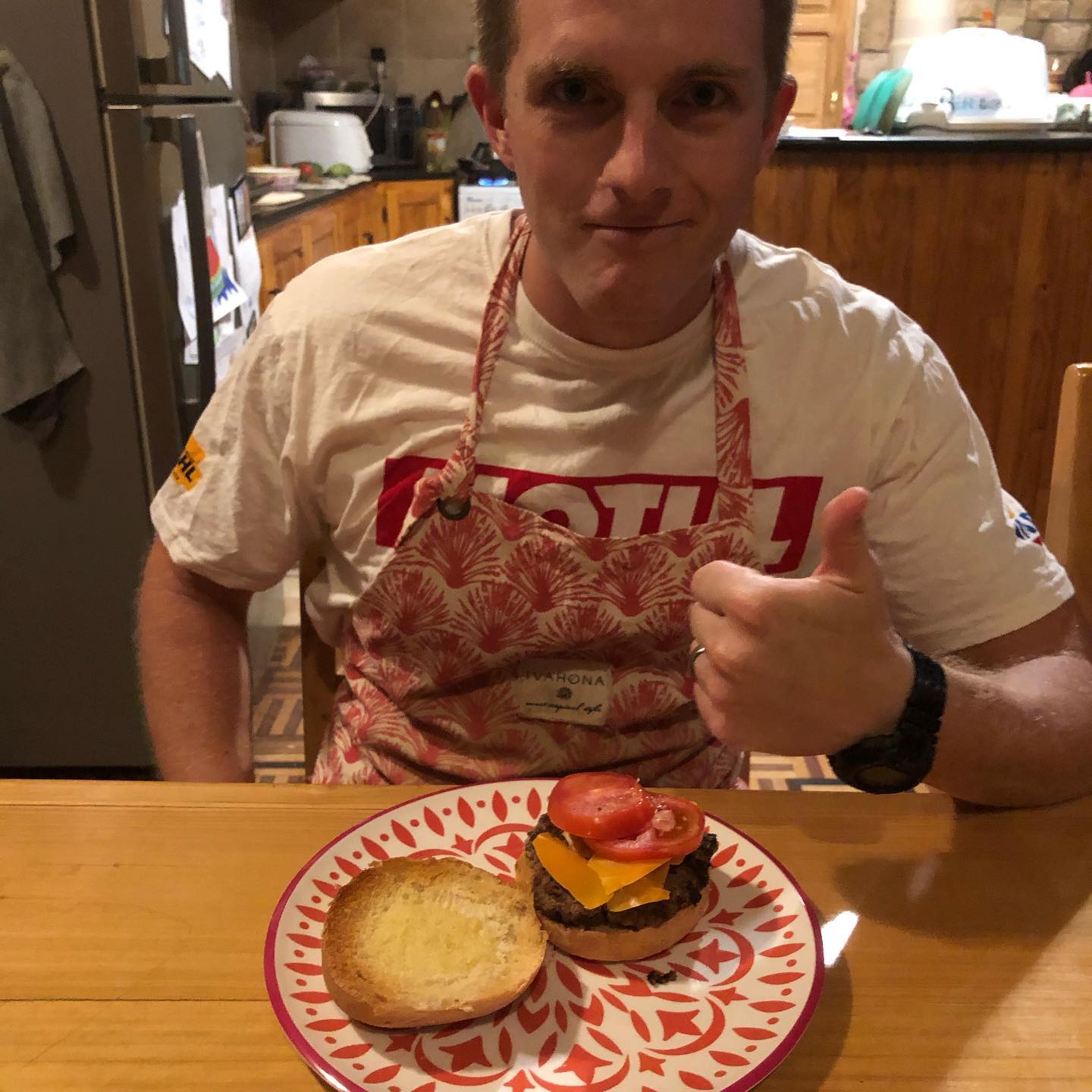
Hamburgers are definitely a kind of comfort / homey food for us here in Madagascar. We look forward to trips to South Africa or America to enjoy burgers, and on several occasions hamburgers have been our “last meal” in the USA before flying back to Mada.
Most of the beef in Madagascar is zebu meat, which is a different breed of cow than we’re used to in the States. The flavor has taken us a while to get used to, and especially for a hamburger, it can be tough to get that juicy, familiar flavor we’re looking for. Especially for Nathan, the hamburger issue has been an ongoing challenge of life in Madagascar 😉
But then, one day listening to the Art of Manliness podcast, all that changed. AOM posted a hamburger recipe from American author Earnest Hemingway. Nathan tried it—with some minor variations—and it was incredible!! Meanwhile, our local grocery store started carrying fluffy, normal-sized buns, and sliced gouda cheese . . . also critical elements of the hamburger experience. Now, hamburgers are a regular part of our weekly meal plan, along with homemade French fries and lasary, a local dish of chopped raw veggies in a vinegar-based dressing. I’ll post a recipe for that next time around! 🙂
If you want an incredibly savory hamburger, you should definitely try these Earnest Hemingway hamburgers. Feel free to adapt the recipe with various flavors of chutney, and experiment with different spices—we do! Enjoy!
Of all the intelligent creatures, the snake was the most clever of them all. He could have taken the liver out of an ant. He came to Eva and said to her, “Now Eva, is it true you can’t eat of all the fruits from the trees in this garden?”
“Oh no,” said Eva, “Eat the fruit of all the trees in this field, is what God told to us. But the fruit of that tree of knowledge of the good and the bad, this one, this one we cannot eat or touch it, God said, or then the day that you eat from it you will die.”
“No,” said the snake, “You won’t die. God knows that if and when you eat it, you all will be the same as the Prince of Creation. You will know the good and the bad.”
Then Eva saw the fruit of this tree. It was good. It made her want it, and she wanted to be intelligent too. She took the fruit and ate it. Her husband too, was given fruit by her, and he ate it also.
Then, when they were done eating it, they felt exposed, in their souls. They looked at each other and saw their bodies were naked. And they knew shame. They took tree leaves and made to cover their bodies.
Later that day, the Prince of Creation was walking through the field. He was calling, “Adam, Adam! Where are you?” “Here we are!” said Adam. “We’re hiding because we’re scared, and ashamed, and naked.”
“What?” said the Prince of Creation. “What made you know that your bodies are naked? Did you both eat the fruit of the forbidden tree?”
“No!” said Adam. “The woman, given to me by you, ate the fruit, and she gave it to me to eat, so I ate.”
“How about it, Eva? What is this thing you have done?” said the Prince of Creation.
“It was the snake! He tricked me,” she said.
With that, the Prince spoke to the snake, cursing it, saying, “You will crawl on your chest, snake. Dust will be your food. Your children and the children of the woman will be enemies. The child of the woman will stomp your head, and your children will bite the heel of the woman’s child.”
Then, the Prince turned to Eva. “You will give birth to suffering and difficulty in order to have children. You will desire your husband and want to control him. But he will rule over you.”
Then, God cursed Adam, saying, “This whole earth is cursed now because of you, Adam. It will grow thorns. You will sweat to find something to eat, and you will work hard until you die and return to the ground. You were made from the ground and you will become ground again.”
But the Prince did not leave there, he saw them, still naked. He killed an animal, took its skin and the Prince of Creation clothed them.
Now with this, the Prince also said, “Here are these humans, but like one of us now in that they now know the good and the bad. I must throw them out. If not, they will continue to eat from the tree that enlivens them and they will live like this forever.”
Adam and Eva (Earth and Life) were then thrown out by the Prince of Creation and made to leave the beautiful rice field there. The Prince also put something to guard the way back into the beautiful field, so that no human could return.
That is the story, taken from the holy writings, of how the curse came in, and why we all die.
It’s Friday family update time again! 🙂 It seems in many ways like the days and weeks run together with the changes COVID has brought–I’m sure some of you can identify! We’re working through the Jesus Storybook Bible with Chyella in the evenings, and she’s really taking in the details this time through! Nathan and I feel similar watching The African Americans: Many Rivers to Cross this month: we’re learning a ton too!
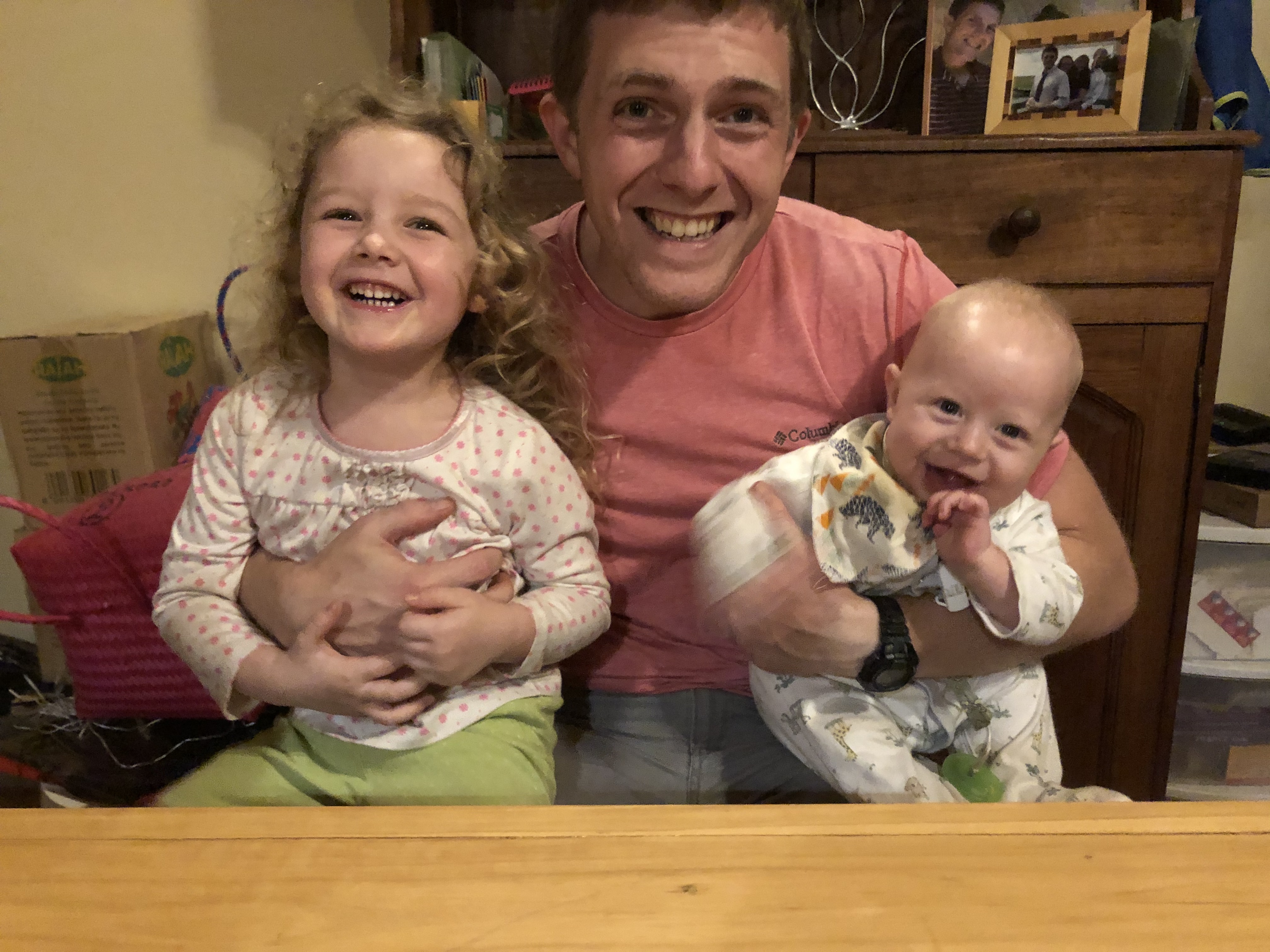
Some highlights from the past month–Jairus’ teeth came through! He’s got two front teeth now. And he’s still not crawling, but he gets around. He’s also given us about a week of normal sleep (5 – 6 hours straight)! That has been amazing.
Chyella is excitedly anticipating her birthday next week. She said goodbye to some of her best buddies here as they returned to England this past month, but she’s hangin’ in there. She’s still full of joy and energy as always! She’s gotten to try out tennis this month with some friends, and also play with our neighbors’ baby bunnies!
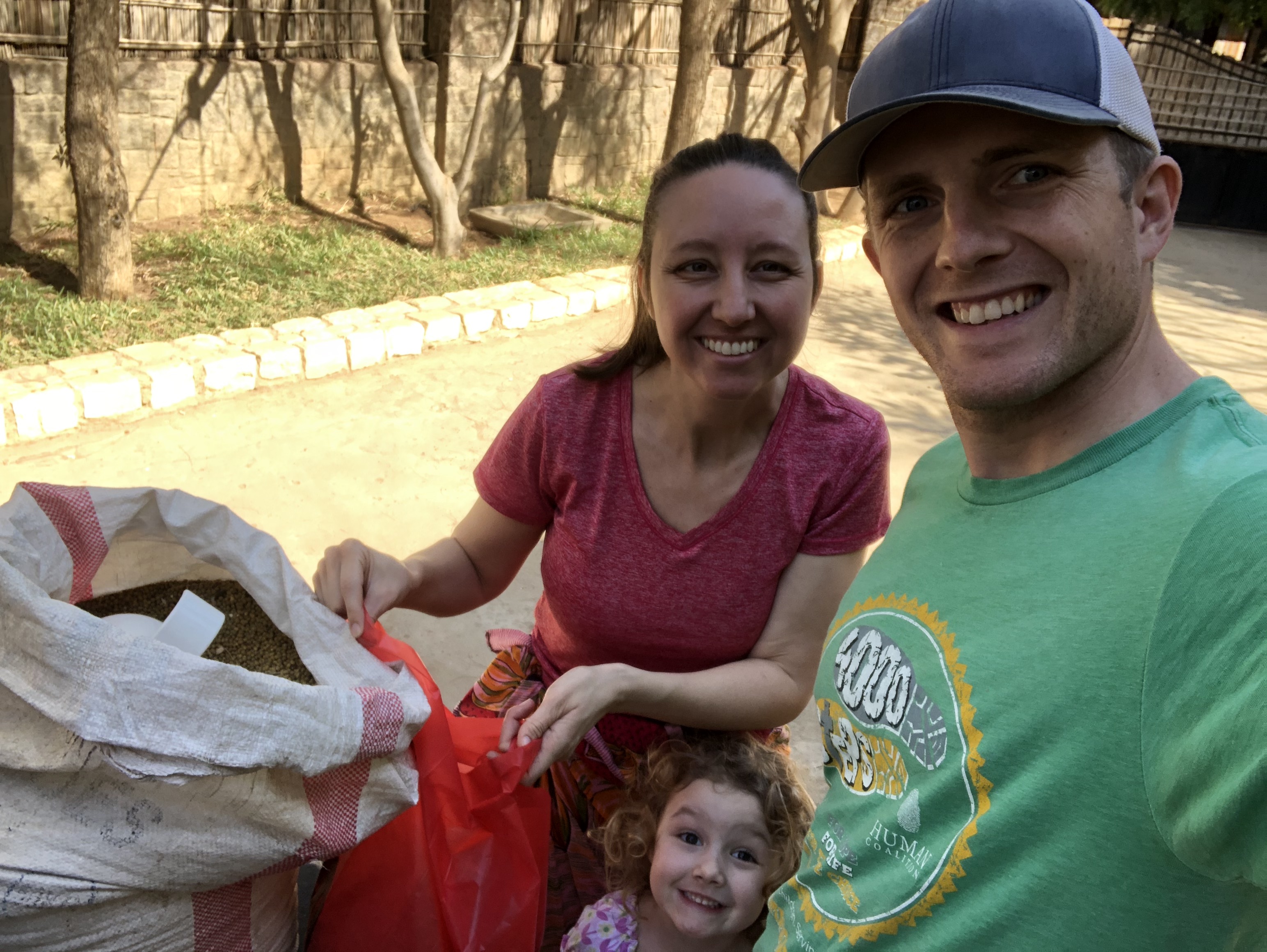
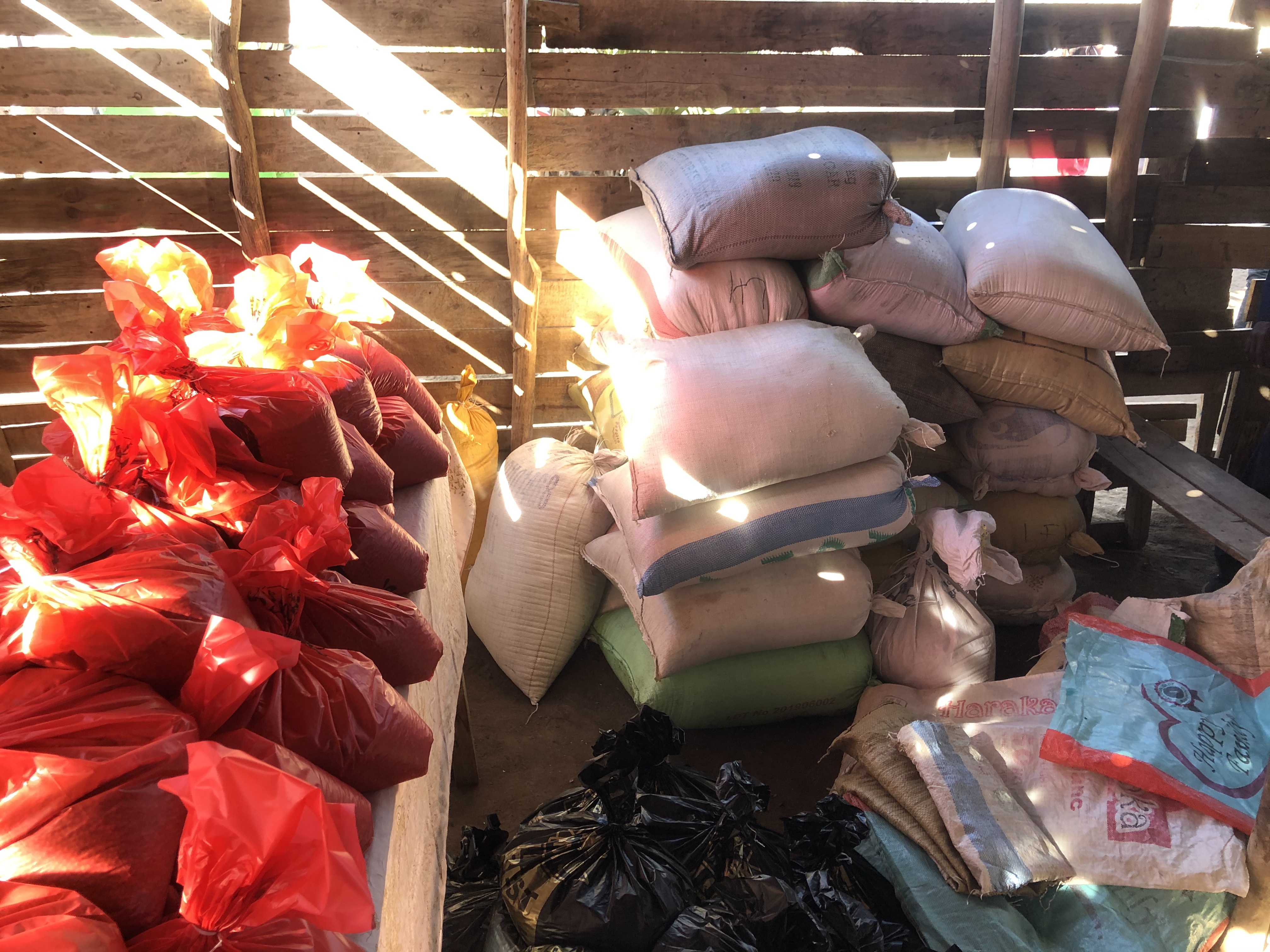
We were very thankful that a distribution project with Send Relief was approved this month, so we’ve been working with three of the local Toliara churches to provide some food for some of the most vulnerable. The churches and pastors have been working so hard to serve their communities, and we’re thankful we get to be a part! Chyella provided her counting and chalk skills to help us keep track of our measured out bags of peanuts and lentils. 🙂
Recently, we gave the revitalized Unsolved Mysteries a try. The first episode is about Rey Rivera, a guy who goes missing suddenly after he runs out unexpectedly one night, only to be found days later in an old, hotel conference room where he has, supposedly, plummeted to his death. Props to the show, it pulls you in immediately and gets your mind to working.
But I was disturbed by the time the show ended. Obviously, Rivera’s case is unsolved; but there are so many things that stick out like and cry foul-play (would someone please decode that freaky, little note he left!). It leaves you dissatisfied because you know Rey and his family didn’t get justice and don’t have the peace of mind knowing the bad buys were exposed. Theologically, there’s actually a lot that could be said for this. Our insatiable impulse for justice in unsolved mysteries and foul-play coverups speaks to God’s character, the need for every act to be held to account at some point, and what God is doing in the meantime.
I don’t think it was running at the time, but Job could very well have been the subject of an Unsolved Mysteries episode back in the day. In fact, if we didn’t have the supernatural backstory of how a shadowy figure is running Job through the gauntlet to challenge his trust in God, Job’s story would be every bit dissatisfying as Rey Rivera’s. He’s goes from a respectable, wise leader to a deranged, homeless guy. And from Job’s perspective it’s actually God abusing him.
Job doesn’t get enough credit. In chapter 19:25-27, he burst out with his fundamental belief in God:
But I know that my Redeemer lives,
and at the end he will stand on the dust.
Even after my skin has been destroyed,
yet I will see God in my flesh.
I will see him myself;
my eyes will look at him, and not as a stranger.
My heart longs within me.
What is kinda crazy is that Job has been railing against God for treating him like an enemy. Job trusted him and this is how God treats him? And what is Job supposed to do? God’s too powerful and too smart for Job to get anywhere lamenting his situation with him (9:19). But here, Job tells us what he believe deep-down about God. He pushes past his present suffering to say the God he believes is hurting him is still the God who is good enough to save him.
As one scholar puts it, “Job is beseeching the God is whom he has faith to help him against the God who is punishing him. While this view seems irrational, this paradox lies at the core of Job’s struggle. These two conflicting views of God are at war in his own mind. Although he believes that God is just, he is overwhelmed . . .”
Is Job crazy? To be honest, this sounds more like the excuses of an abuse victim than it does sound logic. However, I think Job is just honestly struggling with two sets of experiences (1) God’s proven track record, with him personally and in history, of personal love and care, and (2) God’s present indifference to his suffering and impersonal silence to Job’s injustice. Which one is the real God? Someone like Luther would say God #2 is not God wearing the mask of evil but actually evil posing as God. Still, Job fundamentally believes that even in God is responsible for his suffering, he will personally come and sort things out.
The resurrection is the ultimate evidence of God’s personable love and care even in the face of horrible injustice. His love and justice can never be too late; they extend beyond the grave.
For Job, this clearly meant he believed God would restore him before death. But Job also sets the stage for Jesus, the who suffers injustice (seemingly at the hands of God) and yet is restored even after death. The resurrection is the ultimate evidence of God’s personable love and care even in the face of horrible injustice. His love and justice can never be too late; they extend beyond the grave.
Although Job’s confession as interpreted does not explicitly support the doctrine of resurrection, it is built on the same logic that will lead to that doctrine becoming the cornerstone of NT faith. Job is working with the same logic of redemption that stands as the premise of the NT doctrine of resurrection. Both hold to the dogma that God is just even though he permits unrequited injustices and the suffering of the innocent. God, himself, identified with Job’s sufferings in the sufferings of his Son, Jesus Christ, who suffered unto death even though he was innocent. Jesus overcame his ignominious death by rising from the grave. In his victory he, as God’s Son and mankind’s kinsman-redeemer, secured redemption for all who believe on him. While his followers may suffer in this life, he is their Redeemer, their Advocate before the Father. In this way Job’s confidence in God as his Redeemer amidst excruciating suffering stands as a model for all Christians
John E. Hartley, The Book of Job (NICOT), 297.
Justice is coming for Rey Rivera, just like it did for Job. How do I know? Because a man named Jesus is representing him. Do we really think Jesus is not interested? Was he not killed in an enormous, political hit-job which was quickly covered up? Did he not die to, in one fell swoop, take down the bad guys and restore the victims? The biblical hope is not that God will magically sweep away all wrongdoing. He’s going to stand in the flesh in front of us all and bring justice for all.
Meantime, Jesus has left us here as his deputies. Whether it’s Rey Rivera or any other silent victim, our job is to represent the Redeemer, advocating and working for justice on behalf of the vulnerable. And if we’re going to look anything like Jesus, we have to be ready to do what he did and stand between evil and the suffering, taking the hit so they have a way out. The boss is still coming, in the flesh, to set everything right. Meantime, we’ve got work to do.
This recipe comes from one of my pregnancy cravings with Baby Jairus. Nathan and I had just moved back to Toliara, and we were watching Brooklyn 99 at night. Throughout the season, one of the characters was trying to open up a food truck serving meatball subs. Every night, the characters on the show would start talking about meatball subs, and I would get a super intense craving for this deli delight!
Nathan decided to take on the challenge! He found a meatball sandwich recipe, bought some delicious fresh bread at the bakery, and gave it a try one night for dinner. And it was delicious!! This has become one of our favorite meals. It’s now improved by doing the bread at home using a French bread recipe I wrote about last month. The crowning touch, though, was that our local grocery store started carrying sliced gouda cheese, which we melt over the top of the sandwich. Amazing!
You may be familiar with Operation World for the global prayer resources they provide. This little book is really no different. Mandryk, in concert with voices of leaders from around the world, has compiled some, self-admitted, speculations about the mid to post Covid-19 World, especially when in comes to missions. Some of the more helpful bits to me were his reflections on how sending, training, and organizing missionaries will have to change.
I first came across this at lausanne.org and you can download it below.
I have found lausanne.org a natural place to peruse for resources on global mission during this time. Lausanne is an evangelical coalition of Christians (first founded by, among others, Billy Graham and John Stott). Take some time to explore all of their content, the variety of voices from around the world has made me wiser about our current moment.
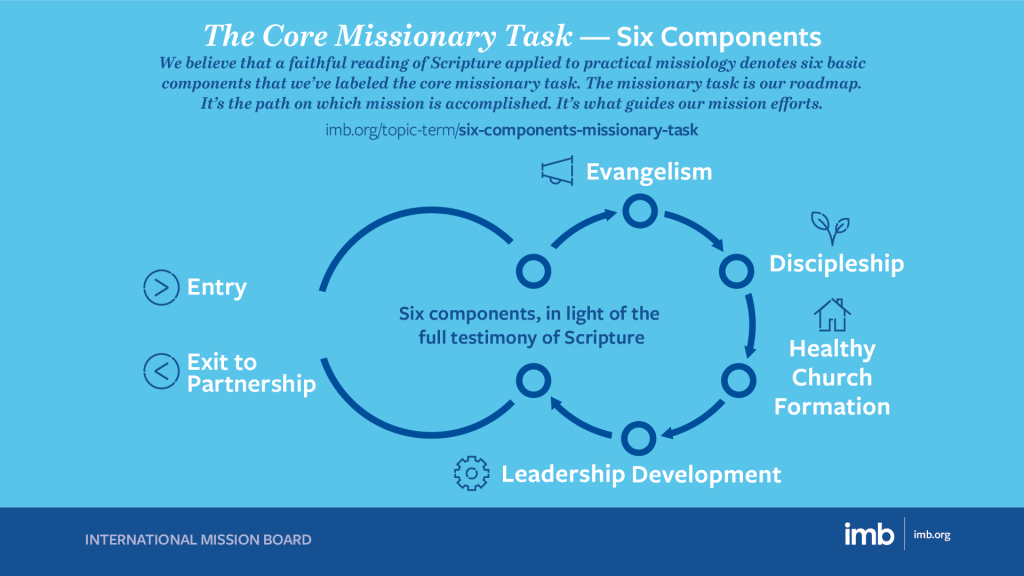
Also, as you think about missions, here’s an infographic from our organization to help you think about missions in your context. Breaking down the goal of missions into these categories has aided us as we follow along this progression with our church plants here in Madagascar.
As churches continues to decentralize their more and more, it becomes even more important for each of us as Christians to find our place in the Task picture above. No one Christian can complete the Missionary Task. It is actually a Church effort where everyone, whether accountant, artist or theologian, has a part to play in one or multiple sectors of this task.
Statistics
We’ve been working recently to learn better ways of gathering and reporting data for our mission here and I’ve been reminded many times of Kahneman’s warnings in Thinking Fast and Slow. A respected expert, Kahneman’s dense book walks through multiple ways we misunderstand and misapply statistics on a daily basis, especially because of media.
Kahneman worked as a researcher in the field of psychology, and is especially interested in decision theory. His thesis, over a lifetime of research, is that we are not rational thinkers. Instead, we resort to a plethora of what Kahneman calls heuristics (cognitive traps or biased ways of thinking). As he himself explains, “This is the essence of intuitive heuristics: when faced with a difficult question, we often answer an easier one instead, usually without noticing the substitution” (12-13).
The novel corona virus has made everything more complex. But sometimes it looks like we’re replacing these complex questions with easier ones. Especially in the current onslaught of statistics in the media, you may find this book helpful. Kahneman winds through example after example of particular traps (heuristics) we use unaware: we are highly suggestible, we are naturally lazy thinkers, we abhor loss, we are overly optimistic, we don’t learn inductively, our intuitions suspect, our memory trumps experience, etc.
Throughout his book, Kahneman challenges the notion that we are rational thinkers. We need tools, strategies, and even better language to help us think things through. The best application, most likely, is to slow down in situations you recognize may incite cognitive traps instead of accepting the first answers that present themselves. So, instead of immediately sharing that scintillating new graph, we should think through whether something means what we think it does.
Digital Ministry
Speaking of statistics . . . a new podcast from Barna. For years, Barna has sought to equip church leaders with real time data. Barna’s ChurchPulse Weekly podcast is now what I listen to every week as I race around for groceries. Every week they seem to improve upon the last, digging deeper into data about church attendance, race, cultural trends, and digital ministry. They’ve also hosted a range of voices who have helped me think through our changing context here (even when the contexts are vastly different!) The most recent one was again on digital ministry.
Send a textDavid Kinnaman and Carey Nieuwhof share insights and ideas about the future of the Church and some exciting news about what's next for the podcast. Stay tuned for more to come in the new year! – Follow Barna at: Instagram: @barnagroup Twitter: @davidkinnaman | @barnagroup Facebook: Barna Group Youtube: Barna Group Relevant Links: Barna Access Plus Gloo: Find out more about the He Gets Us initiative at hegetsuspartners.com/churches
This is the second time they’ve hosted Nona Jones. She does a great job helping leaders on social media think not about mere “reaches” or “likes” but actual engagement for discipleship. I’ve dropped a more extended talk by her below if anyone is interested. She also has a book, From Social Media to Social Ministry, that I have not yet read, though I’m sure it’s also helpful based on what I’ve heard from her.
An extended sessions from Nona Jones on digital discipleship.












 Baker Storycraft