Waiting – Day 5

Read: Psalm 131

There is endless speculation. We all want to know how to move forward. But this is really beyond all of us. David was a king; he was used to complex decisions. Still, he knew there were some things too difficult for him. He trained himself to be like a child before his mother, resting close to God. He rested in God’s competency and control. How are you trying to regain control? Are you content just being with God. Let’s take some time to rest in God, instead of figuring it all out.

“Whoever has ears, let them hear what the Spirit says to the churches.”

“There can be an inordinate desire for greatness and accomplishment (verse 1) . . . This self-seeking creates great restlessness and discontent—but the psalmist has left all that behind . . . A child who has been “weaned” (verse 2), however, and no longer nurses, is content just to be with its mother, enjoying her closeness and love without wanting anything else. We so often approach God only for what he can give, rather than simply to rest in his presence. Do that now, through the Word and prayer in Jesus’s name.”

Tim Keller, The Songs of Jesus, 337.

Resources:


Waiting – Day 4

It is surely understandable, therefore, that frequently we tend to judge an idea not on its merits, but according to how we judge the person putting it forward. We fail to separate the idea being communicated in a message from the person or entity conveying it. This commonly overlooked insight – one that is frequently missed by audiences, and results in them ignoring the expert in the room – illuminates a fundamental feature of the effective messenger.

They become the message.

Stephen Martin and Jospeh Marks, Messengers: who we listen to and why we don’t, 8.

Read: Jeremiah 23:16-18 (for more context read the whole chapter)

Some say, “It’s all good! We’re gonna be fine.” But what if it’s not all good? Jeremiah was surrounded by the pastors and speakers of our day, priests and prophets in exile telling people what they wanted to hear—that exile was a short-term deal. Many around us are only telling us what we want to hear. Some may even do it as if they’re speaking for God. Are we being fed empty promises? What voices should we stop listening to? Let’s pay attention to God’s Word and listen to him.

“Whoever has ears, let them hear what the Spirit says to the churches.”

In examining a teacher’s credentials, then, we have to examine both his character and his message. Bishop Ryle summed it up well: ‘Sound doctrine and holy living are the marks of true prophets.’ Then I think there is a third test which we must apply to teachers, and this concerns their influence. We have to ask ourselves what effect their teaching has on their followers. Sometimes the falsity of false teaching is not immediately apparent when we look at a teacher’s behaviour and system, but becomes apparent only in its disastrous results.

 John Stott, The message of the Sermon on the mount (Matthew 5-7): Christian counter-culture, 202.

Resources:

  • I’ve found the book Messengers intriguing. It exposes the biblical principle of how humans give more weight to status and appearance when choosing whose advice to follow. Here’s an excerpt from the book, as well as a short video, and also a podcast exploring the ideas in the book.
  • I ran across an article from the Seattle TimesI’m not advocating this guy, just thought it was sound advice in multiple sectors of our life right now, as seen in Jeremiah.

Waiting – Day 3

Read: Psalm 13

For years, David lived ostracized in the wilderness. Later, this song would have been sung by those exiled in Babylon. How long, O Lord? That is the question David, exiles, and all of us are asking. How long will this last? How long until it’s over? How long will I or the ones I care about be sick? Let’s ask God, and listen to what he might be saying.

“Whoever has ears, let them hear what the Spirit says to the churches.”

“David is in agony and can’t feel the presence of God. He cries out that God has ignored his pain and his sorrow. It is almost a howl, and the fact that it is included in the Bible tells us that God wants to hear our genuine feelings, even if they are anger at him. David never stops prayering, however, and that is the key. As long as we howl toward God and remember his salvation is by grace (verse 5), we will end at a place of peace.”

Tim Keller, The Songs of Jesus, 19.

Waiting – Day 2

I ask no dream, no prophet ecstasies

No sudden rending of the veil of clay

No angel visitant, no opening skies;

But take the dimness of my soul away.

George Croly, Spirit of God Descend Upon my Heart

Read: Ezekiel 37:1-14

In exile, after the obliteration of their former way of life, God shows Ezekiel how he will reanimate his people by breathing his Spirit into them. Let’s ask God to breathe into us again. In a time of sickness and death, how is God reinvigorating his Church?

“Whoever has ears, let them hear what the Spirit says to the churches.”

Waiting – Day 1

“ . . . theology is not enough, formulas are not enough to explain the Unity and Trinity of God . . . It is a personal communication which God alone can give, and the task of giving it belongs to the Holy Spirit, who is the same love which unites the Father and the Son.

The Holy Spirit is the fulness and the joy of God.

It is so difficult to speak of these things. We have to babble like children, but at least, like children, we can say over and over again, tirelessly, ‘Spirit of God, reveal yourself to me, your child.’”

Carlo Carretto, A Guide to Prayer for Ministers and Other Servants, 193.

Read: Acts 1:1-14

Without Jesus for the first time, his community of biological and spiritual family gathered in a room together for focused prayer, waiting for Jesus to send the Spirit. Whoever we are with, whether church or nuclear family, let’s pray like we desperately need the Spirit to energize and move us out of the room. Because we do.

“Whoever has ears, let them hear what the Spirit says to the churches.”

Resources: 

Holy Spirit video


Starting to Wait

By the time we get to these 10 days, there no telling what things will look like. Maybe for some of us stay-at-home orders have been lifted. Maybe some of us have gone back to work. Maybe it’s all still the same.

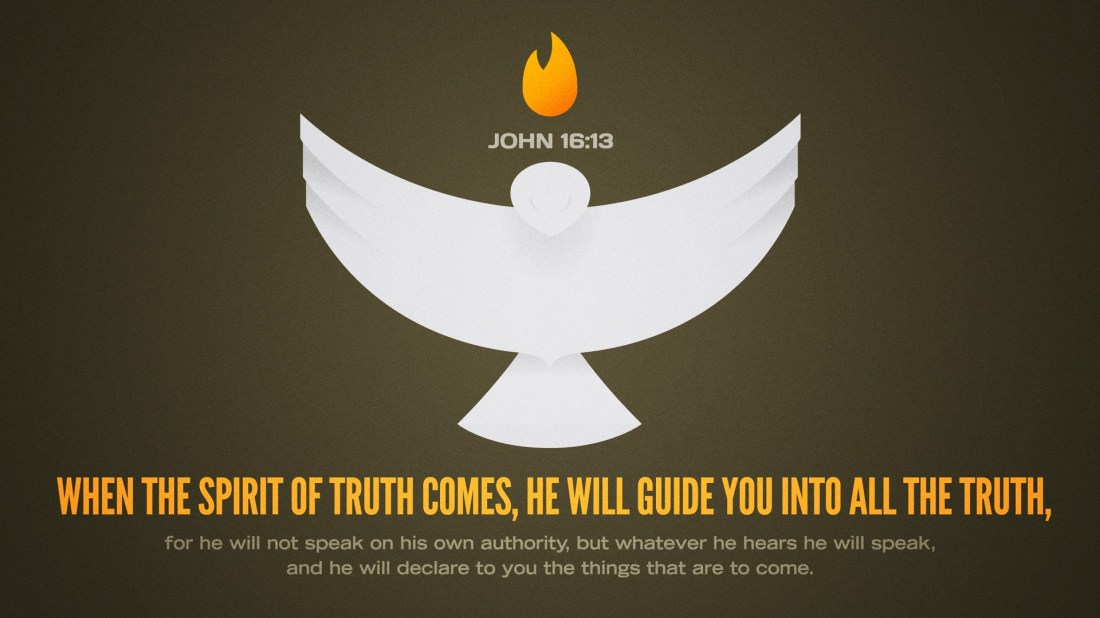
Whatever it looks like, let’s put ourselves back in that Jerusalem upper room praying for God’s Spirit to come and change everything. If you’re like me, this is going to be a challenge. I’m horrible at two things: listening and concentrating. But whether it’s taking 5 minutes before you get out of the car at the grocery store, getting quiet during the kids’ nap time, getting up earlier, or just stepping outside for a few minutes of concentration, how can we focus on crying out to God and taking the time to wait and listen for an answer?

I keep hearing Jesus’ call in Revelation, “Whoever has ears, let them hear what the Spirit says to the churches” (Rev. 2:7). As much as it depends on us, let’s give our ears the time and space they need to do their job. Let’s see if we can hear what the Spirit is saying to his churches.

John_16_13-1920x1080

Building Bridges

Tsidiky (Smile) needed help. Her daughter had just given birth and was not doing well. They had been in the hospital and, overwhelmed by patient upon patient with fever, the hospital sent them home immediately. Smile’s daughter was still very weak and unable to feed her baby; she was scared.

Smile cooks and cleans for some of our friends here, missionaries themselves from England. These friends speak French but Smile speaks the local Malagasy dialect. Since we see these English friends a good bit, I often translate bits of things for them (things that aren’t clear between them in French). So recently, our friends asked me to query Smile about her daughter. As soon as I asked Smile, the story poured out of her. She had wanted to ask off from work to tend to her daughter because no one else would care for her (the baby daddy was out of the picture), but she hadn’t known how or had the confidence to ask through the language barrier.

In the end, as I translated for both sides, our friends arranged for a French doctor to come by and check on Smile’s daughter. Smile had the rest of the day off and they gave her some money to take care of her little girl. That night, I could hear her smile over the phone as she profusely thanked me for enabling her to cross the language barrier. “Without you, nothing could have happened,” she said.

It has been said that missionaries are essential workers during this crisis. It’s true, the good news of how to be transformed in the midst of this crazy world is always essential, in times of global crisis or no. But I’ll be honest, sitting here at home today, distancing myself from others, while for the most part the world goes on around us, I do not feel essential.

In one sense, I’m clearly not an essential worker. I am not a nurse working an ICU shift, nobly caring for others at perhaps the highest personal risk. I am not, like a few friends in essential construction, working as normal everyday to make sure life can carry on. What I can do, what we are doing, is what we do best: we’re building bridges across cultures.

Missionaries do more than just tell people about Jesus

If you have truly grasped the story of how God became man to rescue us from evil and restore the world to perfect harmony, it transforms you. It compels you to tell everyone you can. That is what we call a Christian. A missionary is different. I would argue that even moving to another country and another culture doesn’t make you a missionary. Missionaries are Christians sent with the goal of communicating the good news in another language and culture. That one goal splinters off into thousands in real life as language and culture comprise so much (i.e. What words do you use to speak about Jesus? What should a Christian look like in this culture? What even is this culture? What do they hold most valuable? What mistakes has my culture made in the past with this culture? What even is my culture?).

Suffice it to say, being a missionary doesn’t mean I just tell people the story of Jesus in Madagascar. There are actually a lot of people already doing that (which I’ll get to in a moment). I do that because I’m a Christian, and I have just as much ability to do that working construction as I do as a missionary. I’m a missionary because I have devoted my life to adopting a way of life and way of speaking that acts as a bridge across cultures—a bridge upon which, I believe, Jesus’ scarred feet can walk into a Malagasy person’s life. And even that, I don’t do alone.

Missionaries don’t work alone

Jesus didn’t save us to just be his friends; we are invited into his family. One of the blessings of being a missionary is discovering hundreds upon thousands of brothers and sisters you never knew you had! Please remember, Christians like these are busy telling people the story of Jesus everyday. There were already hundreds of churches here before we came. It’s the same for a lot of the world. Are all the churches healthy? Loving people and telling the right story? Of course not. Just like our churches in America! I can say with confidence, however, if all the missionaries in Madagascar suddenly left, as they say here, sanatria (“heaven forbid”), there would still be people telling the story of Jesus.

In fact, as pertains to our work here, often the greatest gospel gains in our area have occurred while the missionaries were not here (visiting family, for instance). God started 6 churches here through missionaries (and all of those we had Malagasy brothers and sisters helping us). The other 194+ that we have now were planted solely by Malagasy believers, without missionary help. God is not restricted to American missionaries to reach the world.

Why are we here?

It’s scary being here. We’re locked down on an island with closed borders and limited medical care in the middle of a pandemic with two young kids. We’ve absolutely had thoughts of trying to get back. But God has us right here, right now. Why? I’m not exactly sure to be honest. I don’t think you should call me an essential worker. Just call me a missionary. Call me a bridge-builder.

Because in the end, I know Tsidiky (Smile) is right. Our friends were the ones who helped her—provided care. We just got to be the bridge, from one culture to the other and back with the love of Jesus. And I think it’s for things like this that God has us here. As things progress, pray with us that our presence here might continue to be a bridge for hope, help, and the Gospel here in Madagascar.

You do you

To sum up, the command to judge not is not a requirement to be blind, but rather a plea to be generous.

John Stott, The message of the Sermon on the mount , 177.

This week, while at our local market, I gave some cash to some of the beggars there. Among them were some boys who divvied up the money and then followed me to another stop. When I came out, they started again, insisting they were different boys and I hadn’t given them anything. I didn’t berate them. In fact, I told them it’s fine to ask for money. But I also told them they didn’t need to lie. Lying is only going to hurt their relationship with God and others in the long run. We don’t have to be blind to be generous.

Matthew 7:1-12 is all about discernment. Living in the kingdom means seeing things as they are–not more, not less. We need to know God as he really is. We need to approach others as human beings. And we need to see ourselves as we really are.

This is not, “You do you.” In fact, Jesus followers are called to more responsibility: for ourselves and others. Jesus’ words are complicated by the fact that “judge” has negative connotations for us. Yet, even in English we still have “sound judgment” or a “good judge of character.” It may be help us understand what Jesus is saying if we pull apart the different senses of the word and translate 7:1-2a as, “Don’t condemn so that you will not be condemned. For in the way you evaluate, you will be evaluated.

And this carries the theme of discernment to 7:6. What’s up with the pigs and dogs? John Stott, from the quote above, goes on to say that rather we should be reasonable toward fellow humans instead of tearing them apart. That’s what separates us from animals. Interestingly, that’s what Jesus calls those who are unreasonable, who don’t know the difference between pearls and slop.

This seems to come from Proverbs 9:8, “Do not correct a cynic, or he will hate you; correct a wise man, and he will love you.”

Jesus wants those who follow him to be discerning enough to know when to help someone and when someone doesn’t want our help. Some people take this weird turn of phrase about pigs and dogs to mean we shouldn’t tell the good news to others. That’s ridiculous. The book of Matthew ends with the Great Commission (28:19-20). Jesus clarifies what he means here: “with the measure you use you will be measured,” (7:2). Later he clarifies again, “Do to others what you would have them do to you,” sums up the goal of all ethics (7:12).

Do we want others condemn us when they stand equally condemned? No. Do we want others to make snap judgments, call us pigs and not share the gospel with us? No. Again, this is not “You do you,” or “My truth.” This is living in a way that is deeply in tune with reality. We have to really get to know people: ourselves and others.

Resources:

  • This Atlantic article describes a non-discerning, judgmental kind of “Christianity” some are noticing amid COVID-19.
  • As both D. A. Carson and Thabiti Anyabwile have preached from Matthew 7:1-12, the kingdom life is a life of perfect balance (though not necessarily perfect obedience . . . yet). We are to be equally understanding and yet discerning, forgiving and yet willing to confront, sharing the good news and yet making the most of our opportunities. 

“It is a wise Christian who first assesses the condition of a person’s heart before sharing the precious pearls.”

Warren Wiersbe

One of Two Different Options

Is our ambition for God or for success? Are our sights set on doing what God wants or doing what we want?

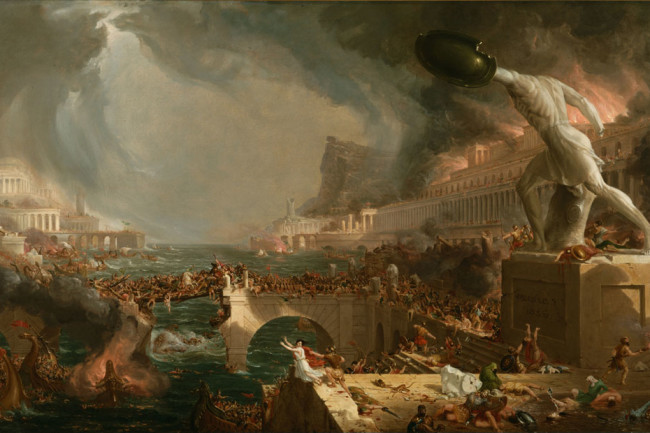
Jesus is constantly drawing a dichotomy seen not only in his teaching but throughout the biblical story. In a lot of ways, the biblical story can be reduced to a story of choice: a choice between one of two different options: store up treasures on earth or with God, be committed to God or a slave Mammon. fall-of-rome

Years ago, a bishop named Augustine spoke into moment similar to the one we’re in. The centuries-old Roman Empire had fallen. Chaos ensued. People were scared because they didn’t know what was coming next. Rome had been around for a long time. But also people were angry. Where was the God of the Christians, and why hadn’t he done anything?

Among many other things, Augustine argued that God was using the crisis of his day to strengthen the godly and smoke out evil (just like fire is used to purify gold and eliminate impurities). As he said it “the same violence of affliction proves, purges, clarifies the good, but damns, ruins, exterminates the wicked . . . So material a difference does it make, not what ills are suffered, but what kind of man suffers them.”

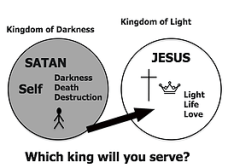
He painted a picture of two realities, two cities or communities, to which every person belonged, either to the City of God or the City of Man. The City of God is a community of self-giving love, the City of Man is defined by twisted self-love. Just like its Founder and its citizens, the City of God would stand the test of time. The City of Man, no matter how much more attractive it was, would fall . . . just like Rome.

Rome fell, but the City of God and its citizens live on.

Thanks to Augustine, we’re reminded, we are all choosing everyday which kind of human we will be. What kind of people has COVID-19 shown us to be? Who is leading us, which community are we living in?

But as for the good things of this life, and its ills, God has willed that these should be common to both; that we might not too eagerly covet the things which wicked men are seen equally to enjoy, nor shrink with an unseemly fear from the ills which even good men often suffer. There is, too, a very great difference in the purpose served both by those events which we call adverse and those called prosperous. For the good man is neither uplifted with the good things of time, nor broken by its ills; but the wicked man, because he is corrupted by this world’s happiness, feels himself punished by its unhappiness.

Augustine of Hippo, City of God

3fe2a5_d4c8a8bdb4dd40a0ae6c6f987b673350Resources:

  • Check out my video on Two Communities gospel tool. The goal is to learn to make your own sketch to share with others. Let us know when you make and share your own (video or in-person)!
  • Bible Project does a great job illustrating this idea in their video on biblical story
  • City of God is a massive tome, but so good. If you find yourself with a love for classics and a lot of time, check it out!

Not a loophole, not a platform


There’s a noticeable shift at Matthew 6:1 – 8 and beyond in Jesus’ most famous sermon.

He’s been addressing the ways people have created loopholes. For example, those saying, “God clearly said to love him and others . . . but certainly he didn’t mean THOSE people” (5:43). Instead, Jesus calls people back to true love for all people, no loopholes.

Now, he moves on to address hypocrisy . . . or what we might call platform. The word hypocrite comes from theatre. But think of it less as wearing a mask (i.e. saying one thing, doing another). That’s part of it, but if you think about a person who treats everything and everyone one else as part of their stage on which they perform, you’re getting closer. Jesus reminds us not everyone needs to know what you’re doing.

When I give is it to be seen as a generous person? Or is it to help those who need it? Are we doing good for a better platform, cultivating a persona, or are we only doing good to make our Father happy? He sees our secrets and our hearts (6:1 and 4).

True religion, love for God and others, is not a loophole, not a platform.

0

Recommended Resources: