Faithful Friends: Pastor Edia

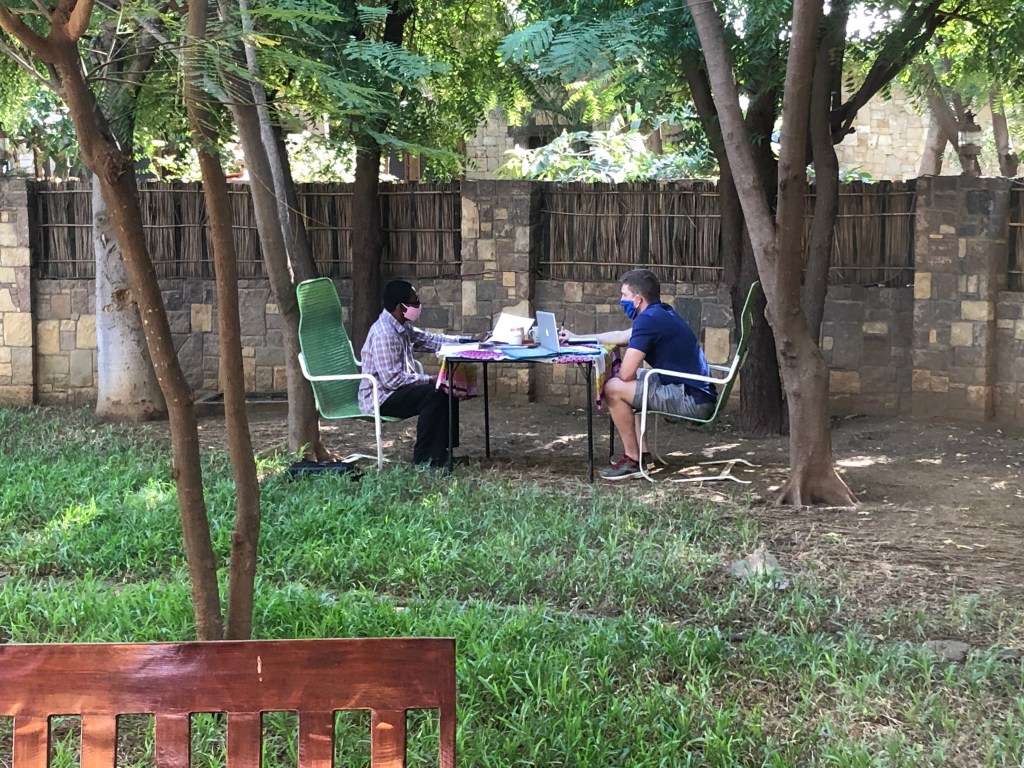
This month, we want to introduce you to Pastor Edia. I (Tessa) first met Pastor Edia in 2010. He was a part of one of the first three story-crafting groups. He is Tanalana, one of the people groups of the southwest, and he was enthusiastic about studying God’s Word. At this time, Edia was not yet a pastor. Very quickly, he became the story-teller of that group. The group would work together to create Bible stories in their dialect, and once all were satisfied, Edia would tell the story for the recording. 

Edia and I worked together for three years, meeting with the group weekly to craft stories. Week after week, the group would debate specific words choices, meanings of words and concepts in Scripture. Sometimes Edia found himself surprised by what he found in Scripture—but whenever God’s Word was different than what he had believed, he submitted his heart to God’s Word. 

The group crafted over 45 stories, which God has used all over the southwest of the island. Edia answered God’s call to obedience in believer’s baptism. He answered God’s call to serve the Baptist church as a pastor. He has followed God’s call to seminary. He also has had the opportunity to teach around the island about the helpfulness of creating oral Bible stories in each dialect. Edia continues to be instrumental in God’s work all over the island. 

Pray for Edia. Pray that the seminary will be able to reopen and he’ll be able to complete his studies. Pray for the church and cell groups he serves here in Toliara, as he continues to disciple their leaders for when he’s gone. Pray for his ever-growing depth of knowledge of God’s Word. Pray for God’s guidance, protection, and provision on his life as he continues to follow God’s call. 

Things to Ponder: Chyella’s Concept of “English”

Our daughter Chyella is four. She is a huge talker. She goes to French preschool—or at least she did, before COVID-19. She also talks with Malagasy people as we visit them and go to church with them. She knows words in French and in Malagasy, and likes to practice. She has a category for the French language, and one for the Malagasy language. One day, we started talking about English. She learned a new word, and asked if it was a French word. No, I told her, it was just an English word that was new to her. She gave me a very puzzled look. 

C: Mommy, what’s English?

Me: You know, English. The language we speak here at home. What we speak all the time.

C: (still super puzzled) You mean French? 

Me: No—you practice French at school, and Malagasy at church. But English is most of what you know, everything we’re saying right now.

She shook her head. We repeated this conversation in some form or another for at least a week. She never got it. I’m not an early childhood development expert (if you are, please chime in! :), but I think I can imagine why she struggled with this concept. English is equivalent to just talking for her. It was a “does a fish know it’s wet?” moment for me. For Chyella, English is not a language to be learned or studied or practiced (as she does with French and Malagasy, because her exposure is more limited). It’s just talking. Removing herself from her daily speech to examine it is nearly impossible. 

I believe this same struggle is true for many of us who are white when we think about race in the United States. We’ve never examined our experience, stepped back from it and considered the role our race plays in it, because to us, our experience is the “American experience.” Race has nothing to do with it. We don’t even realize uniquely white elements of our experience. We don’t understand African-American struggles, but the depth and breadth of what we may be missing never occurs to us. We don’t often step back from our own and other Americans’ experience because we expect it to be our own. 

With the murders that have taken place in recent weeks and months—at least, those that have come to the attention of the news—and the protests that have followed, I have found myself in the midst of a powerful lesson. I’m humbled to admit that I haven’t learned this lesson before now, that I’m new to this conversation on racial injustice. When the protests and rioting started, I felt the impulse to reach out to African-American friends, to check on them and ask how they were doing. And then I realized—again, with shame—I hardly know any African Americans. Suddenly I realized—I don’t know anything about African Americans. How could I possibly, when I know so few?

Nathan and I are missionaries in Madagascar. We have the privilege of working among people who are culturally different than we are, and having many deep relationships with Malagasy people. We have worked for years on language learning and cultural observation. We have learned to enter every conversation with open ears and open minds, assuming throughout that we’re missing something, determined to reserve judgment and keep learning. That doesn’t mean we do this perfectly, but we have seen that regular and prolonged exposure to another culture has given us an incredible gift—we now know just how wrong it is possible for us to be. 

When we first came to Madagascar, we were enamored with the differences—it’s called the honeymoon phase on the culture shock continuums. Then, we developed some real relationships and found ourselves reveling in the similarities . . . this culture wasn’t so different after all! Humans are the same, the world over! Then, as time went on and language and culture comprehension grew, a deeper reality set in. We are different . . . very different in many ways. This is not a statement of value—different isn’t bad. But it is real. There are significant differences between American culture and Malagasy culture. If we ignore those, we will not be good missionaries. We will not share our message or our lives in ways that are meaningful here. We will miss huge swaths of what is happening around us. And the more we learn, the more we discover is missing or inadequate in our earlier understandings. The more we know, the more we know we don’t know.

This experience has changed the way we view life. We now have a growing instinct to listen first, learn first, expect to be wrong, expect to adapt. We are eternally grateful for the development of this learning muscle in our hearts and minds.  

And yet, here I am, failing to practice this discipline in my home culture. I’ve discovered a huge gap in my experience, a whole group of people I’ve lived alongside, yet ignored. And yet I’ve drawn conclusions, as if I could know. 

I’m determined to change this, to listen and learn intentionally to African American voices, to minority voices, especially those who are brothers and sisters in Christ. Even in beginning to listen, I’ve heard stories of suffering I can’t imagine—would not have thought possible. Romans 12:15 calls me to “weep with those who weep” . . . and yet I have brothers and sisters weeping and I’ve been oblivious to their needs. To friends of color who are reading this, I know you don’t need me . . . but I will be doing my best to learn to listen. To those of you who are white reading this, will you join me in learning? 

Recipe Thursdays: Lasary

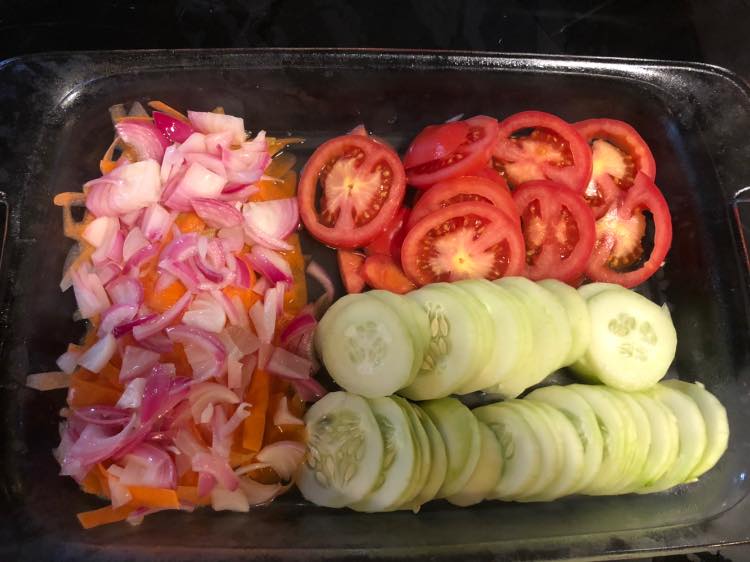
Lots of times when visiting Malagasy families for a meal, friends have served us this delicious mixture of raw, chopped tomatoes, onions, carrots and cucumbers soaked in what tasted like a vinaigrette-style dressing. It’s delicious! And at the little hotel we where we stay near the Mahafaly villages, they serve this as a side along with French fries. You would be amazed how incredible double-fried French fries taste with tangy cucumbers and carrots spread on top. So good. 

Anyways, silly me, I assumed this salad was made simply by soaking the chopped veggies in vinegar. And I proceeded to do that and serve it to several Malagasy families. Poor them! As I’ve mentioned, my tolerance for sour is very high, but I’m sure the vinegar-only dish was a bit of a jolt for someone used to the real thing! Thankfully, a couple of dear Malagasy friends—Narindra and Chantal—helped me out. They explained that, no, actually the dressing is a combination of vinegar, salt, sugar and oil. And, no, the veggies really don’t need to be soaked overnight—oops, again!  

Now, thanks to Narindra’s and Chantal’s help, I believe I have nearly mastered the salad. Here’s what I do. Enjoy! 

– enough cucumbers peeled and thinly sliced to make 2-3 rows short-ways in a casserole dish (usually 2-3 small cucumbers)
– enough tomatoes sliced to make 2 rows (4 tomatoes)
– enough carrots peeled and grated for 2 rows (2 carrots)
– 2 small onions thinly sliced

Slice onions into a small bowl. 
Add 2 tsp salt, 1 TBS sugar, 1/2 cup vinegar, 1 TBS olive oil. Stir. Adjust to taste. Set aside for several hours.

Prepare other fruits and vegetables into a casserole dish. Refrigerate. 

After a few hours, stir onion mixture again and pour over other vegetables. You can serve immediately or refrigerate further.

Mahafaly Bible Stories: Abraham

Hello, it’s me, the Traveler, and I have a story to tell you. It’s a story from a book of holy writings called the Bible. This book is a collection of many stories, and they have all been brought together to tell the whole story. It is the story of our ancestors, and our story. Let me tell it to you.

First, madam and sirs, let me tell you that after the curse came in, Adam and Eve, well their relationship with God was severed. But God, you see, he still wanted the relationship with humanity. Yeah, so Adam and Eve sprouted and their tribes began to settle. Then, after this, you see, God chose one person to be in relationship with so that he could have humanity worship him again. The name of this person was Abraham. The story I’m about to tell you is about this guy, Abraham. 

“So,” says God, “Abraham, leave your lands, leave the lands of your father, your ancestral lands. You go and travel to a land I will give you. You will be blessed by me. Your offshoots will be made so many by me. Your fame will be made my me to be heard from the ground to the sky. Also rooted in you will be all the people on this earth that I go on to bless. 

Abraham says “Ok,” and he takes his wife and everything else he’s in charge of, his shepherds and all of his belongings. Abraham was seventy-five years old at this time.

So that was that. He left. Now let’s keep the story moving . . .

They made it to that land there. They explored all over that land. Then, once finished going all around the land, Abraham set up camp.

“So,” says God, “This right here is the land I’m gonna give to your offshoots.”

And with that, you see, Abraham thanked God.

So there Abraham was for a long while. But let’s keep the story moving . . .

“So,” says God, “Abraham! I’m gonna bless you. Don’t be scared. There still a lot of other big things I’m gonna give you.”

“Huh,” says Abraham, “And what exactly will I do with these good and great things you will give to me, me not even having any offspring? Are all these workers here going to inherit everything?”

“Oh no, says God, “You will beget a son who will be your heir. Those workers of yours won’t be your heirs. You go on outside.” Abraham went outside. “Now you look up above you and watch.” So, Abraham looked above him and watched. “Just like these myriad stars above you, I’ll make your offshoots many.”

Abraham trusted this pronouncement. And God also saw that Abraham trusted his pronouncement. And there was relationship between God and Abraham.

Resource Spotlight: Politics

Yep, be very afraid, we’re dipping into politics. We know we’re all thinking about it. How can we not with social media lit up with opinions and ire and a presidential election around the corner? I’m not looking to fan any fires: if anything I’d like to recommend a couple of resources that I hope will if anything dampen our sound and fury while helping us discern our role as Christians in this time.

Jonathan Leeman @ Downtown Church

Jonathan Leeman from Capital Hill Baptist and 9Marks ministries has four sessions on the Church and Politics. He covers the Church’s distinct perspective on politics as people who follow King Jesus. The church is an explicitly political organization because we follow a king, not a party, platform, or president . . . the king of kings. He also discusses how to get along as church members with differing political views and gives some advice on thinking through voting as part of our role in American politics.

We do not agree with everything Leeman says. In fact, though Leeman is very thoughtful, helpful, and non-incendiary, it struck me how very unfair it is for me to expect one voice (be that a person, pastor, pundit, organization, church, etc.) to give me all that I need to be faithful to God in the political arena or even just the upcoming election.

I am very grateful for how Leeman deals with both his political agency and authority in his local church with the appropriate gravitas and humility. What struck me, however, is how little we have these discussions around politics together as Christians. One man, like Leeman, cannot possibly educate us and give us enough discernment for the job of political engagement. We talk about the great gift and responsibility of voting. But if it’s such an honor, why don’t we do a better job of educating ourselves on how to do it well together as Christians?

I think that’s the unique contribution of the next organization I want to recommend . . .

The (&) Campaign

The (&) Campaign is a non-partisan political movement designed to clarify the Church’s voice in politics. That I am aware of, they have a website, a podcast, and a book (below) that just came out. I’m reading through the book right now and I have found it very practical. It’s called Compassion and Conviction because they are trying to bridge the partisan political gap between a lack of compassion from political conservatives in the Church and a lack of conviction from political progressives in the Church. The faithful way of political engagement for Christians, they argue, is both compassion and conviction, a middle way . . . or perhaps a politic that looks radically different than any current, partisan options.

For people in the States, they also have local chapters people can join to discuss and mobilize for political action. We are not in the States; we’re only able to learn from afar through the podcast and book. Still, I’m extremely grateful for a para-church organization doing just that: gathering and organizing churches to give us a forum for political discussion and action. Trying to address what ails our nation is so much bigger than just voting in November. The Church cannot be part of the solution until we listen to each other (especially those with very different perspectives) and mobilize in our local communities. Voting is a big part of that; but it’s so much more. I hope these resources help us work together to become the alternative society God has brought us together to be.

Sacrifice

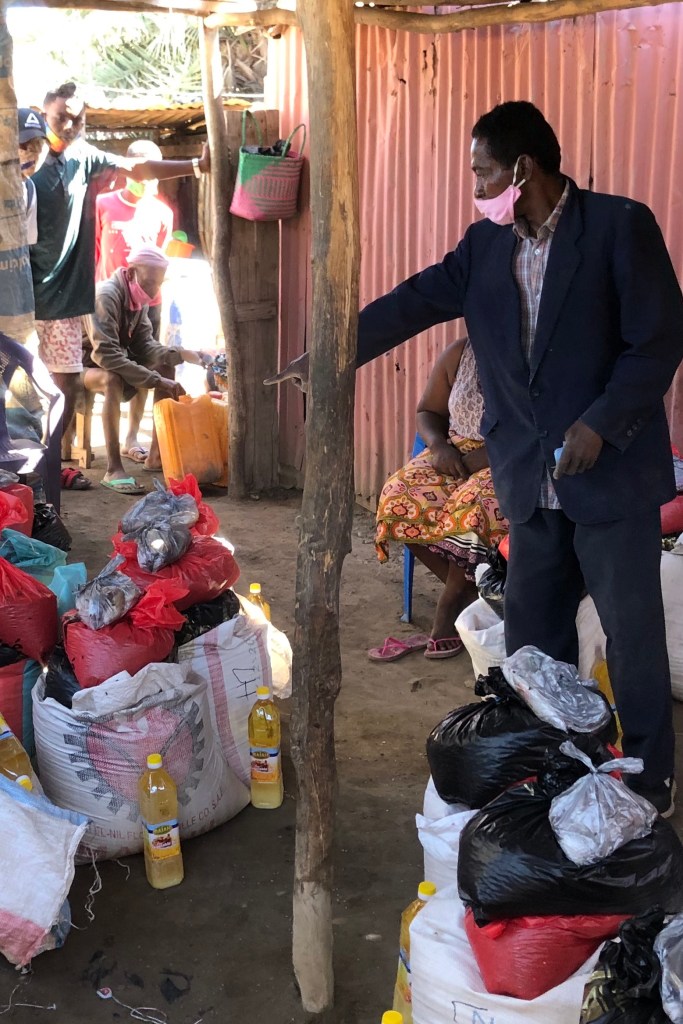
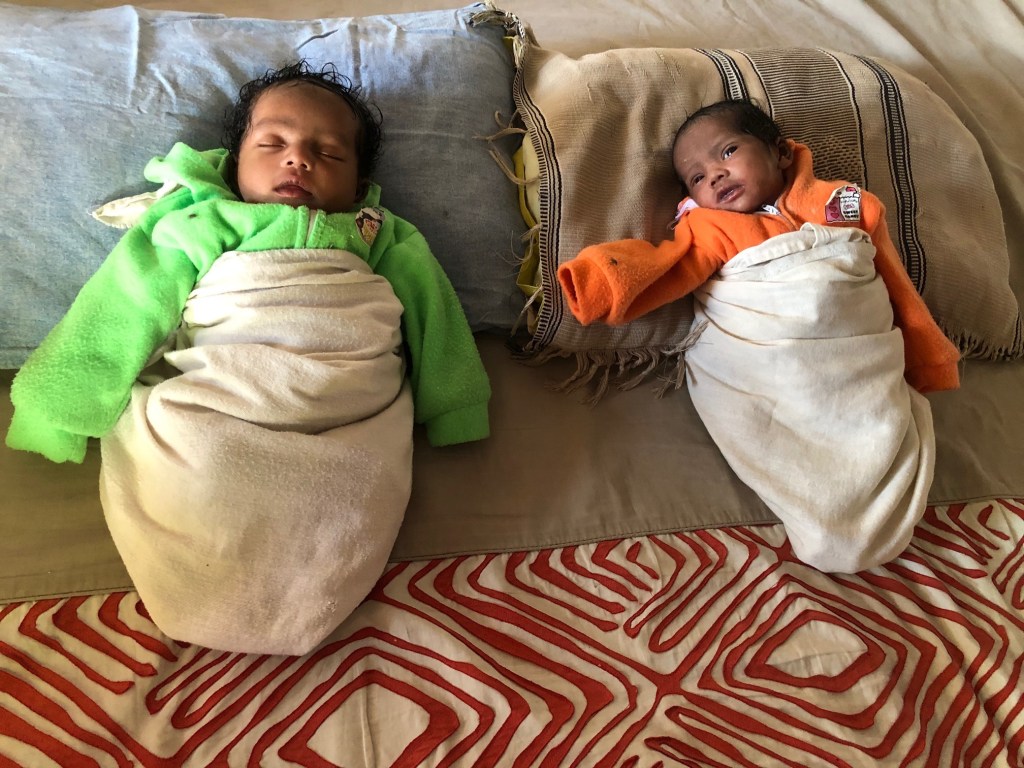
Our friend Manoely called us one morning last month with some news. Our church has several outreach groups around our city (called “cell groups”). Twins had been born to a family in one of these cell groups. This was good news, but sadly, their mother died during the birth. This time of COVID-19 has been very hard on many in our city. This family knew they could not care for two newborns without help. They took them to a local Catholic center that receives orphaned children. However, the center couldn’t help them—they have already devoted all their space and resources to caring for COVID-19 patients. Bravely, the family took on the daunting task of caring for the children. We were in the middle of a food distribution at that time, and so our church decided to include this family in the distribution and send their portion ahead in order to help them as they began caring for the babies, as well as burying their daughter. The father, mother, and younger sister of the twins’ mother are the ones caring for them.

Praise the Lord, this family are already believers, and have been for some time. The twins’ grandfather, in fact, is a hazomanga. This means that he is the one in his family who has inherited the role of go-between for the living and their ancestors. His position in the family is to take the family’s needs—rain, harvest, healing, marriages, pregnancies—to the ancestors to seek help. But, this man is a Christian. For a long time now, he has not performed his role. Instead, he leads his family in worshipping the One True God through Jesus Christ as go-between, or Mediator (1 Tim 2:5). He no longer performs sacrifices of sheep, cows, and goats to the ancestors.

Rather, this grandfather, his wife, and his young daughter are making incredible daily sacrifices of themselves to care for these precious children. Please pray for them! Pray for the health of these two sweet babies—Lucius and Lucia—and for them to grow. Pray for comfort for this family as they’ve lost their daughter. Pray that they would get the daily rest and food they need. Pray for the perseverance of their faith, that they may continue to trust in Christ for provision and not in their ancestors. Pray for wisdom for Manoely, us, and our church as we continue to help them. 

But You Yourself have seen trouble and grief,

observing it in order to take the matter into Your hands.

The helpless entrusts himself to You;

You are a helper of the fatherless.

Psalm 10:14

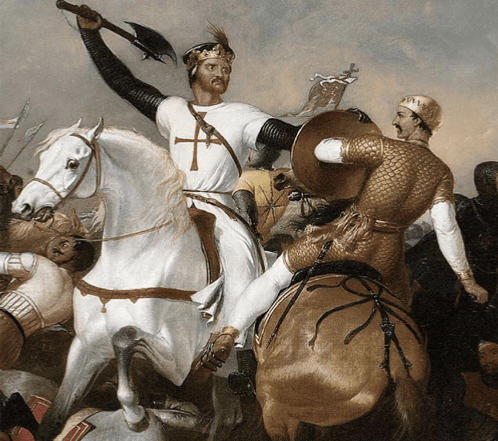
Crusading

Teach me death
Is not death
But a door to glory.
Make my life a museum 
Of holy acts.
Spur us on 
Not in rash or rage but 
Through your consuming blaze.
 
Pain is not pain but 
Feeling your scars
Tracing the path of those furious nails
That fury soon swallowed
And turned to fuel
By which we fight
Not further and higher
But tumbling,
a righteous cascade 
that bows ever lower,
bleeding through the bowels of earth’s hell,
not slowed by position or rank
ambition, rather, dispelling that novel
and ancient myth of progress
by constant condescension—
lower and lower
through the bottom of hell
expelled
yet promoted into beatific 
vision. 

Friday Family Update: Birthdays and Busyness

This month has been busy! The distribution finished well—praise the Lord! We are so grateful for the selflessness and tireless effort of the pastors and leaders of the Toliara churches as they cared for their communities. 

We’ve continued our documentary-watching this month with an excellent one about the Civil Rights Movement: Eyes on the Prize. It’s long but has been eye-opening and very helpful for us.

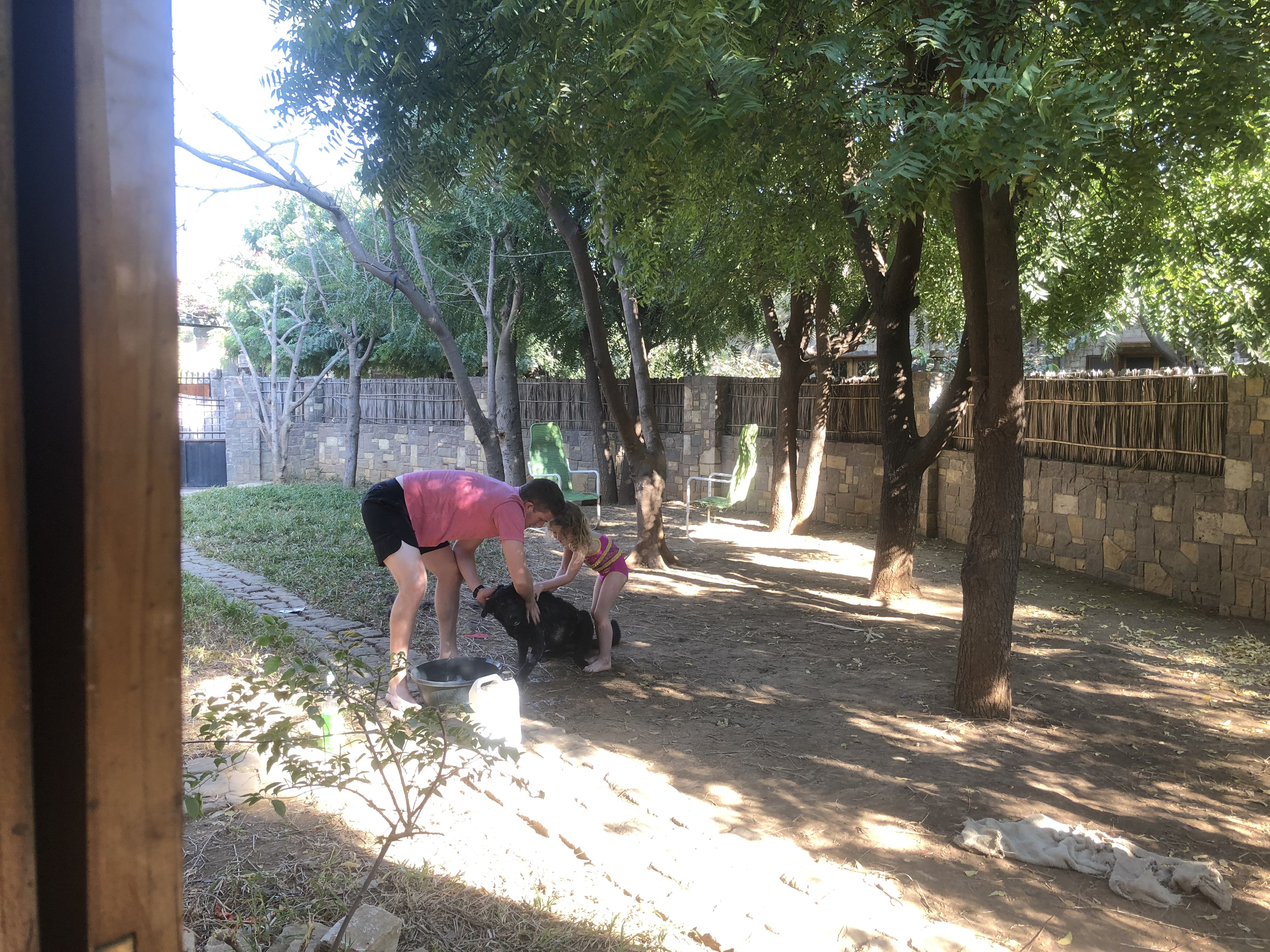
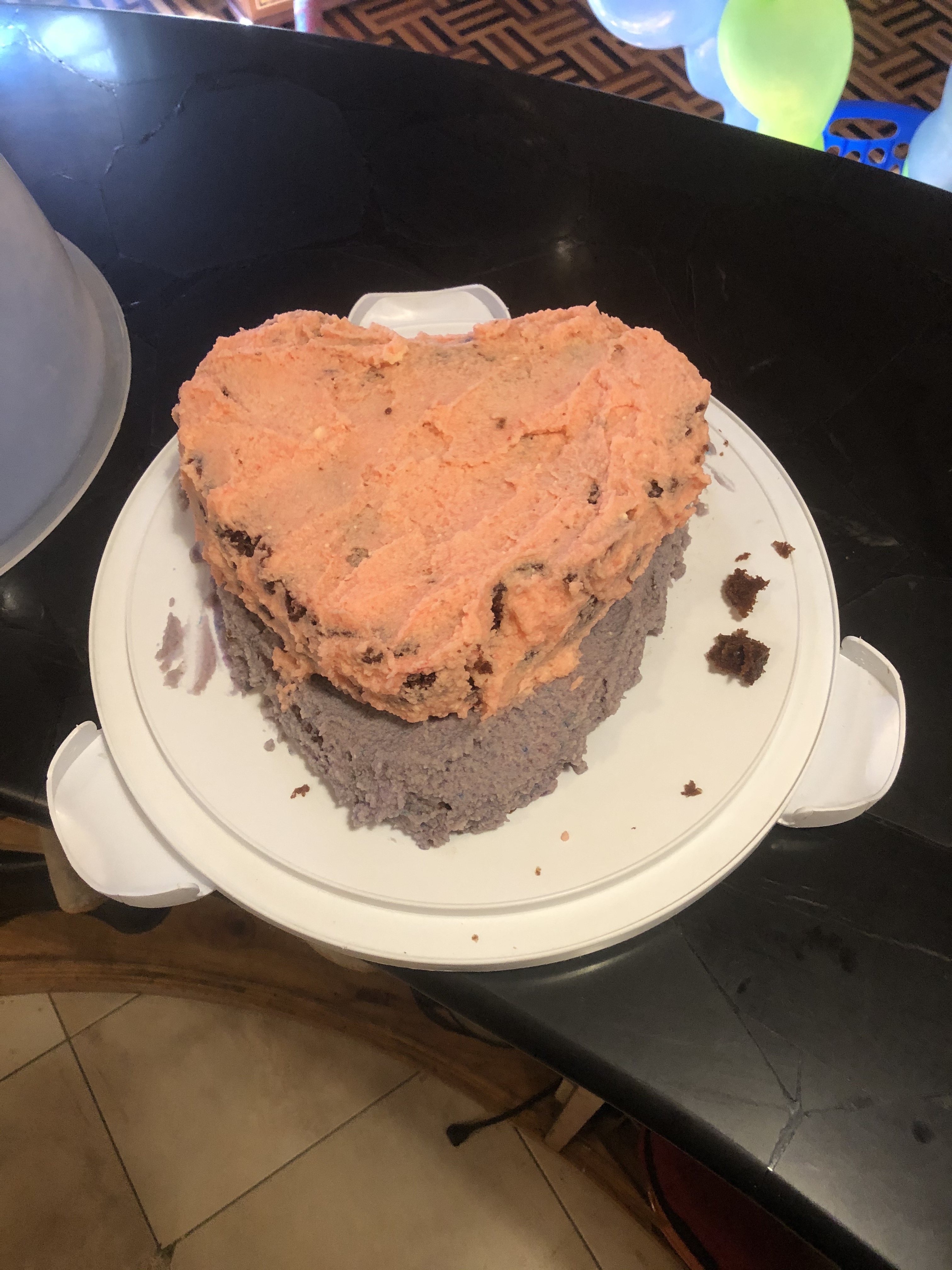
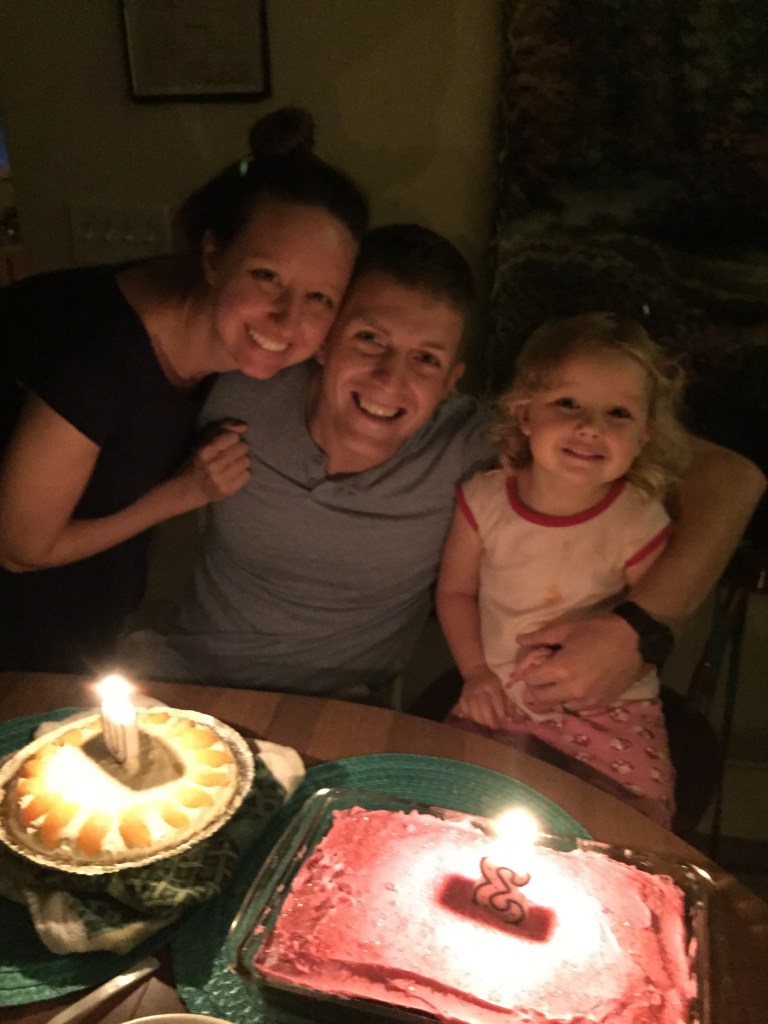
We celebrated Chyella’s and Nathan’s birthdays this past month! Chyella enjoyed some play time with friends, and also helping Daddy wash the dog on her birthday! To celebrate Nathan’s birthday I ended up making a coffee cake that was really over-the-top . . . we barely made it through! 😉 

Jairus now has four teeth!! And he has already lost interest in crawling, and now is pulling up and cruising all over the place. He’s excited to get movin’ to keep up with his sister! 

This month our landlord decided to tear up all of a certain type of tree in our yard. We’re very glad, because these trees carry caterpillars . . . which, we were surprised to learn, are not super cute and cuddly but actually cause lots of itchies! We’ve gotten lots of beautiful new trees, and new grass will be coming in soon! The weather is starting to turn warm here, so we’re looking forward to planning some time away in the next few months—at least a beach trip! 

Recipe Thursdays: Orange Pie

My dear friend Ashley and her mom gave me this recipe years ago, and it has become Nathan’s favorite pie for his birthday. He loves that it’s so light and cool—especially when we’re in the States on his birthday and it’s hot. This year, we’ve been enjoying the cool weather in Madagascar so much that he asked for a different dessert for his birthday: coconut cream cake. Yum!! 

But still, these Dreamsicle-reminiscent pies are a family favorite! We have to use lots of substitutions when we make this here in Madagascar: no pre-made cool whip, no sour cream, no canned mandarins, no Tang. But, as long as I bring home plenty of heavy whipping cream it all works out! 

The other trick is to be sure to puree the whole oranges I use. One year I didn’t and we all had achy teeth from biting into frozen orange slices! And then of course there was the year I WAYYYY overdid the Tang substitute I was using. I’ve got a very high threshold for sourness, but everyone else eating the pie was struggling 😉 Live and learn, right? 😉 

Hope you all enjoy this fluffy, refreshing pie! 

Sissy and Ashley Grisham’s Mandarin Orange Pie

Ingredients:

  • 2 Graham Cracker crusts
  • 1 can Eagle Brand (sweetened condensed milk)
  • 1 can Mandarin orange sections
  • 1/4 cup orange instant breakfast drink (like Tang)
  • 1 16 oz container sour cream
  • 1 8 oz container cool whip

Directions:

  1. Mix Eagle Brand and instant orange breakfast drink powder.
  2. Add orange sections.
  3. Whip with wire wink to break up and incorporate sections–leave tiny bits.
  4. Add sour cream and softened cool whip.
  5. Pour into crusts and chill.
  6. Garnish with several reserved Mandarin orange sections.

JENGA

Everyone scrambles to the top 

of the JENGA blocks

and tries not to blow away

(which is hard for a husk of a human hollowed out one grasping handful at a time).

But the howling wind atop the towers cannot topple them. They

Are held down by a lightless power, 

A gum-like goo stuck to their shoes that creeps up their legs to their

Heart, inflates them like a balloon.

But before their heads explode with the stuff

They scream, “We will never be finished.

All is never enough.”

Meanwhile below,

Level 0 of the JENGA block tower,

The Have-Nots are having their way—hammering away at the foundations—

giving chaos its way.

A little while now and the big shot bobble-head

Will burst

Raining his sick ambition down 

The Have-Nots will have their fill and –that not being enough—will

Devour each other on their way to the top

Still.

And as a new wave scampers up the tower,

Feeling their chests inflated and a certain 

New grip in their toes,

The blocks will shift and the structure buckle

And the tower will slowly go.

Except for the Littles.

So small and unimpressive, bracing each other, back to back,

They hold the tower barely standing 

About to crush the masses.

The Littles are hollow too,

Gutting themselves long ago, but a song

Echoes from inside them,

Stretching out from their cavities, refracting endless empathy

Singing 

Calling.