Avocados here in Madagascar are huge! And beautiful! We love that we can do homemade guacamole as long as avocados are in season.
I’d love to hear your recipes for guacamole, especially if you’re Hispanic and / or from anywhere where guacamole is a part of your home culture! I’m an amateur, but I love this tasty dip as a topping for taco night.
Here’s how I do it:
2-3 large avocados, mashed (set aside pits)
1 tomato, chopped fine
½ small onion, chopped fine
½ TBSP vinegar
½ TBSP olive oil
Salt and pepper to taste
½ cup of sour cream (optional)
Just mix and mash all the ingredients together with a fork or spoon! My sis-in-law likes to add the sour cream (or we use plain yogurt here in Madagascar), and this addition definitely makes the guacamole creamier.
Can you see through the space age
empirical blockade
we swallow like koolaide and die?
Reaching the moon we let go of the sun for nothing
but comfortable living room sets.

Mechanical facade
Wizard of Oz behind a steel curtain
shatters like glass and we cut ourselves
bleeding out on an IV leech,
bleaching our hearts into pure benign sterility.

Spongy butts and petrified brains―Man!
What a science fair we make.
But we're going places behind our great walls
and slowly dying behind them.
So we set our places and smile our faces
preparing our five course fine dining oasis.
All we need is candle light
to enjoy the progressing grey.
February is off to a great start! We’re still in the midst of hot season here, so trying to beat the heat and continuing to pray for rain for our area.
We’ve started a two-week training this week, welcoming leaders from across the southwest. Pray for this group as they learn and grow and serve!
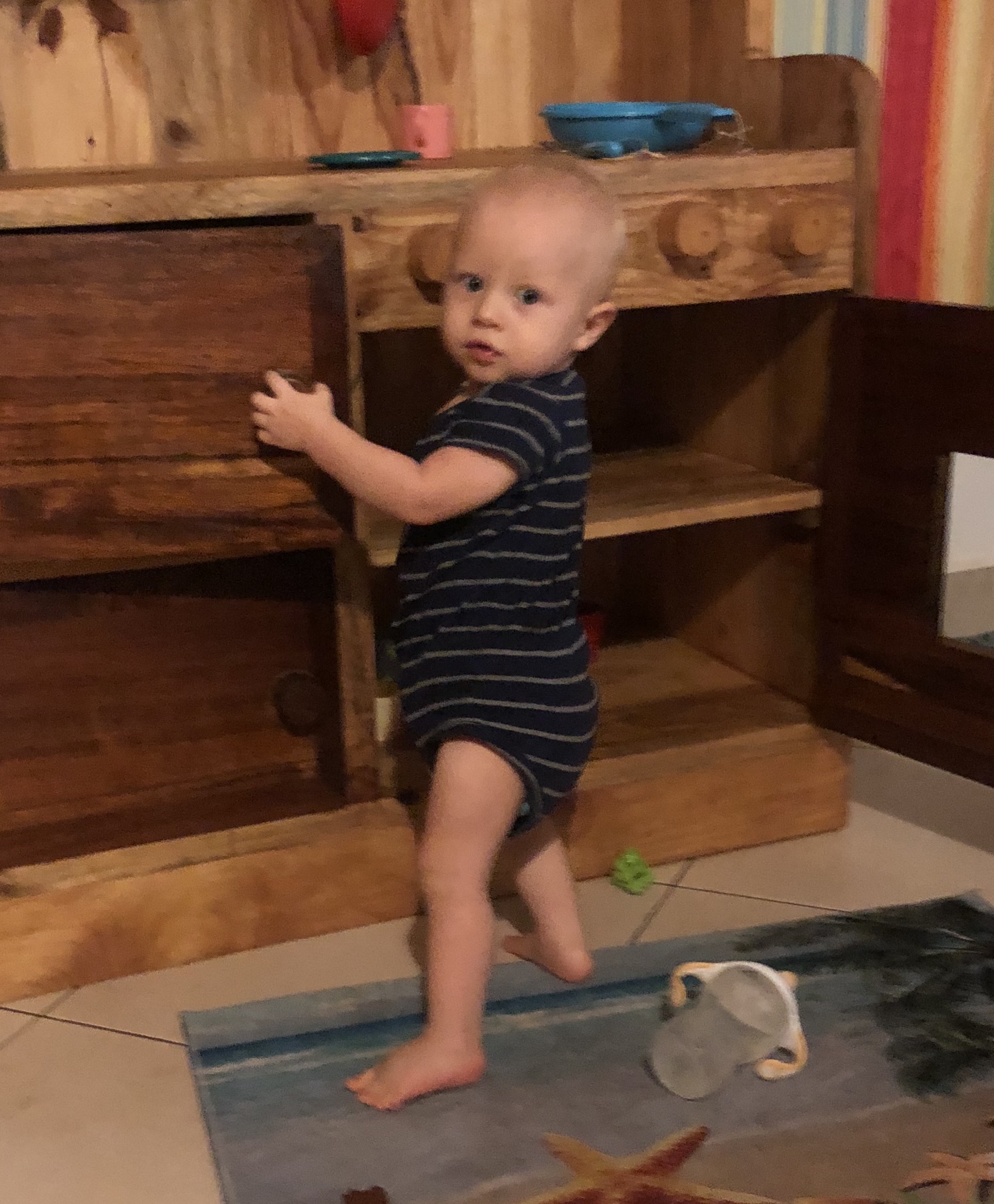
Chyella is still loving school and loving on her friends there! We’re also enjoying a new children’s book in French each month through a subscription service the school runs. And, Jairus is walking!!! He’s super proud of himself as he wanders around the house! 🙂
Nathan and I are enjoying taking a class this month by Be the Bridge for white people wanting to learn about racial unity work. We’re learning a lot!
We just sent out our monthly update, so email me if you’d like to receive it. I’m attaching it here as well.
Chyella is still loving her French preschool! And we love it too–we love that she can make friends with children from many different places, and that she can learn a new language too! We also really enjoy doing “worksheeps” together at home on off-days, so this month we’re supplementing with some Black history month resources! If you have ideas or resources, please share as well!
Here are some fun animated Black History Stories as videos for preschool age. They’re from Goose Goose Duck YouTube channel, and it seems they have lots of fun videos I want to check out!
I was also able to download free printable coloring pages highlighting famous African-Americans on ScribbleFun. Looking forward to learning with Chyella many of these historical Americans’ stories this month! There are many other great resources–here’s a link to lots of ideas–but most of these are for older kids than preschool.
Our organization has also created an app to share new initiatives and current stories of what God is doing around the world. This app has been promoted through many of our SBC churches–feel free to download it here. A few months ago, our organization partnered with Barna Research Groupto do a study on the Future of Missions. Barna and others then shared much of what was learned through the app. This month, starting February 7th, our organization is highlighting many stories of African-American missionaries who have served around the world and throughout history, including some children’s resources! Check out these stories through the app!
We’re so grateful for these initiatives and look forward to learning a lot this month–both with Chyella and ourselves as adults! At the same time, as a couple, we have also learned a lot this past year about the racism in our history in the SBC, and, honestly, in our own hearts. We absolutely want to celebrate the contributions of African-Americans to our denomination and organization, and any progress we are making toward greater racial equity. But we also want to acknowledge that we still have a long way to go. This Christianity Todayarticle talks about the low numbers of African-American and other minorities serving as missionaries with our organization, compared to the numbers of those minorities in our Southern Baptist churches. This IMB.orgarticle discusses why it matters–the great loss to our organization and its impact around the world without more minority voices and leaders.
Each month we want to highlight Malagasy believers serving Christ across the island! We are so blessed to know, learn from, and pray for these friends.
This month, meet Grace and Lalaina. I (Tessa) first met Grace when I came to Madagascar in 2008. She and her family were part of the Malagasy Baptist church I went to. She has a unique kindness and sense of humor—she is a natural big sister to a big, fun family, and carries that spirit with her into other relationships—she definitely was always like a big sister to me as I tried to learn language, understand culture, and make friends. Her husband Lalaina is a gifted minister and leader for his family and the churches he serves. They have three beautiful children that Grace is homeschooling.
Grace and Lalaina have always had a passion for missions. In the last few years, this passion has honed into a unique vision for care for other local missionaries and pastors and their families. Grace and Lalaina have pursued this vision through creating their ministry: Salanitra. Salanitra provides a place for ministers, missionaries and their families to come for retreat, counseling, sabbatical and vacation. They have a center with accommodations. They also provide care as needed for those who come. All of this is provided free-of-cost, as much as ministry funds allow, to pastors and missionaries who visit. In addition, their center is working toward being self-sustaining both in terms of food and energy. They are working on a farm on the property—they have chickens and geese right now—toward this goal; they’re hoping to branch into more livestock soon.
Please join us in lifting up this family with their heart and efforts to serve the Malagasy and the global church in this way! Here are some specific ways you can be praying for them:
Pray for Grace and the kids as they homeschool—this is a big challenge!
Pray for Grace’s health—she’s currently seeking some treatment in another part of the island.
Pray for the Salanitra center as they are having a problem with their water supply. This problem, in turn, affects their farming and efforts to reach self-sustainability in food and energy.
Many families already want to come for retreat, but space and funding is limited. Pray for the provisions and scheduling for these missionaries and pastors seeking rest, care, and refreshment.
Pray for Grace and Lalaina and their family to have patience and wisdom for each challenge that arises.
Hello, it’s me again, the Traveler, and I have a story to tell you. It’s a story from a book of holy writings called the Bible. This book is a collection of many stories, and they have all been brought together to tell the whole story. It is the story of our ancestors, and our story. Let me tell it to you.
This story is called, The Calling of Moses . . .
The Calling of Moses
It came true what the Prince of Creation had said to Abraham: those from Abraham’s heart, his tribe, settled and grew. But, these from the tribe of Abraham, at that point, did not stay in the land given to Abraham by the Prince. Instead, the settled in a land inhabited by other people. And they suffered in that land, enslaved and suffering badly. Just then, the Prince of Creation made a plan to take them from there, leave that place, and finally go home to the land given to Abraham. So he chose someone, one person, to lead them there. Moses is the name of this person.
So there was Moses. Then one day, Moses went to shepherd out there. So there he was out there, shepherding. And when he was out there, he saw a bush in flames! But the bush did not make any ashes, it did not turn to ash at all! So befuddled by all this was Moses, he went and visited this bush.
A voice, then, spoke from out of that fire there, “Mosesy! Mosesy! Slip out of your cow-hides there. This is holy ground.”
Moses took off his cow-hide sandals. Moses got closer to the plant. Again, there was a voice, “Mosesy! You’re going to be sent by me. You will go to the land of Egypt where the lineage of Abraham is suffering. They are ensalved by that land. And you will lead them to get them out of there, to not be there anyone. And you will lead them to the land I gave to their ancestor . . . that’s Abraham.
“Aha,” said Moses. “Look, I, even though you’re sending me to go there, those people don’t miss the sound of my voice. They won’t take me seriously, but this is what they’ll say, “Hey! What God and from where said all this to this guy? I’m a person who doesn’t know how to talk. So you just pick another person.”
“Aha,” said this voice. “You look, I am the Prince of Creation who is said to have always been from ages past. That’s me. I am the Prince of your ancestors. Abraham’s God. Isaac’s God. And if you speak this, my name, to them they will be afraid and they will believe what you say. All this that you’ve said, like, ‘I don’t know how to talk.’ Look, I made the mouth. And I will put want I want to say in that mouth of yours, and the same thing will be done to the mouth of your brother, Aaron. You two guys are gonna go over there. “You all,” said the Prince, “I will be send with three signs.”
So then, after all that, Moses left and met with his brother, Aaron, took him with him and the two guys went there. And when they arrived there in that town, they gathered the tribe of Abraham there. They told them the story of what God had said, how he would get them out of that land, and go to the land the Prince had given to Abraham. And, they also did there, those three signs. After that, the tribe of Abraham was good and scared and they believed the Prince and trusted Moses.
Then, the tribe of Abraham was happy and thanked the Prince and they were saying, “Would you look at that! God sees our suffering and he’s gonna get us out of this suffering to the land there that he gave our ancestor Abraham.
And that is the story taken from the holy writings, and it’s all true.
Let’s start off the year of recipes with one of our family favorites: homemade tortillas!!
When I was in college (and arrived in Madagascar), I could make a very limited repertoire of meals. Noodles with red sauce (from a jar), scrambled eggs, grilled cheese . . . honestly that was about it.
Thankfully, some sweet American ladies living in Madagascar started teaching me how to cook. One was Kristi, and this is her tortilla recipe.
Homemade Tortillas
all-purpose flour – 2 cups
oil – ¼ cup
salt – 1 tsp
warm water – 2/3 cup (as needed)
Mix flour, salt, and oil in a large bowl with a fork. Add water slowly, stirring with a fork, then with one hand. Water should be warm—not hot or cold. When the dough is ready, it will pull together away from the sides into a ball. Be careful not to add too much water. Do not overmix.
Once dough is in one ball, divide into smaller, golf-ball-sized balls. Begin heating a non-stick pan on the stove. Roll out each ball (or use a tortilla press!). Cook tortillas one by one in the hot pan, flipping, until small brown spots appear on each side. Tortillas are especially good / ready / right if they blow up with big bubbles. Serve warm.
This quickly became one of my weekly staples. When Nathan and I got married after we moved back to the USA, I tried to switch to store-bought tortillas. Nathan came home from work one night, and I had fixed tacos and heated tortillas from the grocery store. When he saw them, Nathan’s face fell. He asked me, “You just didn’t have time to make the homemade ones?” I explained that the ones from the store are a lot easier. “But I’m sure it’s cheaper to make them yourself,” he suggested.
I laughed–“Not really! This pack of 30 is about three dollars!” But Nathan was just so sad about it–and let’s face it, the homemade ones are delicious!–so I always made our own after that 😉 And then my sister-in-law blessed me with an electric tortilla press . . . definitely made the process faster and cleaner!
Enjoy this recipe y’all! Fix ground beef or chicken with your favorite spices, chop up some fresh veggies for salsa and guacamole, grate some cheese, and put out a large container of sour cream . . . yum! Have fun!
Tomorrow the United States inaugurates a new president.
If you’re anything like me, this last election cycle has brought out a lot of questions. I’d love to hear yours. Here are some of mine:
What is a Christian’s role as a citizen of a country?
What does the Bible say about abortion?
What does the Bible say about refugees?
What does the Bible say about the poor?
What does the Bible say about how a government should be run?
Is there anything inherently Biblical about representative, democratic government?
What is the role of my vote versus my responsibility to serve my community . . . and what is my community?
Does the Bible actually say anything about voting in a democracy?
And, finally, what in the world is going on? 😩
Maybe some of you share some of these questions. Actually, we’d like to try to address some of these over the next few months, as we’re trying to find answers ourselves. But today, I’d like to hone in on this one:
Does the Bible actually say anything about voting in a democracy?
I’m still a little baffled by the examples I hear from some comparing our current president to a biblical king used by God. In 2016, it was Nebuchadnezzar. Recently, I heard comparisons to Cyrus or even King David. Notwithstanding that only one of those kings was actually the from the same country as the people of God, and not enslaving them, my question, again, since I heard this line of reasoning is, “What does the Bible actually say about voting in a democracy?”
Our government is by representation, which means we don’t have kings who inherit power, or are appointed by God as David was, and so far we don’t have political leaders from another nation and culture who conquer our nation, deport us, and enslave us, as in Nebuchadnezzar.
So does the Bible actually say anything about representative democracies? Certainly there are verses we could appeal to about how Christians should act. But what about an example of voting in the Bible? The following story is actually something I was looking at and wrote up in 2016. At risk of adding fuel to the fire of the political ire at the time, I never did anything with it. Same song, second verse, this past year. But now that the votes are cast, and especially after what the last few weeks have held, I’d like to share it.
The story is, of course, a Bible story. Here in Madagascar, we turn to Bible stories to try and understand what’s going on. This particular story is from the book of Judges (chapter 9), and in my 2016 search it was the closest thing to voting in a representative democracy I could find in the Bible.
God’s people electing their own king in 1 Samuel chapters 8 – 10 might be another example but even then God selects Saul and puts him forward for the people’s approval. Abimelech seems to be the best example of something close to democratic election.
The Story
Abimelech was from a privileged family. His name means “my father is a king,” because his father, Gideon, had led Israel and been treated like a king. But Abimelech was the forgotten illegitimate child. Until, one day, at a time in which Israel is being led by a multitude of privileged aristocrats, Abimelech campaigns to lead them. His strategy was careful, his message simple: (1) Better for one to lead than many—a strong leader can cut through the bureaucracy and get things done. (2) Better the devil you know than the devil you don’t. Abimelech uses his influence to persuade the citizens that he is “one of them” in order to get their vote.
But the citizens are going through a rough time politically, so they listen to the outsider. He convinces them he’s a better option than their current government because he is really one of them. So they give him religious blood money (taken from the temple), he quickly gathers other evil-minded people around him, and promptly goes and kills off all their leaders, 70 of his half-brothers. What a leader.
But one of the brothers escapes from the slaughter and decries this new leader’s actions. This guy tells a parable that reveals that while their government had problems, the citizens knew Abimelech was a bad choice. Strikingly, this guy prophesies that the citizens have elected a worthless man who treats the lives of others as worthless—and they will be held responsible for their choice.
For a while it looks like the prophet’s wrong. Things go for fine for three years. But then God brings justice. The citizens decide they actually don’t like their leader now that he’s leading. So they try to get him out of office. That goes poorly. Abimelech starts a war, razes a city, and burns the citizens inside the temple. Like I said, fun guy. Then, while trying to do that same thing to another city, Abimelech is maimed by a woman with a millstone. So God brings justice on Abimelech for his destruction and justice on the citizens for electing him. As Bible scholar, Daniel Block, sums up, God gives the people the leader they deserve, and Abimelech what he deserves (Block, 335).
There is so much in this story, but I just have three questions as we read this story:
What do we learn about people?
What do we learn about God?
What do we learn about voting?
What do we learn about people?
People are blinded and corrupted by what they want.
Now there is obvious unrest in the community. How do we know? The parable describes leaders who act too good to help. The citizens are also willing to get rid of their leadership by paying off their illegitimate, distant relative—which is still pretty shameful in today’s majority cultures. It means these people really wanted something to change in their leadership—enough that they were apparently completely blind to what Abimelech really was.
In part this is because the citizens treat the lives of others as worthless. People who do not respect all life often usher in death. They pay a shekel apiece for the lives of the 70 brothers at a time when you had to pay 50 shekels to buy someone’s life back out of slavery or poverty (The IVP Bible Background Commentary: Old Testament, 258).
And with the measure they use it is measured to them (Matt 7:2). Those who do not respect life (unborn, weak, strong, the dying, black, Muslim, etc.) create a culture of death. These citizens mistook hubris, a lack of respect for life, and an insatiable lust for power as the ability to get things done.
What do we learn about God?
God is unfortunately absent in this story—not because he’s not there but because the people don’t care about him. Still, justice is meted out.
God lets his people face the consequences of their decision.What can we say? the people want what they want. So God let’s them have it. And chaos ensues. God basically lets Israel destroy herself (Block, 309).
God always wins; His kingdom always stands. In different ways, both Abimelech and the citizens were only using each other to get their hands on power. Abimelech wanted to be the ruler and the people wanted a new form of government. Both completely ignored the fact that God rules over all, and it cost them their lives. “In the end Abimelech’s egomaniacal ambition must yield to the kingship of God” (Block, 334).
What do we learn about voting?
God respects the votes of citizens, but allows voters and elected officials alike to reap what they sow.
The Hebrew wording draws out the idea that the people of the town are leaders able to make decisions for the community. Or, as the NIV translates it, they are “citizens.” These citizens have the right and power to elect a leader (king) for themselves (Block, 313-14).
What we see is that in a setup where people are electing a leader to make decisions for them, those people are held responsible for their vote, especially for the brutality they invoke. In the context of this story, we might say they are held even more responsible when they know they are choosing to be led by a ruthless man.
Again, these citizens make a bad choice to solve their political situation. The parable shows that for sure there were already problems with Israel’s government leaders. It’s not like those before didn’t have their own issues. But it shows God outright rejects Abimelech’s style of leadership (Block, 321).
Regardless of how bad the government is, these citizens do not take their grievances to God. Instead, they elect a ruthless man who is contributing nothing to society or God’s kingdom . . . but he does think a lot of himself (Block, 318).
Old Testament scholar Daniel Block (from whom I have pulled from throughout) has this priceless quote:
“ . . . persons of honor engaged in constructive activity have no time for political agendas. They are too caught up in serving humanity, and so the rule often falls to the despicable elements of society. Third, rulers have a tendency to desire power for the worst reasons—their own narcissistic self-interest. In order to gain power they are often forced to offer promises they cannot fulfill. Fourth, in the words of a modern sage, people tend to get the leaders they deserve. Jotham’s fable is not only a polemic against a certain kind of kingship; it is actually directed primarily at those who are foolish enough to anoint a worthless man to be their king.”
Daniel Block, Judges-Ruth (NAC; Nashville: B&H Publishing, 1999), 321.
Foolish votes in a democracy have consequences. We should vote in the fear of God, who rules his kingdom with perfect justice and watches over the lives of all. We will be held responsible for who we choose to represent us.
This past week at the Capitol shows very clearly the kind of president we voted for (and when I say we I mean an overwhelming majority of evangelicals) and the kind of violence and shame he has ushered in . . . thanks in large part to evangelicals. We must take responsibility for that. That does not stop with our vote.
Our form of government is built on the principle that the voter is in charge. As Christians, it is our right and responsibility, no matter who we voted for, to use our voices, time, and resources in the fear of God, for the sake of all life, and putting others before ourselves. The issues facing our nation are complex, and aren’t solved with just our votes. We must intentionally invest ourselves in the issues we voted on, learning from both sides–that’s what it means to be in a democracy. We have to sow better things or risk our choices crashing down on our own heads.
Every day, same plan,
same game every day:
Eat a little better, work a little harder, get a little smarter, make love a little longer.

The internet algorithms got us figured out,
a clip, an email, a picture or a twitter
la petite mort
a thousand little deaths has our
veins thumping for another. But don’t bother
that your life is stringing you out.

You say I don’t have time any more
But it’s time to be holy
It takes time to be holy.

Don’t just hide in the garden with Jesus.
He’s out here walking the streets.
We’ve got to go with him through the scum and the mud
use our skin as collateral.
Let him cut through the media hum
buzzing and fuzzing up your brain.

We’ve got to feed on His Word instead of
feasting on our feeds.
Keep up his pace, steady feet,
steady heart,
steady faith.

The more we look at him, the more we’ll look like him.
It’s time to be holy.
Take the time time to be holy.

We keep calm and carry on as we sail on through this storm
Even though Jesus is strutting on the water.
Keep your eyes on him as you sink
beneath the waves
he’ll pull you down through the bottom
into fountains of love.
The dog was barking again. It was another beggar outside. She’s cripple and a widow with six kids and her elderly mother to care for. She’s the third one in the last hour.
As I’m talking to her my phone is franticly buzzing in my pocket. It’s someone else calling for financial assistance. I’ve already gotten calls about five other calls this morning from other people with problems. There’s the guy who lost his job, the farmers who don’t have seed to plant, the in-debt mom trying to pay for her kids’ schooling, the twins whose mom died, the guy who lost three family members in one week, and a seemingly never-ending stream of people who are sick. They all need my help.
And do you know what I’m feeling at this moment? Annoyance! Oh sure, there’s a lot of pity. I have shed my fair share of tears over people here. And only due to the Spirit of the Living God bound to my own is there a “but for the grace of God go I” conviction that I should help.
So I help. But do you know what? Only a few minutes after I finish with the crippled, widowed mother of six, the dog starts barking again . . . only this time I don’t go out. I’ve had enough. “I cannot do this,” I think. “I cannot help everyone.”
It reminds me of a story Jesus told in Luke 11. . . Let’s say you’re in bed one night. You’ve had a hard day, you’ve finally got the kids down and you’re finally asleep in bed. Then, around midnight, the dog starts barking and someone starts pounding at your gate. You look out the door and you see your friend. He calls to you and says, “Hey man, I just had some family stop in unexpectedly. Everything’s closed, do you mind if I borrow some food from you to host them with?”
What are you going to do? asks Jesus. Nothing! The kids are in bed. You were asleep! You will say, “Get out of here, man! I can’t help you right now!”
But you know what? says Jesus. Even though you won’t help him just because he is your friend, if he keeps knocking on the gate and making that dog bark, you’ll help him with anything he needs just to get him out of there!
Man, Jesus knew people well!
Then, Jesus says the famous words, “I’m telling you, ask and you’ll get something, look for it and you’ll find it, knock and the door will be opened to you. Everyone who asks receives, everyone who looks finds and everyone you knocks will have to door opened to them. Dads, if one of your kids asks you for a sandwich, are you gonna give them a scorpion instead? If they ask for a cookie are you gonna give them a copperhead? No! And you guys are terrible fathers! But even so you know how to give gifts to your kids. So how much better do you think the God who created and keeps the world running is at giving you what you need, especially his own, life-giving, empowering, Holy Spirit?” (Luke 11:5-13)
Let me just confess. Most days, I am not a very good father. I am one-hundred percent more like the guy who won’t be inconvenienced until you annoy the living daylights out of him. Again, one of my primary emotions these days is either exasperation or annoyance. Thank God he is not like that. He has the audacity to say, “Eh, bother me whenever you like. Everyone . . . EVERYONE is welcome. I’ll always give, always find you, and always open the door to you.”
Me writing this and most of you reading this have so much historically unprecedented wealth and security that it has taken a year like 2020 to make me realize that every single one of us wake up every single day vitally in need of God’s help.
In years past, even when things were bad here, I could review the people in my life and unconsciously think, “Whew! Everyone else is doing ok.” Well, not so this year. Literally, there is only one person I know right now that it does not weigh me down with grief to pray for them. This year has been hard for everyone. And these words literally came out of my mouth yesterday. “It’s like everyone I know needs God to help them in some major way.”
Me writing this, and most of you reading this, have so much historically unprecedented wealth and security that it has taken a year like 2020 to make me realize that every single one of us wake up every day vitally in need of God’s help. The fact that one of my primary responses to the suffering around me is annoyance and self-pity is proof positive that I need Jesus’ help (or I will continue as a pretty terrible person). We will never know the pain and suffering that people in a place like Madagascar deal with day to day. Yet still, if God does not help each one of us, we will die without his life-giving Spirit in us. We think social distancing is bad; we’re all in danger of being separated from those we love and the One loves us Himself, if we do not ask God to help us.
It’s true, I get overwhelmed with all the people who need my help. Especially because, as Jesus points out, I’m not all that special. But he is. And I need his help. We all need his help. And thankfully, because he’s not like you or me, he’s never annoyed by that.





 Baker Storycraft