God Gives the Growth

IMG_2485As some of you know, we had a sick spell back in October. Well, let’s face it, we get sick a lot here. The one in October, though, will stand out in Nathan’s and my memory as our first new-parent-baptism-by-fire-style-baby sickness. Parents, I know y’all have stories. We’re talking throw up in the bed, diarrhea down the legs, every few hours of every day for more than a week–three baths a day–no clothes–you know what I’m talking about. It was not pretty, and it was not fun.

And it was scary! My little baby was sick! Our sweet nurses in South Africa were so patient with me as I daily updated them. They were incredibly supportive and gave great advice. Still, I felt so helpless as, day after day, she woke up still sick.

I prayed, y’all, constantly. I felt so helpless, so guilty, like there must be something I should do. But I knew that, no matter how hard I tried, I couldn’t make her better. I had no control over her little body and its responses. I couldn’t will her to heal. I knew this for sure, because if I could have, I WOULD HAVE.

Eventually, praise the Lord, she improved! I was so happy, so thankful, at first.

And then a funny thing happened. I forgot (?) my feelings of total helplessness, and I started thinking that I was doing something right–“Well, I added more protein; I’m sure that has helped,” “It’s a good thing I pushed her to drink that water–that’s helping.” Some of it was almost unconscious, but an overall feeling of self-congratulation–“We’re ok!”

Now, I don’t want to do too much naval-gazing here–of course I should feel relief, thankfulness–but I’m telling you, there was more to it, and it really was pride. When she was struggling, I was helpless and desperate for the Lord. But when she was doing well–i.e., when He was mercifully answering my prayers–I attributed this change to myself and my own efforts. Hmm. How does that make sense?

This realization actually mirrors something I’ve noticed in our ministry here. I have a tendency to do this same thing as we pray for our Mahafaly churches. When the churches are struggling–leaders have marriage problems, believers aren’t sharing the stories, they’re tempted to return to ancestor worship because they’re desperate for rain–I despair and beg God to work. I beg His Spirit to protect them, provide for them, strengthen them.

But then, when God answers these prayers, when churches are growing and people are being transformed, I find myself thinking that it’s because of us. We must be doing something right. We must be using the right tools.

Of course, we want to work hard and work well. We want to use “best practices,” and daily grow in competence in our work here. But the reality is that, just like I can’t make Chyella’s  body respond in health, we can’t make our churches grow strong and healthy. As Paul says, “One plants, another waters, but God gives the growth.” He is the One who changes hearts. He is the One who transforms minds. He is the One who uses us, weak and inadequate as we are. So whether our churches are struggling or they are healthy, may I never imagine that success comes from me. May I desperately seek His help in every moment. God is the One who gives the growth.
We Endure

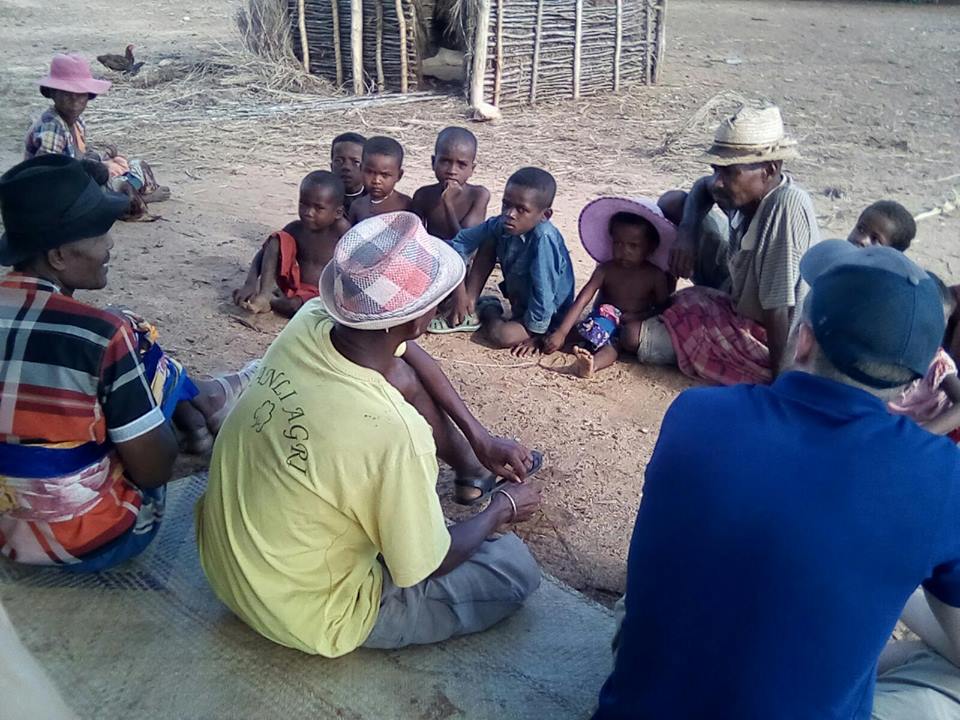
We’ve been helping facilitate an indigenous church planting training in northern Madagascar this past week. Leaning heavily upon our national Malagasy leaders, we’ve been able to share our experience sharing the gospel, teaching young Christians, and starting churches among the Mahafaly. Tessa and a national partner, Edia (who has worked on crafting Malagasy Bible stories with her for years now), have specifically led sessions on sharing God’s Word through storying in a way that is easy for people to understand.

It has been an extremely encouraging week leading up to Easter in many ways:

  • We’ve met brothers and sisters from many denominations who have been faithfully sharing God’s Word, teaching, and starting churches for years.
  • Others have shared how God has burdened their heart for the lost in their city, province, and even the entire island.
  • Over 100 people received training that we anticipate will facilitate even more excitement and practical next steps for reaching even more people.
  • Prayers have been lifted for numerous leaders, denominations, churches, areas, regions, nations, and God’s work across Madagascar.
  • Our Malagasy brothers and sisters have been and are ready to take the next step in owning the responsibility for reaching their people . . . even across the entire island.

As we went around sharing prayer requests for our different areas of service and churches, two ladies began sharing that they were about to go home. But their home is a very closed Muslim country where there are not many Christians. These ladies had come to Jesus in Madagascar and now were returning home to their Muslim husbands and a very tough situation. They were very realistic about the challenges they would face.

But let me share the Easter sermon one of our sisters preached with her simple, but challenging, testimony. She said, “You know, it is very hard to convince Muslims [to accept Jesus]; even good works the Muslims can duplicate and even do better than us [Christians]. But they cannot endure. We Christians endure. As loving wives and Christians, we can endure. We will outlast their anger and resistance with the love and endurance of Jesus.”

Underneath all of our devotion and super-spiritual trappings, Christians are convincing because our faith is built on the bedrock of unbreakable endurance. We are filled with the indomitable Spirit of the God whose love could not let us go and whose life could not be cut off by death. That is the Easter story. So then we can love so much that it may kill us. We can literally give others everything we’ve got. Because we endure. Because he endured . . . outlasting even death and standing strong and resilient on the other side.

The love he poured out in his sweat and blood now runs through our veins and will punch us through this to the other side of reality, just as he did. I could see it shining through our sisters yesterday. It is yours today if you have given your life to Jesus and are following him. No matter what you are facing or will face because you are doing what Jesus says, you can make it through. You can endure. We will outlast the competition. We endure because of him.

The Bare Minimum

IMG_2477Our training before Madagascar challenged us to share the Gospel as a regular discipline. One teacher talked about how looking for regular opportunities to share the Gospel–with people we work with, or buy vegetables from, or send their kids to the same school as ours–is not something we do as missionaries, but something we do as Christians. We met a church planter in New York who explained that he tries to share the Gospel in the first 30 seconds of any conversation with a stranger.

I found all of this very challenging. I’ve never been what I would call a “bold witness.” Nathan is. He makes a practice of sharing regularly. He isn’t afraid to challenge people, and yet he does it in a winning and respectful way that people respond well to. They seem to feel heard and remain open to talking more. I’ve been trying to learn from his example and share more regularly, even if it’s a short conversation. For me, the hardest part is still starting: turning the conversation from the meat I’m ordering to the Gospel, from telling how old Chyella is to the Gospel.

I have noticed, though, that intentionality helps. At the end of last year, I had been sharing more often, and I found myself looking for opportunities, ready with questions to start the conversation. Through our trip to Spain and back to the US, I got out of the habit of sharing, and I’ve found it hard to start back again. Thinking of a question and engaging the person takes much more effort now than it did before. Noticing this change has been a good reminder–sharing needs to be a discipline, a practice, an exercise. The more I do it, the more natural it becomes.

If you’re like me, even reading this is intimidating, and brings an uncomfortable mixture of guilt and anxiety to your stomach. We’re terrified of being pushy, of offending someone, of seeming like an extremist. Here’s the thing, though. Paul writes in 1 Cor. 9:16 that preaching the Gospel is nothing to boast about–it is the bare minimum–it’s a necessity. What if I lived like that? What if the most important thing on my to-do list each day was to intentionally share the Gospel with those around me: family, old friends, new friends, strangers? Paul talks about another area where we are willing to put forth significant effort: exercise, eating healthy. This example doesn’t really resonate with me, because I hate exercise, but what about areas where I do work hard? What is it for you? School? Your career? Creative pursuits? But, Paul reminds us, these efforts are “perishable”–they won’t last. The effort we pour into others’ souls is eternal!

I want to give two ideas that have helped me, by way of practical advice to grow in this area. First, it’s helped me to have a question to ask–a simple, unoffending question. Maybe, “Do you go to church anywhere?” works in your context. Maybe something like, “What are your thoughts on religion?” Maybe both of these sound awful to you–think of one you’re comfortable with. Practice using this question to open conversations.

A great question that I’ve never had anyone object to is, “How can I be praying for you?” We learned a fun idea from a colleague in West Africa. Think about 3-5 ways this question will likely be answered–decisions, family, sickness, money, etc. Then, find a simple Bible story or reference that applies to each of these responses, and be ready to briefly share it as someone asks for prayer. And be sure to pray for them!

I’d love to hear your ideas and stories, too. Know that even here as a missionary, this is still something I’m growing in. Praying for all of us to be bold and winsome in sharing the hope we have!

Changing Culture, Changing Hearts

At the most recent meeting we also had in attendance a priest . . . or at least he should have been a priest. Here the priesthood is a family business, passing from generation to generation. But this would-be priest would be offering sacrifices that he knows Jesus completed with his blood. So when the old priest died suddenly, he had a choice: reject his family, his role in society and leave his village bereft of thousands of years of tradition, or reject Jesus as the one who made the final sacrifice.

28548477_1707939742559643_450792403_o

The last time Grant talked with this guy, he was praying through this, obviously, life-changing decision. We hadn’t seen him until he showed up at this meeting. He is not a village priest now; he is the leader of a church. The priesthood is dead in Kilimary. Jesus changed his heart, and through this one man a village and whole culture is changing forever.

(Side Note: This man’s knee was so swollen after their 12 hour walk that he could barely get around the next day. We tried to figure out a way to get him back in the truck, but when that wasn’t possible we gathered around him, laid hands on him, and prayed for God to heal his leg for the journey home. He woke up that night with no swelling and was walking around like nothing had ever been wrong when we saw him back home later.)

This is not the first time this has happened. Last May we heard that one of our church leaders, who had been a part of the priesthood, had defected from the sacrifices along with all his sons. The whole priesthood was effectively wiped out in a day as he and his future replacements put their faith his Jesus. While the village still sacrifices, they know when the current priests die their legacy will not continue. Again, their culture is changing.

However, here’s the rub: that leader is now no longer a leader. Due to taking a new wife (while still married), this figure of a changing culture now signifies every person’s struggle. Jesus changes culture because he changes hearts. To the the extent that our own hearts change, our culture can change. Why should we expect others to change when we ourselves do not? We are all responsible to fight for the change in our own hearts, before trying to change our culture. Our culture will change, if Jesus has anything to say about it. And yet, Jesus starts with the individual heart.

28534649_1707937459226538_1907495060_n

Jesus is changing thousands of years of tradition and culture to set people free. But that will only happen we all give our hearts over every day to be changed, infused, and regenerated. We all need culture change. But culture change succeeds or fails one heart at a time. And it starts with our own hearts.

The glory of God in man

Human beings are amazing and, as God’s image here on earth, not only bear a resemblance to the divine but, in some very imperfect way, show who he is and what he is like. We marvel in particular at the feats our Mahafaly friends are able to accomplish as we see God’s strength wrought in them.

28449674_1707940125892938_2060172293_n

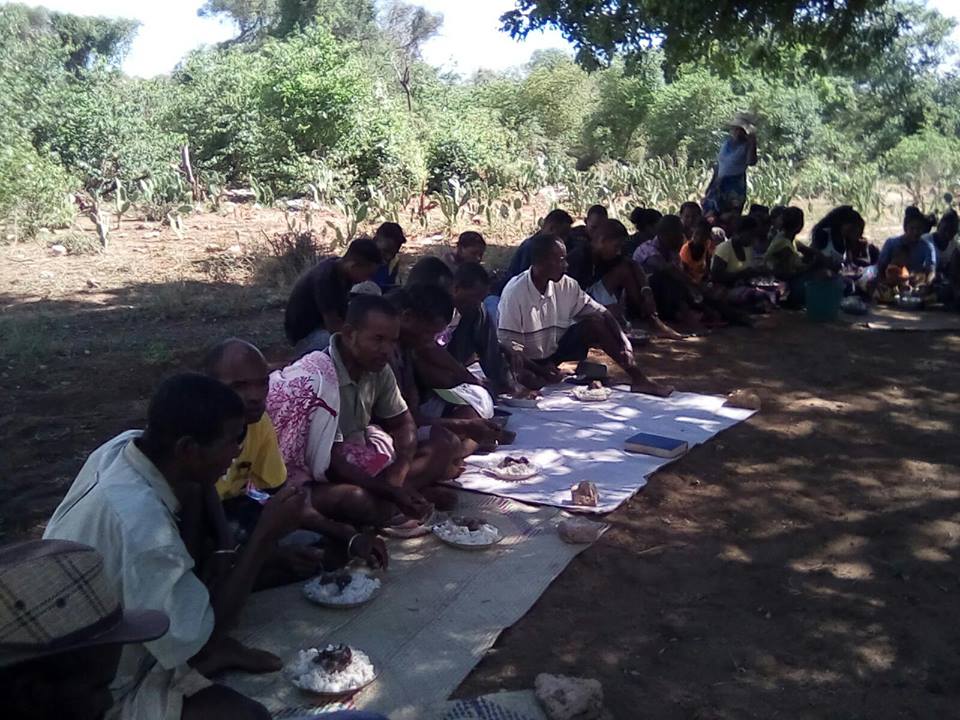
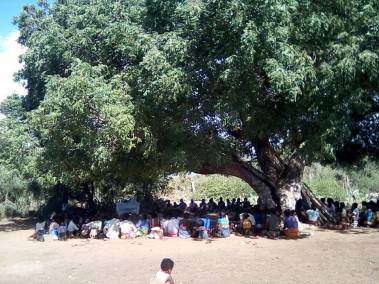
The Mahafaly met recently for their bi-monthly leadership pow-wow. This meeting was in the furthest out village and was the first time all leaders attended without us driving them. By the time we drove up (I and a national pastor), two men had arrived after setting out on foot at midnight 60K away and arriving in time for lunch 12 hours later. That night, more leaders (with youth group in-tow) arrived, walking from 4 hours away. The next group got there that morning after biking 4 hours. More and more came in with over a hundred people meeting for 2 days–all walking or biking themselves to get there.

28450543_1707940072559610_1907499223_n

This meeting was 90% Mahafaly. We were there for support and as an encouraging presence. But we sat and watched as the Mahafaly led the reception of guests, led the discussions, led the teaching, and then led the decision making for the next meeting. The combination of their effort to make it to the meeting and their desire to take responsibility for the meeting is to their glory. I told them this is a weighty thing for them, an important event that shows God’s glory in their lives.

All the while, this meeting is being held in the village of Andremba, so far off the beaten path that they had to labor meticulously to remove rocks and create a road for the oxcarts and cars. Let me rephrase that, the Christian women labored to create a road out of the rocks. Andremba’s church has three older, respected men, several young men, and the rest are women. It was these women who’s strength built a road out of the rocks.

28536496_1707937289226555_1754125077_n

Behold, the glory of God in man. These people give their all to meet together and learn about their God. They serve him not just with their praise but with poured out sweat and physical labor. It is really glorious to see what God is capable of and, in turn, what people are capable of when divinely inspired. We see his strength in their strength, his glory in their steps toward independence.

Three AMAZING Recipes that have Rocked my Madagascar Kitchen

So, I’m not a great cook. Actually, when I arrived in Madagascar as a single, I knew how to cook “pasta-roni” and scrambled eggs, and that was about it. I thought in order to separate an egg white from a yolk, surely the easiest way was to hard boil it?

But cooking is REALLY important to our life here in Madagascar. Cooking is from scratch, by necessity, and we end up making and using lots of substitutes. So, needless to say, while I lived here as a single, I learned a few things.

Now I’m back as a wife and a mom, and Nathan won’t let me get away with oatmeal for dinner. We’ve also discovered that while I’m thrilled to eat the same five recipes over and over, week after week, Nathan likes a little variety. So I’ve been on a sort of ongoing quest for new and improved recipes to add to my cookbook. (Speaking of that, I would LOVE your recipe ideas and suggestions–please list them in the comments and I’ll give them a try!)

Since we’ve been back, I’ve found three recipes that have been an amazing addition to our monthly meal plan, which I want to share!

First, chicken noodle soup. This is one of those family staples–you need a good chicken noodle soup recipe as a go-to when you’re sick. I really wanted this to be a crock pot recipe, and tried several, but eventually found this one. It’s not for the crock pot, but it is easy, and I’m committed:

https://www.allrecipes.com/recipe/26460/quick-and-easy-chicken-noodle-soup/

Next, lemon rice. We’ve started making naan with mediterranean chicken, with a nice, cool cucumber salad and yogurt. This rice is a light, fluffy, delicious addition to this meal, and stretches the meal too!

http://www.geniuskitchen.com/recipe/lemon-rice-165211

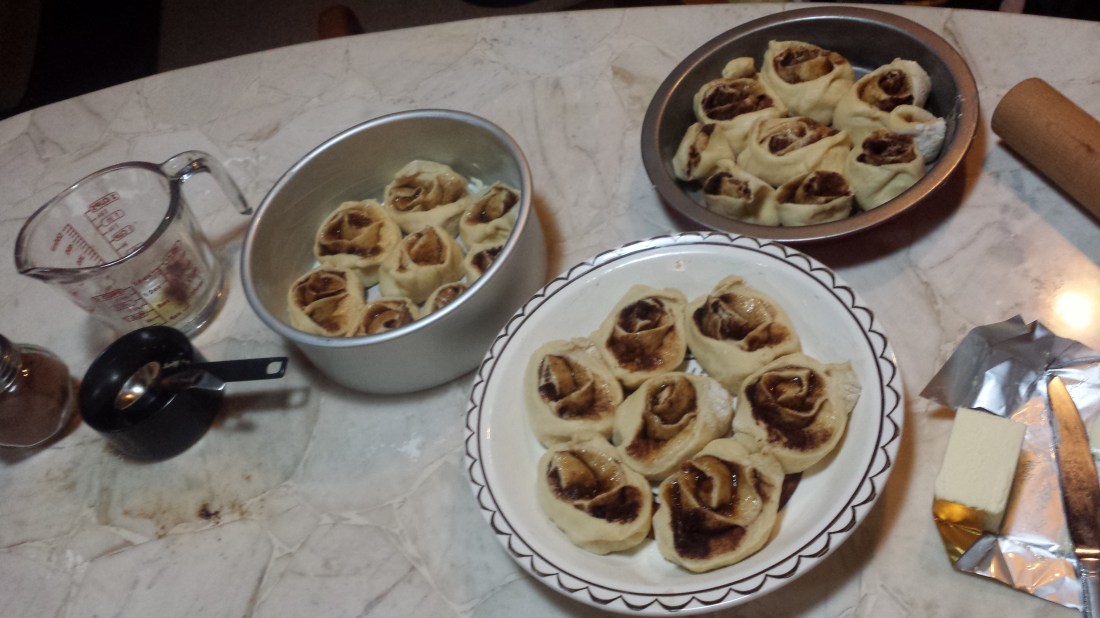
And finally, my favorite: cinnamon rolls. These are a Christmas tradition for us, but I’ve been intimidated by recipes with yeast, and disappointed by those without. This recipe convinced me to give it a try this past Christmas, and it won us over immediately. These were truly the softest, most delicious cinnamon rolls I’ve ever tasted. Try them! You’ll love them!

https://cafedelites.com/quick-soft-cinnamon-rolls/

20180303_215452(0) copy

Our Guys

I wanted to provide a quick glimpse into our ministry and more importantly what drives the Mahafaly work forward . . . our leaders.

We recently pulled up into two villages with a problem: our villages were not going to have transportation for the upcoming meeting that is half-a-day travel on foot. While we could have suggested solutions for the problem, we needed to present the problem to our leaders. One, because their solutions are usually better-fitted to their context, and two, because we are trying to teach them how to do this on their own–so that when we are not here one day they will continue driving the work forward.

28175884_1696017213751896_987023320_n

So, we pulled into Besatra. Emora was sitting there, having just gotten off what we would call an 8 hour work shift (4am to noon) working his fields. He’s tired and he hasn’t eaten yet. We catch up for a minute and then explain the situation. Emora says, whatever we do, we’re not canceling the upcoming meeting. They will do whatever they need to do and see how God provides. If they set out at 2am they can make it. Otherwise they’ll be caught in the sun and die from heat exhaustion (like a couple from a nearby town who ran out of water while traveling). Emora then offers that we need to talk with the other furtherest out town, Kilimary. So we head out, Emora still tired and still having not eaten.

The whole ride there, Emora is filling us in on the ups and down of ministry. The arguments between other leaders he’s tried to calm, the baptisms he’s done, the people he’s shared the gospel with and groups he’s teaching. All in the middle of the busy planting season.

We pull into Kilimary to find our guy. Estifihezy has just spent all morning walking to town 5K away and sitting in on town business meetings. We show up, talk a little bit and figure out that they can pull together as a church and send an oxcart with water on it and all make it on foot. Then, still without anyone having lunch, we all load up again and ride out to talk with the hosting village. By the end of the day, we had a plan for everyone,  a plan decided on by our leaders and a plan in which they could take pride.

These guys know hard work, long days, and sacrifice. They do it all the time. And without these guys, and especially how God uses them, nothing would happen here.


A new mom’s thoughts on bush trips

Tessa here. After our most recent trip, I wanted to chime in with some honest, but sort of disconnected, thoughts about our bush trips.

It’s been cool (read: challenging, at times terrifying, exhausting) to see how intensely Chyella’s development affects our bush trips, especially for me. One of our first family trips, back in July, was kind of a dream. C was still nursing, so I got to completely control her food options, and throughout the trip she miraculously napped against me twice a day out in the villages. It was pretty incredible.

But, as she was just crawling then, it was also tiring holding her most of the time. Dirt is everywhere in the bush, and the combination of her crawling and her putting everything (including her hands) in her mouth was just too much for me . . . so I held her above the dirt.

On a later trip, where I was still holding her a lot, I was sitting with a group of women, and they started whispering. I smiled and asked, “What are y’all talking about?” They responded, “Well, we’re just noticing that you don’t really put her on the ground much.”

I smiled apologetically, “Well, it’s just that she eats everything, and I don’t want her to eat dirt. What do you do with your kids?”

They answered, matter-of-factly—“Oh, we put them on the ground, they eat everything and then they get diarrhea.” Gotcha. Good to know.

Mobility has made a huge difference for C and I out in the bush. To be able to set her down and have her toddle off, where only her feet touch the ground, has been amazing! Still, though, there are new challenges. This most recent trip, I found myself sitting on a mat, talking with an old friend and a new one, looking for ways to get to know them and also turn the conversation to the Gospel. In the meantime, I’m scanning: She’s playing with dirt . . . ok. She’s playing with actual trash (piled up in front of where we’re sitting) . . . not so ok. She’s playing with dirt outside the potty . . . not good. She’s playing in a little pond . . . fine. She’s drinking the water in the pond . . . not good. She’s playing with a knife . . . definitely not good. She’s playing with a chicken . . . ok . . . and on and on and on. The idea of a playground—a clean one, with that fun, rubbery stuff under it, and nothing dangerous in sight, where I can sit more than 10 feet away and maybe have a real conversation . . . that’s such a nice idea.

One huge step of this last trip was in her communication. We’ve been doing signs with her, and on this trip I started trying to double the signs in English and in Malagasy. So, if someone hands her something, I prompt her to sign, “Thank you,” while saying, “Thank you, Misaotra!” This worked great! She caught on very quickly, and it also gave the women and even the kids we were playing with a way to communicate with her. She’s such an anomaly for them, but on this trip I actually got to watch her communicate, and that was a huge blessing to me!

This trip was also the first time Chyella actually played with the kids close to her age. In the past, older kids have “played” with her, taking care of her and being sweet to her. This time, a little boy and girl about two and three years old played with her. They climbed up on this big pile of sand, and Chyella climbed with them—jumping and plopping and screaming. It’s a strange thing to watch your baby becoming her own person—an amazing, beautiful thing.

I know our life would look much different if we actually lived out in this rural area. In some ways it seems like it would be easier . . . in some ways it would be much, much, much harder. I’m not actually sure we could do it. Either way, though, our churches and believers are growing, and we truly believe that they will continue to take the Gospel further out. Why would we step in and steal that from them? Why not come alongside them as we can and encourage and empower them? That’s the why, but the how—how do we encourage them? Are we coming alongside enough when we don’t live there? Do C and I have a role as a family there, or are visits enough? What is the point of the visit if I spend most of it watching her?

These are the tough questions we’re always asking. But we’re thankful for the time He gives, and trying to remain open to any changes He might lead us toward. In the meantime, thankfully, this whole thing is not about us at all. It’s about Him, what He’s doing in so many of His people here, and what He will do as we all continue to hope in Him.

He sends rain

It has been a little over a month the rains have not fallen in Southern Madagascar. Corn, beans, and peanuts have been planted since then, and since then those crops have withered and failed–now food for the cattle. The rains only come one season every year, from November to February, and the lives of the Mahafaly are dependent on it.

Last Tuesday, me and a mpamaraky (young man) from our church here in Toliara were sharing the gospel with a group at the market near our house. Asking about Jesus, one man said, “If that’s true, why doesn’t Jesus help people today? Why doesn’t he send the rains?” We had told the story of Jesus calling the disciples, the story that ends with Peter begging Jesus to get away from him. He knows he doesn’t deserve the boatload (pun!) of fish Jesus brought after all their efforts, as professional fishermen, all night long have not provided one single fish. And so we explained to him. Jesus was saying two things: He is our good God (he commanded those fish to get in Peter’s net) and he cares about us. But we have to recognize, like Peter, that all our efforts are worthless without him. We are bad; He is good. And though we do not deserve even to stand in his presence, Jesus gives us good things and calls us to greater things.

We probably don’t give it much thought, but here it is a significant statement about God: He sends rain. In fact, if I reflect, I would say the biggest way God reveals himself to the Mahafaly may be through the rain. I cannot tell you how many stories there are of Christians begging for rain and the rains come as they are praying. Or it has not rained and on the day we come to share the gospel, or do baptisms, it rains.

We prayed last Tuesday for Jesus to show us that he is God and to send the rain for which many here have been begging. In the bush, one of our churches was meeting and people were getting desperate. “If we don’t get rain our crops are going to die and then we’re going to die!” Emora, the leader there, gathered everyone to pray and ask God for what they needed.

IMG-20180210-WA0000

It rained Saturday and Sunday. But listen, this rain was even different.

Scientifically, there should be less rain down here. We just spoke over our meeting with a community developer who has been here before. “The only way they will get more rain is if they plant more trees,” he said. The deforestation of the south is cutting off their rains. No forest, no rain. The Mahafaly have already damaged their land too much. Except that He sends rain. This rain didn’t come from Madagascar. A large storm system swept through southern Africa and slowly made its way to Madagascar.

It is incredible to think that as the man in our group prayed for rain, God reached across to Africa and swept the rains toward Madagascar. As a church in the bush begged for rain, God made a way for life where, if you look at the human damage, life should be impossible. But that’s Jesus. Jesus can do something about our problems because he is God, and he is listening to you because he cares. In spite of reasonable science, in spite of all our efforts, in spite of our mistakes and destructiveness . . . he sends rain.


Tickets and Sickness

Since arriving back in Madagascar from our meeting and vacation, we have been eager to get back out to the bush. That eagerness has been intensified by the fact that, now twice, we have been delayed getting out there.

Once, it was paperwork: one of the seven pieces of stamped pieces of paper that says we can drive our car was out of date, given the new year. We’re still waiting for the government office that reissues this paper in the capital to issue a new one. This would not be huge deal (the paper basically just states the number of people we are allowed to carry as a non-taxi). However, it is a big deal when police and military officers are stopping people left and right and looking for any kind of leverage for a “gift.” So our last attempt to head to the bush ended in getting pulled over, and being unable to proceed without this paper we can’t fix.

Then, after discovering there is nothing we can do but wait for the expired paper, both Tessa and I got sick. It has been a fitting welcome home! We really aren’t discouraged by this: this is part and parcel of living here. But we have wondered why it has been so hard to get out there. And we are ready to try again. We are sure there is a divine purpose behind the delays . . . even one we may never know.

So please pray for us as we prepare to try and head down south to the bush again, reconnect with our friends, and get ready all together for the next stages ahead.