
Winter-browned autumn droplets crunch
Underneath.
Another year's skin has shed--
Gone--
Food for the future.
Accomplishments Past

Winter-browned autumn droplets crunch Underneath. Another year's skin has shed-- Gone-- Food for the future.
This is one of those recipes that has evolved over time. It started with a turkey pot pie recipe from my friend and first Mada roommate Melody–thanks Melody! But we always used chicken. Hers had a biscuit topping, which was tasty, and then a few years ago I switched to a pie crust top and bottom. I also switched to that canned veggie assortment of peas and carrots . . . just to make life easier! But the main thing about this recipe is that it’s very forgiving!! It’s one of those you can use at the end of the week to get rid of extra veggies—that’s one of the reasons I love it! Here’s what I do:
Ingredients – Filling:
Directions – Filling:
Then, here’s the pie crust recipe I use. I almost always have salted butter, so then I just leave out the teaspoon of salt. Make the crust sometime during the day and then have the two “disks”—the dough balls of the pie crusts—in the fridge.
Once I have the filling made, I roll out one disk, press it into the bottom of a 9×9 casserole dish, and put it in the oven at 190 C. After about 10 minutes, I pull the casserole dish out, spoon in the filling, and then roll out the other disk and lay it on top. Then I put it all back in the over for another 30 minutes or so. Sometimes I put on the top grill for a few minutes at the end to brown the top.
This is one of our favorites! Enjoy!
We were able to get out to the churches in the South (some of our so-called “bush churches”). Thankfully, we have some good, godly leaders who, even though like everyone else have been slowed down by COVID-19, continued to care for their communities.
Meeting can be very hard for these leaders who are separated by a day’s walk in a place where almost everyone has to walk. So we kept picking up folks in our truck and carried them to the final village. They killed a goat for us and cooked us some of their meager rations of rice. These people will literally starve themselves before being inhospitable. Then we met. And we met. We met well into the night and then the morning. Then we got up early the next morning and continued meeting. We talked about good things and bad things, encouraged one another and grieved together. But everyone was so happy to see each other!
That next morning, as we all sat wrapped in blankets in that sparse, concrete schoolhouse, we presented the story of Job. We brought a recording we had just completed the day before, where a team of Malagasy created a radio drama of the story of Job. The leaders sat in rapt attention and then, when the story was done, we began asking questions and drawing out what everyone had understood and learned from Job.
Those men and women sat there, after they had told us how hard things had been and how hungry they were, and vowed to be like Job and never turn their backs on God. Satan would not get the best of them, no matter how hard he tried!
One leader, Emanda, who serves in a local government capacity and serves as the statesman and wise elder of the group, said it reminded him of a Malagasy folk story, a story I now share with you . . .
In the kingdom before there were two great friends. These guys were inseparable. It didn't matter what they were doing or where they were going; they were always together. They had been friends since anyone could remember and nothing could drive them apart.

But one day, a troublemaker came to the king of that land. The king was watching these two guys walking down the road together, laughing and enjoying one another's company. "Do you see those two?" the king asked. "There's no one else like those friends. Nothing could ever break their bond!" But the troublemaker overheard the king. "What's that, O King?"

The king again point out at the two friends. "Nothing could ever drive those two apart, they're inseparable!"

"I can do it," said the troublemaker. "I can drive a wedge between them."

"You're lying!" cried the king. "And even if you could if would take so long it wouldn't even be worth it."

"Oh no, O king," said the troublemaker, "I'll be quick. I'll have them hating each other even for this day is dark."

So as the king and others watched, the troublemaker set out ahead of the two friends. As they passed him on the road, talking and carrying on with each other, the troublemaker flagged the one down. "Hey," he said waving. "I need to talk to you for a minute. It's important."

So the one friend broke off from the other and came to the side of the road where troublemaker stood. "What's up?" Troublemaker didn't say anything, he just looked at him for a minute. "Make it quick, man," said the friend, "I've gotta get back to my friend."

Then Troublemaker pulled him in and began whispering to him, making sounds with his mouth that never formed into words.

The friend pulled back in horror. "What in the world? What are you trying to say, man?!"

Troublemaker pulled him in again and whispered still, still moving his lips but not saying any distinct words. The friend was angry. "Listen, I'm not sure what you're trying to do but you're not saying anything! I'm going back to my friend." And he left, racing to catch back up with his friend further ahead.

"What was that all about?" asked the other friend once they were walking together again. "Oh nothing. I can't even tell you anything he was saying!" His friend stopped suddenly in the middle of the road. "You can't tell me he didn't tell you anything. I saw him pull you in and whisper to you. Now, please, tell me what he said."

"He didn't say anything!" exclaimed the one.

"You're planning to kill me aren't you? You're going to kill me and take my stuff!"

And the two friends argued and went their separate way to their own houses, each now the others' enemy. And Troublemaker laughed as he watched, having separated the best of friends without ever having said one word.
The whole point of Job is that Job refuses to jump to rash conclusions while still grappling with what he has seen and what has happened to him. Job struggles mightily not to read into what’s happening to him and instead just take his complaints directly to his friend, God. In the Malagasy story, it would be as if Job stands their quarreling with his friend without storming off.
I couldn’t help but ponder our sound and fury right now during this season. It’s not that I think there’s nothing behind all the accusations we’re hurling and the existential panic we feel. But as Job and folklore remind us in our time, we never really know what’s going on behind the scenes. But trust is key, and we need to spend more time building trust than tearing down one another.
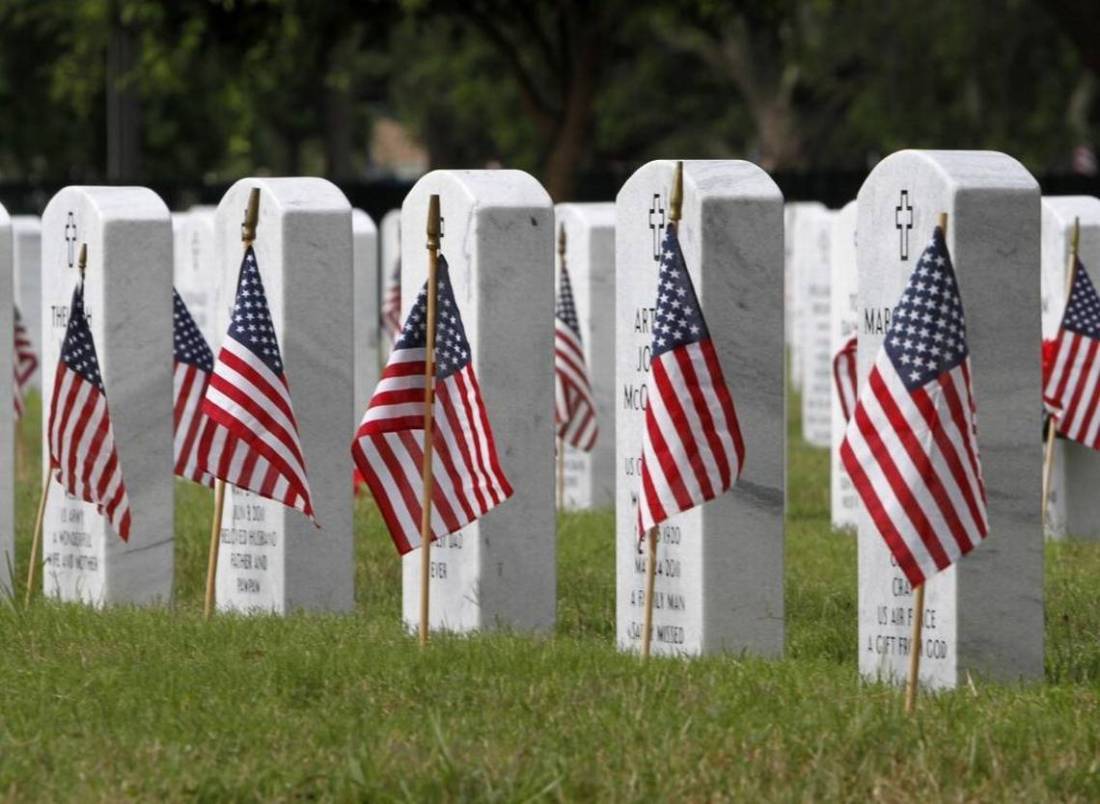
With an austere glance and an upright heart
We, the people, watch our troubled world.
Conflicts abounding and they all take part
As we sit and watch and rest in peace.

Why should we worry
And leave our tranquil home?
Their troubles are their duty.

We'll stand on this ground we died for,
Where the rocks don't move, the flags wave on and, the flowers always grow.

“Protect and defend our rights!”
Cry the people,
“We worked for our shade and green grass.”

There's a dark, real world out there,
you’ll see, visceral and rife with humanity.

“We're safer in here,”
We the people say,
“Live and let live! We're better off alone.”

And so alone we are
In our corner of the world
Marked by our rocks and flowers and patterned stripes and stars
Spattered across our safe, clean, cemetery plot.

And we are safe,
We, the people,
O, so safe!
The dead need not fear.
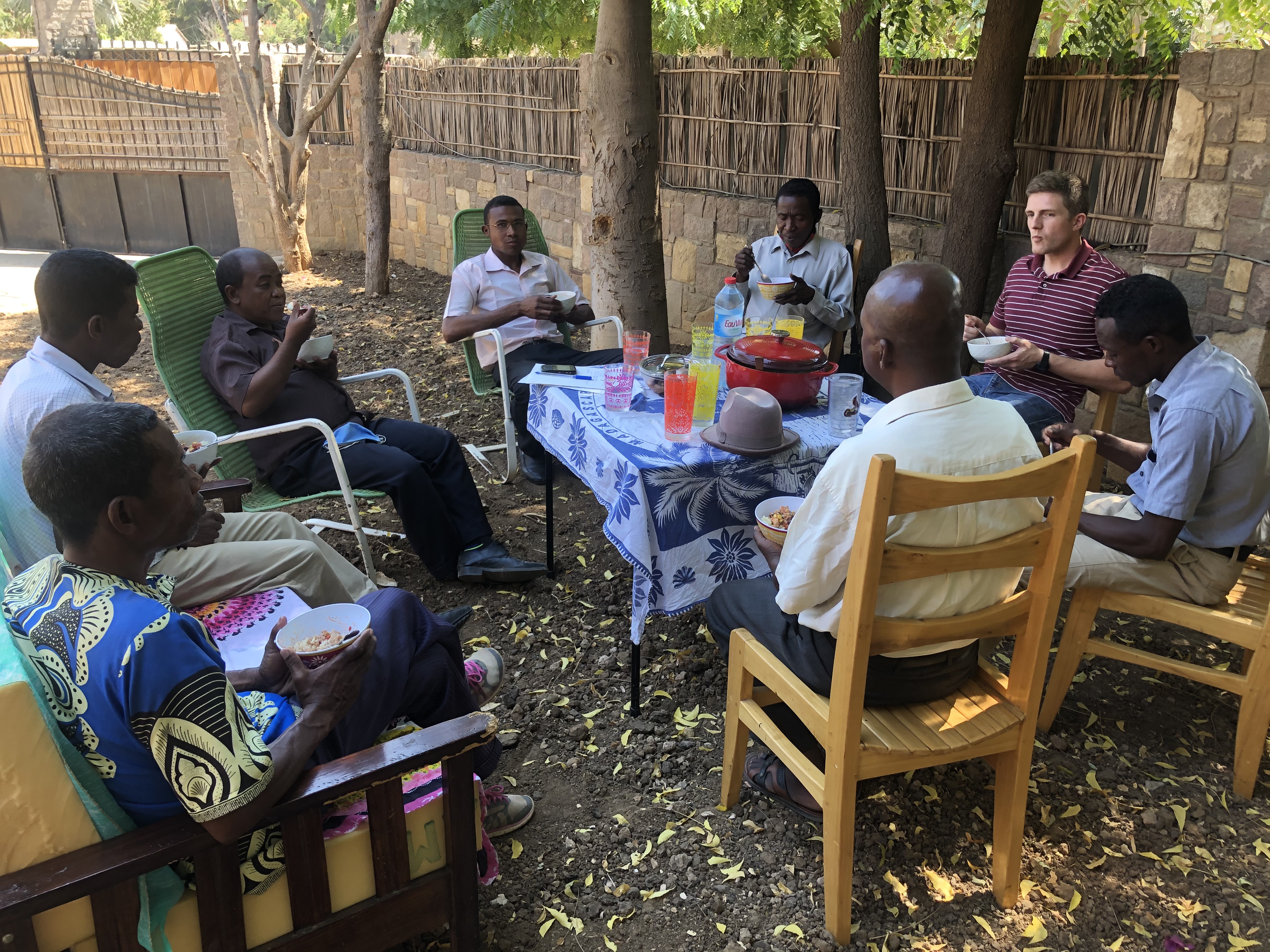
We’ve had a great month here! We made a quick trip to the capital to work on renewing our visas. This trip was a huge emotional encouragement for us—it coincided with the opening of domestic flights (suspended since March) and the lifting of some additional travel restrictions of the past few months. We also had the opportunity to visit some of our coworkers there—such a blessing!
Chyella bravely faced a COVID test and 4-year vaccines on our trip—what a plucky girl! And Jairus enjoyed exploring a new place!

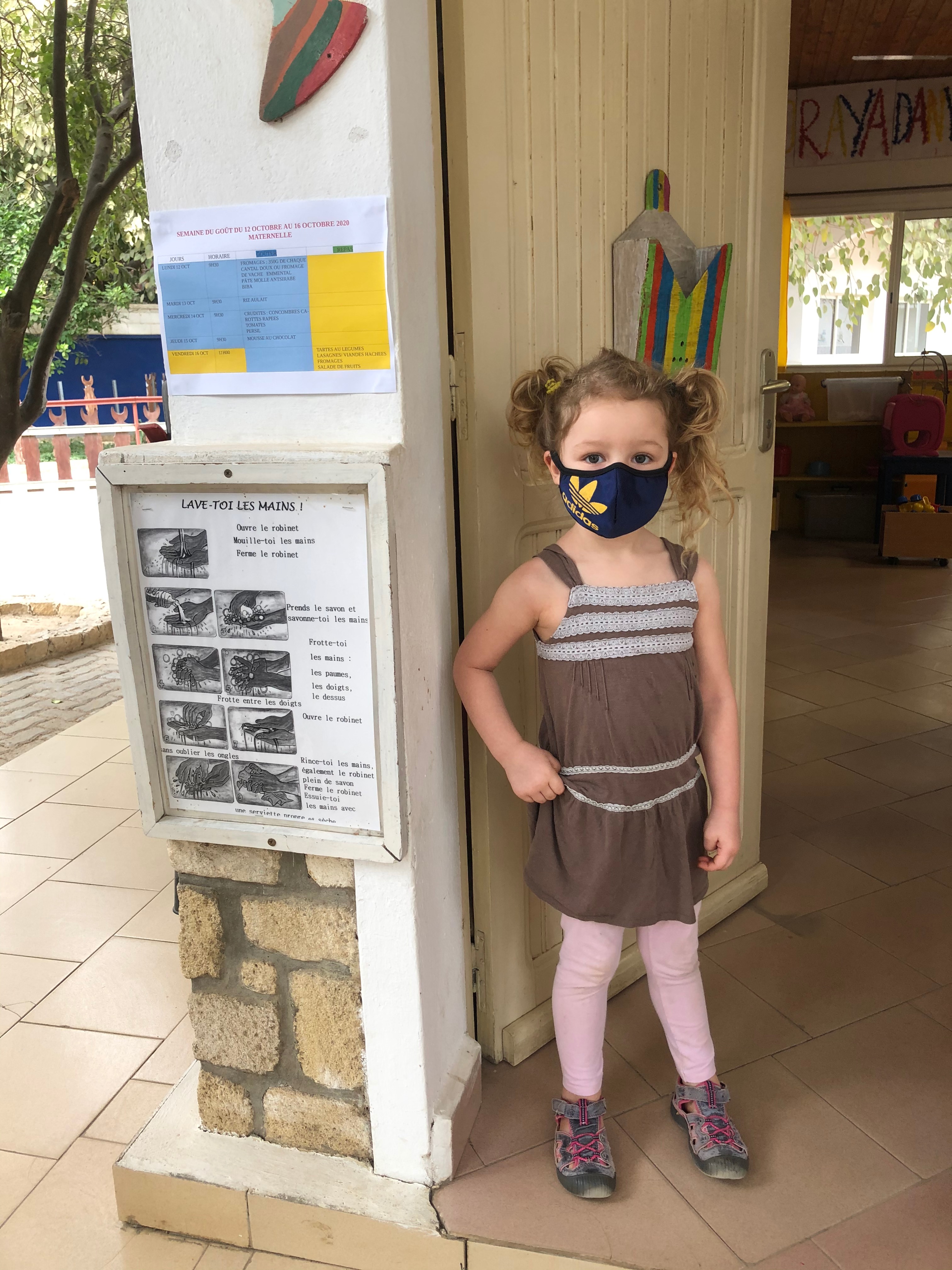

With the start of October, we were able to put Chyella back in preschool. She is soooo happy. She loves the time at school and all her friends. We’re so grateful for this opportunity for her to play with other kids. Churches has begun to open as well, so we’ve been enjoying finally worshiping together with local believers again.
Jairus continues to be a smiley, happy boy! At 9.5 months, he’s still cruising around, and we’ve caught him standing on his own for brief moments . . . I think he’ll be walking pretty soon!
Nathan and the local team here wrapped up a radio drama from the book of Job—20 minutes, four voices, and sound effects! They had a great time working together to create a story to encourage people here during these challenging days. Nathan has also been able to visit the rural churches to the north and south with the local pastors, to hear how God continues to sustain and use them, and to encourage them during this time.
I’ve had the opportunity this month to interview many of the local leaders here about how they disciple people in their churches to spiritual maturity. What a rich example of self-sacrificing, dedicated, humble care for the health of their people. I’m learning so much about the personal integrity and everyday obedience to God’s Word that characterizes the spiritual maturity of Malagasy people. Very thankful for this opportunity.
My name is Traveller. I’m going to tell you a story. And the story I’m going to tell you is called Abraham’s Sacrifice, and it’s taken from the Holy Writings . . .
Abraham Sacrifices Isaac
It came true! What the Prince of Creation had spoken when he promised Abraham came true! Even though Sarah, Abraham’s wife, was old they had a son. His name was Isaac. There and with that, the Prince of Creation touched Abraham’s thoughts. The Prince said to Abraham, “Abraham! Take your son, of which you have not two and not three, and worship me. Go on, and I’ll show you the land and the mountain.”
“Ok,” said Abraham. So Abraham woke up the next morning and took his son, Isaac. He also took with them two younger boys. And they left.
So they went, and went. After three days, Abraham saw the mountain. And, you know, he thought, “That’s the mountain the Prince of Creation was talking about.” He said to the two young boys with them, “You boys stay here. We’re going, me and the child, on top of that mountain over there.”
“Ok,” said the one.
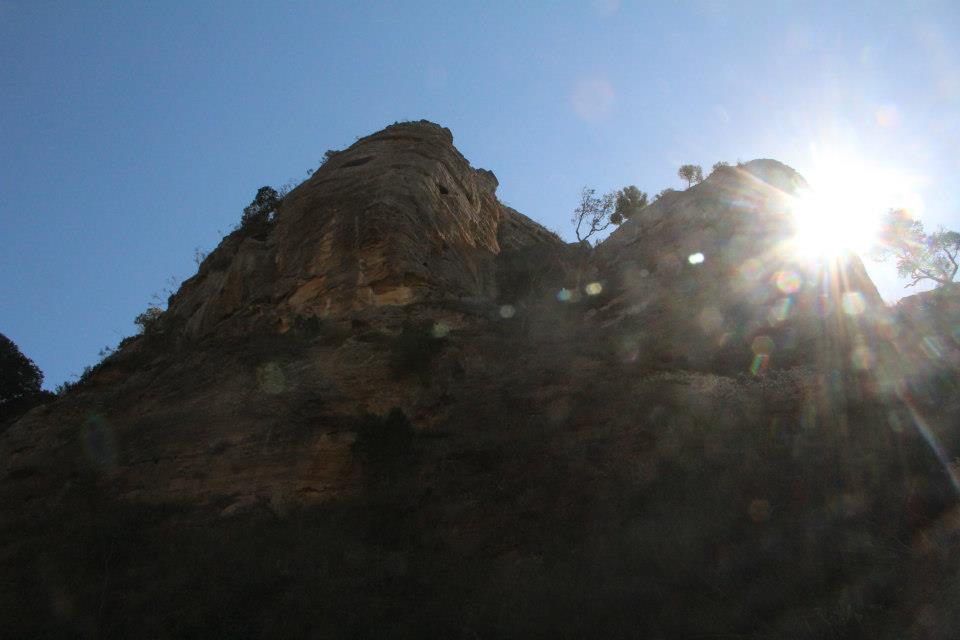
So they left, climbing and going up the mountain. When they had gone a little ways, Isaac said, “Um . . . Baba . . . Where’s the sheep we’re going to worship with? Only the knife, the wood, and the fire are here.”
“Uh-huh,” responded Abraham, “The Prince of Creation will see the sheep we’ll worship him with.”
So they went, and they climbed higher. And they arrived at the top of the mountain there. When they arrived there on top of the mountain, they constructed the place, the place they would make the sacrifice. After everything was done to do the sacrifice, the father seized his son and was about to slit his throat. Just when he was about to slit his throat, the Prince of Creation’s messenger spoke, “Abraham! Don’t kill the child. God sees that you believe and trust in his voice.”
Abraham turned with that, hearing a male sheep stuck in a small, thorny tree. And Abraham saw it. He untied Isaac and grabbed the sheep, placed him on top of that wood they had brought, slit its throat and worshipped The Prince of Creation.
And when all that was finished, the name that was given to that place was, “The Price of Creation will see.”
Afterward, the messenger spoke again, saying, “Abraham! The Prince of Creation has said to you, ‘He will make many, many, like the stars or the sand of the seashore, your offspring. The Prince will bless you, and you will be protected by the Prince.”
Then, with that, they went and got off the mountain, Abraham and Isaac. They met up with those two boys they had left below there. So they went back home together and arrived back in their village.
And that’s the story taken from the Holy Writings, the sacrifice Abraham made.
We recently did a food distribution here in our town through three of our local churches. In filling out our evaluation form afterward, the final question was something to the effect of: What other measurable spiritual benefits came from this project? Nathan filled out most of the form, and I came behind him to fill in a few additional details. I was struck by his answer to this question. He wrote one word: hope.
This year has done a number on our hope. I think if you looked the whole world over, you would be hard-pressed to find one community not touched by COVID-19 . . . by sickness, death, loneliness, job loss, uncertainty, fear, upheaval, grief, anxiety. Where do we find hope in a time like this?
I’ve witnessed hope in the faithful lives of Malagasy believers. I want to share that hope with you. From 2017-2019, we worked through a series of stories from church history that emphasized different doctrines with the Mahafaly leaders. We started with the first church in Acts and followed along with stories up through today.
One week we were concerned as we prepared, because our topic was God’s sovereignty and suffering. From our own cultural perspective, we expected this topic to be tough. We wrestle with how a good, powerful God can allow suffering. We’re always asking, “Why?” In fact, we struggle with that question often personally here. We see significant suffering around us every day. Why? Why is life so hard here? Why is our life so much easier? How can I fix this suffering around me—make it stop!
But when we taught through this lesson, the Mahafaly leaders didn’t bat an eye. The principle is basically that a loving God calls His people to suffer in a fallen world. When I’m confronted with this reality, I buck against it, either from one side or the other. Maybe God isn’t really loving. Or maybe He can’t really control my circumstances. Or there will be some “silver lining”—visible very soon, I’m sure—something that shows me WHY!!!
But our people here just aren’t asking those questions. They are following Christ faithfully. And they are suffering deeply. And these two things simply aren’t incongruent for them. One doesn’t threaten the other. I don’t have either the theoretical or the experiential framework for that, yet I see it over and over in the convicting testimonies of the believers here.
I’m beginning to hear this conviction too from the testimonies of people of color in the United States. I have always assumed that our propensity to insulate ourselves from suffering is an “American” problem. But I am realizing that I can only speak as a white, American evangelical. I’m learning that right alongside the America I’ve experienced are communities of believers of color worshipping God through deep suffering on a daily basis.
Please understand. I’m not denying that everyone in the world suffers—it’s a part of being human. Please, don’t hear me diminishing your personal experience of suffering. I know many of you reading this have experienced suffering unlike anything I’ve never known, and my heart aches for you. But God has been bringing specific stories of suffering and faith—from people of color in the United States—before Nathan and me over and over the last few months. I confess I was unaware of so, so much of what these brothers and sisters are facing. I’m committed to continue listening and learning, and to try, as much as I can, to weep with those who weep, whether here in Madagascar or there in the United States.
One of our local pastors here shared with us about the challenges they had faced as a family during the “confinement,” as it’s called here—the time when people were supposed to stay at home, churches were restricted from meeting, and travel was extremely limited due to COVID. He admitted that yes, things had been very hard. Then he continued, “But sometimes you forget how good God is, until you truly need him every day, like we do now.”
“Sometimes we forget how good God is, until you truly need him every day, like we do now.”
Pastor Manentesoa
How have the challenges of this year helped us realize our true need for God? Every day? That’s the gift of suffering.
This year has been tough. I know it’s been hard on us. I know many of you have faced significant struggles. If you find your hope flagging, please take courage from communities practiced in suffering. Some of the circumstances we find ourselves in now, we probably never thought we would face. But even if . . .
You’ve lost someone, there is hope.
You don’t feel confident in the future, there is hope.
You’re worried about you or someone you love getting sick, there is hope.
You’re separated from an elderly person you love, there is hope.
You don’t see anything getting better with the coming election, there is hope.
You’ve lost your job, there is hope.
You feel threatened, there is hope.
Because, as Ekemini Uwan says,
“Hope is not an abstract concept. Hope is a person.”[1]
Ekemini Uwan, Truth’s Table Podcast
[1] “Truth’s Table Classroom: Why We Can’t Wait : Eschatology and BLM,” Truth’s Table podcast, 4 July 2020, recording from lecture at Westminster Theological Seminary, 2014.
One of our favorite restaurants here in Toliara—the Blue—is owned by a German man. He and his team serve a delicious meal called Curry Vert, French for Green Curry. It’s yummy!! It’s a favorite for sure.
When we were staying in due to COVID, we really missed this meal! I decided to tackle it myself! I needed green curry paste—you may be able to find some at your local grocery store! Here’s the paste recipe I found to make it from scratch. We were able to find most of these spices here, though not the galangal and not the kaffir lime. What is galangal, anyone?
Then, this is the Thai green curry recipe I found to use for the whole meal—the green curry chicken with veggies and over rice. I love this recipe. The only thing I do differently is that I really don’t like touching raw chicken—even cutting it up! So I put the chicken in right after the oil, garlic, and paste and let it pan fry. I usually have to add more oil and some water, and keep turning it over. Small tenders works great for this. Then once the chicken is pan-fried I go on with the coconut milk and the rest of the recipe.
Enjoy!
If you’re part of the SBC you may be aware of the recent decisions of some to start calling themselves Great Commission Baptists. If you’re asking yourself, “Where did that come from?” or are just puzzled by the current cultural climate, particularly in the church, then I have some resources for you.
A friend just recently made me aware of an SBC effort to talk through several issues disturbing our society. As an international missionary constantly engaging in cultural issues here in Madagascar, I was stoked to hear that NAMB (our national baptist missionary sending branch) is trying to help people be on mission in American culture in this moment. I’ve found it really helpful just to hear the different voices as people seek to address what ails us from a biblical perspective. There are several sessions covering multiple topics but focusing on race and social engagement. Check out the trailer below.
So much of what I’m currently learning as pertains to current American moment comes back to not simply race, but history. We have Black History month as if that is somehow segregated from the rest of American history. It’s not. What some of us conceive of as one country is, as one of my black brothers pointed out, not United States but several “countries” of people with different versions of history. As a missionary, I would say we have to know these different versions of the story if we are going to engage people with the best story of Jesus.
Unfortunately, there is a version of the story that is pretty uncomfortable for the “American Church.” I put that in quotes, because what I have learned is that what I think of as the “American Church” is really a predominantly white church. I have been helped greatly by Jemar Tisby’s The Color of Compromise. He does an admirable job of condensing the American Church’s timeline into an historical survey that brings out the heavy silence from the church on racism. Historically speaking, there would be no Black Churches, Asian Church, Hispanic Churches, etc. if it were not for white Christians who would not accept their brothers and sisters who did not look like them as equals.
If you doubt that, or think of the Church’s role in things like slavery as just an unfortunate incident, then please read the Appendix to the Narrative of the Life of Frederick Douglass. I am thankful I was taught to view Douglass as a heroic figure. Yet, I was never aware of his scalding words on the “American Church” and our version of Christianity:
. . . between the Christianity of this land, and the Christianity of Christ, I recognize the widest possible difference—so wide, that to receive the one as good, pure, and holy, is of necessity to reject the other as bad, corrupt, and wicked. To be the friend of the one, is of necessity to be the enemy of the other. I love the pure, peaceable, and impartial Christianity of Christ: I therefore hate the corrupt, slaveholding, women-whipping, cradle-plundering, partial and hypocritical Christianity of this land. Indeed, I can see no reason, but the most deceitful one, for calling the religion of this land Christianity. I look upon it as the climax of all misnomers, the boldest of all frauds, and the grossest of all libels.
Frederick Douglass, Narrative of the Life of Frederick Douglass, 95.
He goes on, and I would encourage you to read it. From the very beginning of American history and therefore the history of the church in America, we have been a double-minded and divided people.
I hope that resources like Undivided can help us course correct. But if we don’t engage with other resources like The Color of Compromise or aren’t aware of our own complicated history of complicity, there’s no way we’ll be able to talk to each other, let alone understand one another.
Desolation comes in many different forms:
A salesman in a crowded shopping mall
Ignored by all who pass.
A child playing in the hall
Unwanted and forlorn.
What creates the loner?
Deserted buildings?
Buzzing freeways?
Setting changes nothing.
Unwanted,
Shameful,
But curable on contact.
Desolation is the human soul
Untouched.
 Baker Storycraft