Our Guys

I wanted to provide a quick glimpse into our ministry and more importantly what drives the Mahafaly work forward . . . our leaders.

We recently pulled up into two villages with a problem: our villages were not going to have transportation for the upcoming meeting that is half-a-day travel on foot. While we could have suggested solutions for the problem, we needed to present the problem to our leaders. One, because their solutions are usually better-fitted to their context, and two, because we are trying to teach them how to do this on their own–so that when we are not here one day they will continue driving the work forward.
28175884_1696017213751896_987023320_n

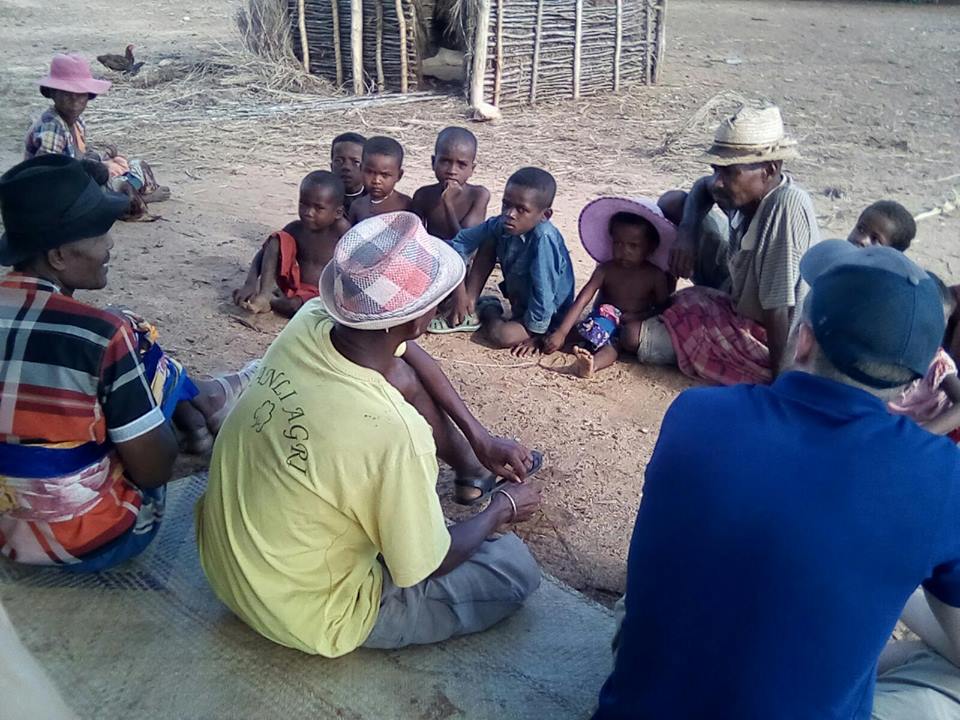
So, we pulled into Besatra. Emora was sitting there, having just gotten off what we would call an 8 hour work shift (4am to noon) working his fields. He’s tired and he hasn’t eaten yet. We catch up for a minute and then explain the situation. Emora says, whatever we do, we’re not canceling the upcoming meeting. They will do whatever they need to do and see how God provides. If they set out at 2am they can make it. Otherwise they’ll be caught in the sun and die from heat exhaustion (like a couple from a nearby town who ran out of water while traveling). Emora then offers that we need to talk with the other furtherest out town, Kilimary. So we head out, Emora still tired and still having not eaten.

The whole ride there, Emora is filling us in on the ups and down of ministry. The arguments between other leaders he’s tried to calm, the baptisms he’s done, the people he’s shared the gospel with and groups he’s teaching. All in the middle of the busy planting season.

We pull into Kilimary to find our guy. Estifihezy has just spent all morning walking to town 5K away and sitting in on town business meetings. We show up, talk a little bit and figure out that they can pull together as a church and send an oxcart with water on it and all make it on foot. Then, still without anyone having lunch, we all load up again and ride out to talk with the hosting village. By the end of the day, we had a plan for everyone,  a plan decided on by our leaders and a plan in which they could take pride.

These guys know hard work, long days, and sacrifice. They do it all the time. And without these guys, and especially how God uses them, nothing would happen here.


A new mom’s thoughts on bush trips

Tessa here. After our most recent trip, I wanted to chime in with some honest, but sort of disconnected, thoughts about our bush trips.

It’s been cool (read: challenging, at times terrifying, exhausting) to see how intensely Chyella’s development affects our bush trips, especially for me. One of our first family trips, back in July, was kind of a dream. C was still nursing, so I got to completely control her food options, and throughout the trip she miraculously napped against me twice a day out in the villages. It was pretty incredible.

But, as she was just crawling then, it was also tiring holding her most of the time. Dirt is everywhere in the bush, and the combination of her crawling and her putting everything (including her hands) in her mouth was just too much for me . . . so I held her above the dirt.

On a later trip, where I was still holding her a lot, I was sitting with a group of women, and they started whispering. I smiled and asked, “What are y’all talking about?” They responded, “Well, we’re just noticing that you don’t really put her on the ground much.”

I smiled apologetically, “Well, it’s just that she eats everything, and I don’t want her to eat dirt. What do you do with your kids?”

They answered, matter-of-factly—“Oh, we put them on the ground, they eat everything and then they get diarrhea.” Gotcha. Good to know.

Mobility has made a huge difference for C and I out in the bush. To be able to set her down and have her toddle off, where only her feet touch the ground, has been amazing! Still, though, there are new challenges. This most recent trip, I found myself sitting on a mat, talking with an old friend and a new one, looking for ways to get to know them and also turn the conversation to the Gospel. In the meantime, I’m scanning: She’s playing with dirt . . . ok. She’s playing with actual trash (piled up in front of where we’re sitting) . . . not so ok. She’s playing with dirt outside the potty . . . not good. She’s playing in a little pond . . . fine. She’s drinking the water in the pond . . . not good. She’s playing with a knife . . . definitely not good. She’s playing with a chicken . . . ok . . . and on and on and on. The idea of a playground—a clean one, with that fun, rubbery stuff under it, and nothing dangerous in sight, where I can sit more than 10 feet away and maybe have a real conversation . . . that’s such a nice idea.

One huge step of this last trip was in her communication. We’ve been doing signs with her, and on this trip I started trying to double the signs in English and in Malagasy. So, if someone hands her something, I prompt her to sign, “Thank you,” while saying, “Thank you, Misaotra!” This worked great! She caught on very quickly, and it also gave the women and even the kids we were playing with a way to communicate with her. She’s such an anomaly for them, but on this trip I actually got to watch her communicate, and that was a huge blessing to me!

This trip was also the first time Chyella actually played with the kids close to her age. In the past, older kids have “played” with her, taking care of her and being sweet to her. This time, a little boy and girl about two and three years old played with her. They climbed up on this big pile of sand, and Chyella climbed with them—jumping and plopping and screaming. It’s a strange thing to watch your baby becoming her own person—an amazing, beautiful thing.

I know our life would look much different if we actually lived out in this rural area. In some ways it seems like it would be easier . . . in some ways it would be much, much, much harder. I’m not actually sure we could do it. Either way, though, our churches and believers are growing, and we truly believe that they will continue to take the Gospel further out. Why would we step in and steal that from them? Why not come alongside them as we can and encourage and empower them? That’s the why, but the how—how do we encourage them? Are we coming alongside enough when we don’t live there? Do C and I have a role as a family there, or are visits enough? What is the point of the visit if I spend most of it watching her?

These are the tough questions we’re always asking. But we’re thankful for the time He gives, and trying to remain open to any changes He might lead us toward. In the meantime, thankfully, this whole thing is not about us at all. It’s about Him, what He’s doing in so many of His people here, and what He will do as we all continue to hope in Him.

He sends rain

It has been a little over a month the rains have not fallen in Southern Madagascar. Corn, beans, and peanuts have been planted since then, and since then those crops have withered and failed–now food for the cattle. The rains only come one season every year, from November to February, and the lives of the Mahafaly are dependent on it.

Last Tuesday, me and a mpamaraky (young man) from our church here in Toliara were sharing the gospel with a group at the market near our house. Asking about Jesus, one man said, “If that’s true, why doesn’t Jesus help people today? Why doesn’t he send the rains?” We had told the story of Jesus calling the disciples, the story that ends with Peter begging Jesus to get away from him. He knows he doesn’t deserve the boatload (pun!) of fish Jesus brought after all their efforts, as professional fishermen, all night long have not provided one single fish. And so we explained to him. Jesus was saying two things: He is our good God (he commanded those fish to get in Peter’s net) and he cares about us. But we have to recognize, like Peter, that all our efforts are worthless without him. We are bad; He is good. And though we do not deserve even to stand in his presence, Jesus gives us good things and calls us to greater things.

We probably don’t give it much thought, but here it is a significant statement about God: He sends rain. In fact, if I reflect, I would say the biggest way God reveals himself to the Mahafaly may be through the rain. I cannot tell you how many stories there are of Christians begging for rain and the rains come as they are praying. Or it has not rained and on the day we come to share the gospel, or do baptisms, it rains.

We prayed last Tuesday for Jesus to show us that he is God and to send the rain for which many here have been begging. In the bush, one of our churches was meeting and people were getting desperate. “If we don’t get rain our crops are going to die and then we’re going to die!” Emora, the leader there, gathered everyone to pray and ask God for what they needed.

IMG-20180210-WA0000

It rained Saturday and Sunday. But listen, this rain was even different.

Scientifically, there should be less rain down here. We just spoke over our meeting with a community developer who has been here before. “The only way they will get more rain is if they plant more trees,” he said. The deforestation of the south is cutting off their rains. No forest, no rain. The Mahafaly have already damaged their land too much. Except that He sends rain. This rain didn’t come from Madagascar. A large storm system swept through southern Africa and slowly made its way to Madagascar.

It is incredible to think that as the man in our group prayed for rain, God reached across to Africa and swept the rains toward Madagascar. As a church in the bush begged for rain, God made a way for life where, if you look at the human damage, life should be impossible. But that’s Jesus. Jesus can do something about our problems because he is God, and he is listening to you because he cares. In spite of reasonable science, in spite of all our efforts, in spite of our mistakes and destructiveness . . . he sends rain.


Tickets and Sickness

Since arriving back in Madagascar from our meeting and vacation, we have been eager to get back out to the bush. That eagerness has been intensified by the fact that, now twice, we have been delayed getting out there.

Once, it was paperwork: one of the seven pieces of stamped pieces of paper that says we can drive our car was out of date, given the new year. We’re still waiting for the government office that reissues this paper in the capital to issue a new one. This would not be huge deal (the paper basically just states the number of people we are allowed to carry as a non-taxi). However, it is a big deal when police and military officers are stopping people left and right and looking for any kind of leverage for a “gift.” So our last attempt to head to the bush ended in getting pulled over, and being unable to proceed without this paper we can’t fix.

Then, after discovering there is nothing we can do but wait for the expired paper, both Tessa and I got sick. It has been a fitting welcome home! We really aren’t discouraged by this: this is part and parcel of living here. But we have wondered why it has been so hard to get out there. And we are ready to try again. We are sure there is a divine purpose behind the delays . . . even one we may never know.

So please pray for us as we prepare to try and head down south to the bush again, reconnect with our friends, and get ready all together for the next stages ahead.

Moving Forward

We are another year into our journey and the Mahafaly are another year into theirs as God continues to do a work among their people. This time last year, church growth was booming as over a hundred Mahafaly churches sprang up overnight. By the end of last year, we were starting to experience the issues that naturally come with hundreds of churches full of people being made new.

Recently, two of our Toliara pastors who help train the Mahafaly leaders got back from a training down south. They checked in on the leaders and refreshed them on what they will be teaching the other leaders at the next leadership meeting. Our Mahafaly leaders continue to grow in their understanding of the Bible, their ability to teach others, and their passion for reaching those who still have not heard the gospel.

So, as we start this year, we thank God for the great work he is doing and many, many lives here. Please pray for two things:

  1. Pray that the gospel continues to spread into other areas (especially the larger towns of Ampanihy and Androka).
  2. Pray that as the gospel spreads and churches are planted that leaders and new Christians alike would continue to mature in their relationship with God.


Redefining Success

When we think about sharing the gospel with people or being a faithful child of God, what comes to our mind? When you think about things you can do to make an impact or potentially change the trajectory of someone’s life, what are those things?

I (Nathan), found it interesting that on this past bush trip two different answers to those questions were given of our collective work as missionaries among the Mahafaly.

First, a visiting pastor from elsewhere on the island came to learn what he could from the Mahafaly. He came away with many insights, but this was what he said about us as missionaries: “I can see from you and what I know about Grant that you love this people. You are not afraid to stay out here with them, eat their food, and sleep in their villages. You have humbled yourself and they can see that you love them.”

The second answer came from Emanda, one of the Mahafaly leaders whose life has most radically changed (murderer to man of God type story). He said, “When Grant came we knew he was different from the other people who had tried to get us to follow God. The others came making it clear that the authority would always be theirs. From the beginning, our missionaries made it clear that we would be responsible. They didn’t keep the authority, they gave it to us and taught us how to teach ourselves. And now look, here we are hosting our own meeting, organizing ourselves, and teaching ourselves!”

Intentionally loving people, and giving them dreams and responsibility. These are two  big things that stick out to our brothers here that enabled them to hear the gospel, tell others, and start over a hundred new churches. (1) We set aside our personal preferences and comfort to be with them and (2) we gave them a bigger plan for their lives and expected something out of them.

Now there are a million caveats that come with that–the first being that this may apply generally but it only really helps when we’re talking about the good news that Jesus did this for us first. (1) He humbled himself to our place so that we could have his life, and  (2) he gave us a bigger plan and responsibilities for that new life–to reach the world with the good news!

What makes us successful Christians? What changes lives? At least according to people here, it’s relationships and responsibility.

That was surprising to me. I expected to hear how impressed people were with our language, or how clear our teaching had been. Instead our impact has been (at least by these accounts) relational and inspirational. To the people we work among, we are not successful because we work hard, or because we are really smart, or brave. They have listened because they saw our love lived out among them. They have listened because we presented them with good news and a better plan for their life. They listened because we expected them to be responsible and taught them how to be, instead of just running things ourselves.

Take the time to love people, especially those different than you. Invest in them and teach them how to be responsible with what God has given them, especially the good news of Jesus. This is a challenge and encouragement for me and I hope for you too.


The Replacements

Having come back from meeting with our Mahafaly churches in the bush, we wanted to give you a little update.

This meeting is where the original (what we call 1st generation) churches Grant planted meet together for teaching, reports, strategizing and camaraderie. These meetings have been going on over the past 5 years. But this was the first meeting hosted, organized, and taught by Mahafaly. We were still there to encourage and facilitate, to make sure things ran smoothly and to still have eyes on the teaching. But this was their show.

There were three men teaching, three men whom we call Mpandime–the Replacements. Now we’re not talking football replacements like Keanu Reeves but rather Paul’s replacements in Acts 20:17-38. In that story, Paul tells his disciples and leaders of the church in Ephesus that he is moving on and they will never see his face again. And yet he is convinced this is ok because he has taught them everything he knows and, even more important, he has given them the whole story–the whole Bible. He warns them that false teachers will come to try and destroy the church and dismember the believers like wolves devouring sheep. But the same thing Paul did to give them the truth is the same thing these men will do as they replace him. And Paul knows that God’s Word is able to grow them more like Jesus and keep them victorious.

Moving forward, these three Mahafaly men (Emasike, Emora, and Estifihezy) will be learning from us how to interpret and understand God’s Word for themselves, and therefore how to defend against an onslaught of false teaching. We’ve already seen Emasike grow as we’ve been personally teaching him over the past few months. He now speaks with confidence from God’s Word. Estifihezy and Emora are recent attendees, but they were able to learn from Emasike and then turn around and teach others at this meeting.

They will no longer be waiting on us to give them a new Bible story or a new teaching. They will be feeding themselves and feeding their sheep straight from God’s Word. Just as they started to do at this last meeting.

Compassion

He had just found out his cousin and brother-in-arms, the man on earth who probably knew him best, was dead. Jesus’ cousin, John the Baptist had been beheaded. It’s a lot to take in and, understandably, Jesus needed some alone time.

But as soon as he sets off he is mobbed. Seeing his alone time as an opportunity, everyone who needs his attention comes running. And what is Jesus’ response? He has compassion on them. He does not stand up for his right to solitude. He does not even apologize and then take his needed time away. Instead, Jesus embodies the Old Testament words he has been reminding the so-called religious people, “I desire compassion and not sacrifice, says Yahweh” (Matthew 9:13; 12:7; from Hosea 6:6).

God’s people have always been much better about making sacrifices than compassion. It’s not a new problem. It’s so much easier to, on your own time—when it’s convenient for you, go out back and pick out a cow you don’t mind handing over to God, throw a small percentage of your resources at a problem, and feel like that’s the right thing to do. But that’s just pragmatic; you haven’t learned how to love any better.

The Hebrew word the prophet Hosea used was hesed. What God desires from his people is hesed—the word used for the love God shows his people. It is the kind of thing that is slow to anger, abounding in steadfast love, and full of compassion (Exodus 34:6). God wants us to love him and others the way he loves us and others.

In Matthew 14:13-21, Jesus walks the talk. In a moment of great personal need, he does not put off 5,000+ people until it’s convenient. He doesn’t make up for it with a donation afterward, or by praying for them, or pay down his guilt in some other way. He loves them and has compassion. He is the only human being with a heart capable of knowing God’s word and living it out—loving a mob of 5,000 rabid peasants with a host of extreme needs fueled by desperation.

This is precisely what makes him our God, worthy of all our effort and praise. He is the only one who actually loves. “We love him because he first loved us,” (1 John 4:19). Jesus is the only one who can actually fulfill God’s desires for the human race. God isn’t waiting for us to do something, to sacrifice. He wants us to have compassion; he wants us to love him and others the way he loves us and others.

The only way that you or I can actually help anyone is if we admit we are not Jesus. We do not have compassion and we do not love like this. And we have to fall at the feet of Jesus, who has done what no one else could do, and beg him to take away our hate, our guilt, our unworthiness, and fill us with his love and compassion. He will do it.

Jesus is the only way we (Nathan and Tessa) can really help here in Madagascar. He is the only way I can have compassion on all the desperately needy here and meet their needs. And as the story continues, he is the only one who can simultaneously meet all the desperate needs in my life and the thousands of people we are trying to help.

Throwing Up is Hard to Do

I’m absolutely certain that my least favorite thing about working here is cleaning up puke out of the car after giving someone a ride. Imagine taking your Grandma, who was alive before Ford, for a ride through a rock quarry in West Texas. That’s kinda what it’s like giving someone from one of our villages a ride here. Most of them have never ridden in a car and definitely not that fast or that bumpy. The end result is not pretty, and smells worse.

I’m going to try to explain why I get one part mad and two parts desperate when someone tosses their cookies in the backseat . . . but it’s complicated:

#1. People here are desperately in need of help.

Almost every time we get ready to leave a village a stream of people make a run for the car with their luggage. It’s hard to get between villages and so taking advantage of someone going anywhere close to where you are (especially in a car!) is top priority. And we have one of the only cars.

Many of them are sick and need to get what little medical attention there is here. Many of them are trying to buy food because they are unable to grow any. Many of them are on their way to bury a loved one. There are almost always good reasons why they are imposing on us.

Yet we know we cannot solve this desperation. We can’t solve their problems; we are finite and their problems are infinite. So even though we want to help and see that they are desperate, we feel we are not really helping. The problem is bigger than us, and I’m not helping the problem because . . .

#2. I am a sinful American who wants his privacy, cleanliness, and control.

I am American: I like my privacy. I don’t mind riding back alone (though that is impossible for our Malagasy friends to understand) and decompress the day with some English songs, a podcast, talk in English with my wife, or just plain non-linguistic silence. But I don’t get to make that choice–not when every person in a village of a 1,000 has a family member who needs to take a 5-hour car trip with us.

This last bush trip we arrived in town from one of the villages, I opened the door to let the eager, old woman out of the car. She immediately threw her lunch at my feet.  I don’t care who you are, missionary or not, cleaning ick off your toes gets old. I did not intentionally choose a career path that included this. I have not yearned for this close, messy community. I like clean, healthy boundaries and not being thrown up on.

And yet it’s not the physical challenges that really get to us here. For sure, the disease, the poverty, the gross, the heat, the grind, they all do their part in making it difficult. But the hardest part is a complete lack of control. As I said, we can’t change a thing here. We can do some good, throw a starfish back in the sea or whatever, but at the end of the day things are only getting worse for these people. And then when they mob me for a ride in my car my first thought is for myself. Because I am part of the problem.

Essentially, every time someone hurls I am reminded of the gross injustice of sin in this world. It has corrupted everything in this world from bacteria to governments to my heart. And there’s really only one thing I can do to help: I can let Jesus change my heart and lead others to him for the same. Jesus has been guiding me for a while now and I’ve thrown up on him quite a few times. He knows I’m desperate, and he doesn’t shy away from helping.

We’re not here to be superstars or better Christians or something. And this is hard for us. But we are not alone.


The Story of the Mahafaly Church: Multiplying Churches

When we left here in 2013, there were three churches–all had issues and only one had gone to share their faith with another village. But over the years the gospel gained momentum.

We began telling the story of the church from the book of Acts. The original Mahafaly churches began saying, “If this is what God’s people do then this is what we will do.” From the model of Acts 2:37-47 they began meeting together for prayer, teaching, giving money for needs, appointing leaders, remembering what Jesus did for them through the Lord’s Supper, Baptizing new believers, and continually telling their wider community.

Eventually, a church was started in the one new village which had been evangelized. Then the other two churches caught the vision. More churches were started. By 2016 there were over 30 churches and more groups meeting. Then, through BGR (the relief arm of the Southern Baptists) the Mahafaly churches handed out many seeds to stave of the terrible famine that is ravaging Southern Madagascar. That was last October. Now that the dust has settled, there are over 100 churches . . . and they are still spreading. This movement has already crossed a river and spread into a neighboring (and enemy) tribe.

The simple idea that it was, and is, their responsibility to not only share the gospel with their friends and family but also teach them how to conduct themselves as a Christian and as Christians living together (church), revolutionized the Mahafaly–and their culture. The custom of sacrifice is one of the strongest Mahafaly indicators. And yet, at a recent meeting, we heard leaders testifying that because of their conversion to Jesus as their final sacrifice and Savior, sacrifice and worship of the ancestors is nearly non-existent in their villages.

Wow! You are talking about people that have sacrificed as long as they can remember. But the powerful good news of God dying on their behalf to save their lives is transforming their culture. And because these people are learning to live in service to God together as a church, this is a change that will continue transforming them.

Now, as we drive down the winding, bumpy bush road that leads to the Mahafaly, the majority of the towns we used to pass and pray that God would save have a small band of believers meeting as a church. Slowly, like a small, insignificant seed growing large over time, these churches are changing everything.