Resisting vs. Retaliation

I need to go for a run.

For those of you who haven’t yet heard (I know that will be few), people in America are running 2.23 miles in honor of a young man named Ahmaud Arbery. On February 23 this year, he was ambushed and blasted with a shotgun in Georgia, U.S.A.

Why? He was jogging in the wrong neighborhood. (I would recommend Russell Moore’s summation of the situation).

Martin Luther King Jr. (like Ghandi in India or Mandela in South Africa) is one of those people who brought the Sermon on the Mount alive to a generation in America. His memory still looms large, especially given actions like these in our world, especially when we all have just been reading about non-retaliation in Jesus’ sermon on the mount.

MLK’s civil rights movement was predicated on the non-violent, non-retaliation taught in Matthew 5:38-48 . But MLK also understood that this was a strong, active love for neighbor and enemy alike; it was not a passive acceptance of evil. We are all called, like Jesus, then MLK, taught, to loving resistance, not hateful retaliation. The meek will inherit the earth. They are strong enough to absorb its insults, and shoulder the weight of injustice thrust upon them. But they are also blessed by their hunger and thirst for justice, for righteousness.

MLK proclaimed in a sermon, “But it is not enough for us to talk about love. There is another side called justice. And justice is love in calculation. Justice is love working against anything that stands against love. Standing beside love is always justice.”

A run is not going to change anything. But it is a start.

Recommended Resources:

It’s not the crisis . . . it’s me

aff2b3538b7ba57204e9ba9de6674829daa99446725bad4655e97d49c1698697_zpsyefwwano

One of the many cool scenes in the original Avengers movie was when Bruce Banner instantaneously transforms into Hulk. He doesn’t have to get worked up into a rage . . . he’s always angry.

It was so cool in the movie. But it sure ain’t when you’re a dad blowing up at your 3 year-old daughter.

I’ve been reintroduced to my anger since all this happened. I honestly don’t know what exactly it is. Is it the constant low-level stress of all this? Is it because we’re spending more time around each other? Honestly, it doesn’t matter why. I have been reminded that no matter how I like to think of myself, there is a hidden current of anger right below my surface. I’ve seen it surface it Chyella too, and I know exactly where she got it!

As I read Matthew 5:21-26, I was also reminded of this Mere Christianity passage:

“And the excuse that immediately springs to my mind is that the provocation was so sudden and unexpected; I was caught off my guard, I had not time to collect myself. Now that may be an extenuating circumstance as regards those particular acts: they would obviously be worse if they had been deliberate and premeditated. On the other hand, surely what a man does when he is taken off his guard is the best evidence for what sort of man he is? Sure what pops out before the man has time to put on a disguise is the truth? If there are rats in a cellar you are most likely to see them if you go in very suddenly. But the suddenness does not create the rats: it only prevents them from hiding. In the same way the suddenness of the provocation does not make me an ill-tempered man; it only shows me what an ill-tempered man I am . . .”

What C. S. Lewis reminded me of is I am angry. It has nothing to do with the corona crisis . .  it’s just me. As our pastor illustrated recently, when you put pressure on a lemon by squeezing it, what’s inside comes out. We’re all being squeezed right now and anger is what is coming out of me.

Have you all found yourselves making excuses, anger or other things? I have to take my anger (and whatever else comes dripping out of me) to Jesus. As Lewis continues . . .

“And if (as I said before) what we are matters even more than what we do—if, indeed, what we do matters chiefly as evidence of what we are—then it follows that the change which I most need to undergo is a change that my own direct, voluntary efforts cannot bring about” (155).

What I primarily need is Jesus to do what I cannot and fill me with rivers of living water that overflow the banks of my hidden anger.

Realizing Jesus

biblical-law-stone-tables

Jesus’ words in today’s reading (Matthew 5:17-20) help us understand something about the whole Sermon on the Mount. Jesus says he isn’t destroying the law but fulfilling it (fuller explanation here on the law). I would say it like this: Jesus “realized” God’s vision for humanity. To “realize” is to “bring into concrete existence.” In financial terms, realized assets have been converted from intangible stocks into real cash money! Jesus is not reconfiguring God’s ideal but making it a reality in himself. As we continue, remember, these are not just rules for an ideal society—all impossible to follow. These are all rules for an ideal society made real and alive in our King Jesus, and we too are called to realize this in our own lives, through him. By ourselves, yes, these ideals are impossible to follow—but our King who lived them out is not. He will make these truths alive and real in our own lives as well.

For those of you following the Pentecostal Devotional with us, you’ve already received this in email. We wanted to give people a way to interact with one another and be able to share with each other what we’re learning.

We got the idea from one of our sisters in South Africa, Donné. She shared with us last night over email:

“Thank you for this opportunity to read, pray and listen to God together. I’m so very thankful to God for you initiating this.

I’m thankful for the reminder today, that Jesus has fulfilled the law and that through Him, His grace and guidance by His Holy Spirit I can strive to keep the law, to glorify God in response to His sacrifice for me. I must admit when I caught up day 1s reading of the Beatitudes, my heart was overwhelmed. I honestly don’t even remember them all, nevermind try do them all. I did ask God to guide me if there’s one specifically I need to focus on. I realise again, that my heart attitude is what matters. The Bible project clip you sent also helped me see that God is at work to change my heart as naturally it opposes God. I’m thankful for His work in me and that Jesus is my righteousness. This encourages my heart deeply today. “All praise to you Lord Jesus.”

In response to day 2, our reading about salt and light… The imagery where God asks/commands us “not be hidden”.  Salt and light (and lack thereof) is noticed in our daily lives. I’ve noticed in the lockdown that I’ve struggled emotionally and then naturally want to withdraw. I’ve given up because it’s difficult to be salt and light. John 16:33 reminded me that there will be trouble in this world, Jesus has overcome that. I also realized that if I give up and withdraw, I cease to be a witness for God, His might and power. So when I feel like withdrawing I turn to God to strengthen and nourish me, and ask, Lord, how can I bear witness of you now? I understand that others need to hear about Jesus and His love and me withdrawing/giving up impacts the Kingdom of God. Coming back to salt and light, God is calling us to be noticed, not for our glory, but for His glory, such it states in verse 16.

I’m humbled by all that God is teaching me.

If this would help others, I don’t mind if it’s shared.”

We were so grateful for Doneé’s honesty and thoughtful encouragement. Everyone feel free to follow suit and share what you’re learning and being challenged with here in this space. Let’s learn together.

A few other helpful resources for these chapters:good crisis

  • This article a brief, helpful overview as we read through the Sermon on the Mount.
  • Our Good Crisisoffers some cultural analysis through the lens of the Beatitudes, which we’ve just read. Full disclaimer, I haven’t read the book, but I have found the author insightful in other books.
  • Here’s a Bible Project video about the Law (tagged above).

Praying in Pentecost

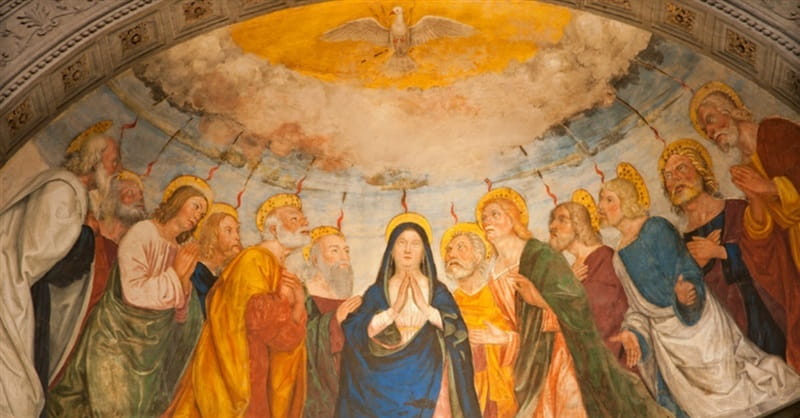
53882-52986-pentecost-sedmak-facebook.1200w.tn.800w.tn

During this Easter, as we read to Chyella from our Jesus Storybook Bible,  we were struck by the length of time between Jesus’ resurrection and the coming of the Holy Spirit. How many questions the disciples must have had!

After celebrating Easter morning, and hanging around for a while, Jesus left. Much like us now, the disciples sheltered in-place, waiting on something to change—waiting on God to move at Pentecost. It struck us how we have, in many ways globally, been brought back to such a moment.

So why don’t we, like them, focus on prayer? Until this year’s Pentecost on May 31, let’s return to what makes us a community together in Jesus, and ask to be empowered, waiting and listening. Who knows what may happen?

We’ve created a devotional for the month of May leading up to Pentecost (May 31). If you’d like to join us in reading, praying and listening together, please take our Pentecost Devotional.

For those of you who have already joined us through our April Update, follow us here to post your own insights and challenges. We’ve already been encouraged by your responses and would love to use this space to interact with and encourage one another during this month.

Love to you all!

COVID 19 and the Least of These

figure3
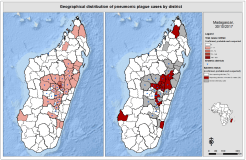
WHO map of plague in 2017

In 2017, it was the Black Plague in Madagascar. The end of 2018 saw Madagascar brave another epidemic—this time measles. It’s no surprise then that most Malagasy are jumpy at the thought of another viral wave. They’re more than accustomed to sickness and death.

It’s always easy to get absorbed in our own everyday. How much more so now?

We all have a lot of anxiety, questions, and—if social media is any indication—lots of opinions about how everybody else should be handling this crisis. Yet, the reality is, this pandemic affects different communities to different lengths. Africa in general is affected differently than America. Cameroon, Zimbabwe, India and Bangladesh all have similar (but also different) stories in the news that should summon our empathy. Let me also give you a window into the COVID-19 crisis here in Madagascar:

I went around to our different church communities in town as word spread that corona virus had officially arrived in Madagascar. Everyone was scared. With more speculation than information. Everyone assumed that it was either a hoax or it would kill us all (and they don’t even have a 24/7 news cycle here!)

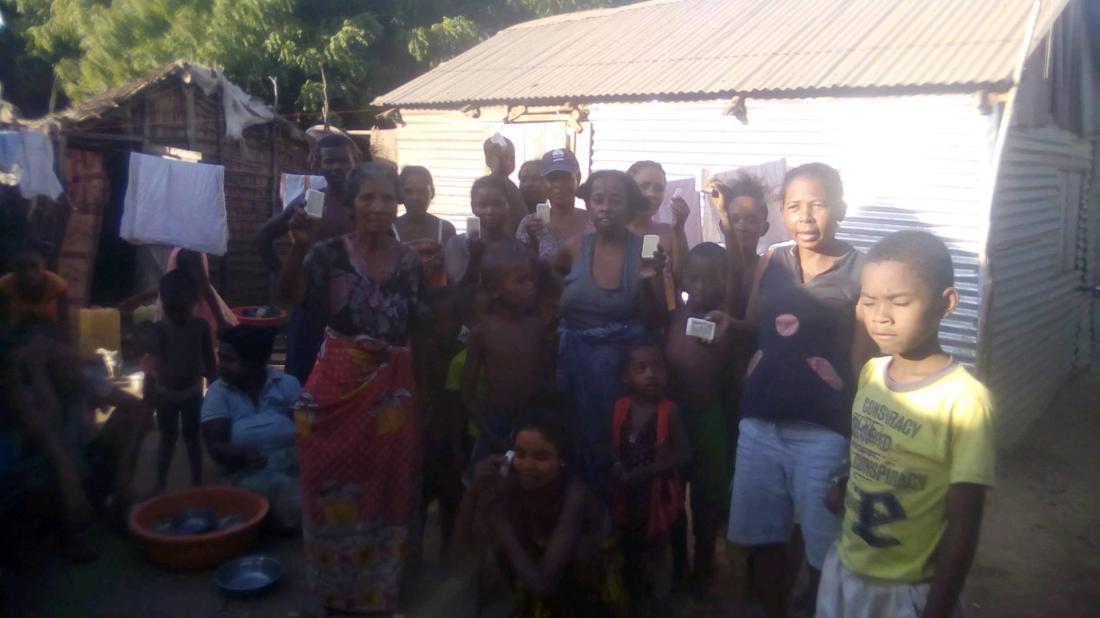
As one alarmist summarized, “First, it was cholera, then bubonic, then our babies died from measles. Now, corona virus will finish us off!” I was passing out soap and explaining how washing your hands was a good idea—all the time, not just now, but especially now. But even as I sat there and explained about basic principles (i.e. wash your hands, drink lots of water, stay a meter apart, etc.), I got sad.

90683690_2933553943398006_4648773782582853632_n
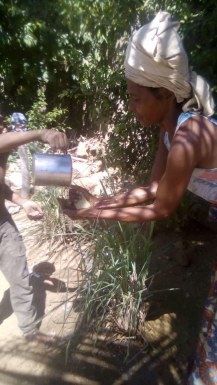
Washing hands from a cup

We were sitting in a 5 foot by 5 foot tin building. About fifteen people sat shoulder to shoulder, then did their best to move a meter apart as did my corona spiel. Even then, young kids were constantly running in and out, most of them stopping to caress my arm before they reach into the communal food dish.

Most of us cannot even comprehend—unless you’ve spent significant time in these communities—how pointless all of the corona best practices are to them. The people who live here are not stupid or disgusting. Most of them would love to wash their hands several times a day, drink more water, eat plenty, and be further apart. But they can’t!


You can’t wash your hands or drink more water when there is no water. You can’t eat food that’s not there. And you can’t maintain distance when your houses are not even a meter apart and you live on a 20 by 20 plot with your extended family of 50. And if you think those things are easy to fix—as we ourselves have thought at times—then consider . . .

  • Communities share a centrally located pump that is some distance away. Every family can only collect so much water each day, usually between 5 to 10 gallons per household.
  • You can only build houses where you have land. Most land is already owned in town. So the little plot your grand-dad bought way back when is now the only spot his kids and grandkids have.
  • You can only get more food in one of two ways: farming or buying. To farm you need land, which most people don’t have here in town. If you have land it’s far away, making it logistically difficult. But right now that’s a moot point when we’re past rainy season. Otherwise, you have to buy your food. Which is a problem if you’re being told to stop working and stay home.

One of the guys there asked me what people were doing in America. I told him many people were staying home to keep the virus from spreading as quickly. He nodded and said he had seen pictures of people bringing food to Americans in their houses. “But here,” he said, “No one’s bringing food to us if we stay home!” Then I nodded. He’s exactly right.

“Look,” I said, “It’s true. The best way to stop the virus from spreading is for everyone to stay home. But that’s impossible for you all here. Do you all have food stored at home?” They almost spat. Of course they didn’t! “Well then, you have to go work and buy food or you’ll just starve at home, right?” They all agreed. This is the reality facing many, many people around the world right now.

I don’t know how Madagascar will weather the COVID storm. Most people don’t live over 60 anyway, yet most of our friends have underlying conditions (tuberculosis, asthma, cancer, auto-immune disorders, etc.) They say the heat will change things, yet we already have confirmed cases. Just about everyone in the world is facing some kind of economic difficulty, yet, here in Madagascar, as in the rest of the majority world, there is far less buffer against uncertainty and suffering.

What I know is God is kind and just. So please, as some missionaries in Cameroon put it, consider how God has blessed you in your quarantine (and other measures against the virus). Meanwhile, please pray for the vulnerable near and far. The churches here took the soap I gave them that day and split it to share with the most vulnerable around them—especially those who they know are eternally vulnerable without Christ. The most poignant thing they shared was the gospel—always a practical, timely message. Hearing that made me glad.

90620103_350465829203459_8745733001654042624_n
People in the community showing the soaps they received

I truly believe God is using the shock of this virus to wake us up. I believe that is true for Madagascar as well. But please, remember your brothers and sisters around the world who do not have the same options many of us (including my family!) have. Lift them up to the Father. He knows what he is doing, but that doesn’t mean we should forget to intercede, especially, for those more vulnerable than us.


Here again are links on how the virus is affecting different countries and communities around the world:

Africa in general 

Cameroon

Zimbabwe

Bangladesh

India

Roger: The End

Jesus’ body, the church, revealed God to Roger. It gave him a family. And at the end, it revealed itself again to others—this time through the life of the man it had saved so many years ago.
20180127_105931 2

The End

We had noticed Roger was sleeping more and snoring very loudly. Honestly, everyone was relieved he was sleeping. It meant he was at peace and we weren’t having to move him or feed him or bathe him. He had always been a big snorer, so no one really thought anything of it. But when the nurse came to check up on him, she called us all into the room. “He’s actively dying,” she said. The weight that had been looming over all of us finally settled. She explained how to position him for comfort, how to administer the morphine, and what we would be looking for as he grew weaker. This sweet nurse was also a Christian, we discovered. As she explained how this time was for the person to make their peace with God, we all responded, “Oh, he’s been at peace with God for a while. He made the decision to follow Jesus years ago.”

Throughout those few days of Roger “actively dying,” and watching as he slowly passed away, we were each struck by the palpable peace in it all. Had God not revealed himself and Jesus not changed Roger’s life all those years ago, the scene would have been much different. Can you imagine sitting there willing for the person with a diseased brain to suddenly become coherent enough to make the most important decision of their life? Instead, we all sat there in shifts, knowing that God had prepared Roger for the journey well in advance. Nothing was dependent on Roger. Everything, including Roger, was safely in Jesus’ hands.

Tessa and I had struggled with the decision to return to America from our work in Madagascar. There is no standard timeline with Alzheimer’s, and we were at a loss to know when the right time to return would be. A year after we left, Tessa and I had independently prayed and felt right about coming back for a couple of weeks to visit her family. It was on that trip that God solidified for Tessa the desire to come back and take care of Roger when things got really tough. When he fell in November the following year, none of us really knew if that time had come yet. It was certainly not a positive development but it could still be years before he needed full time care. With a lot of prayer and inner turmoil, we made the decision to send Tessa home for a month to assess the situation. About a week after she arrived, he fell again. He appeared to have been making progress with his physical therapy, but something was still not right. We then planned for me to return as well and transition away from Madagascar to helping to provide full-time care for Roger.

After Tessa and our daughter, Chyella, picked me up from the airport, we stopped by Roger and Karen’s for me to say hello. Roger greeted me with a smile and pat on the back. He had obviously deteriorated physically (he spent most of the day sitting in a recliner at that point) but he was still alert and recognized me. As I sat there with him he put his hand on my shoulder and gazed meaningfully at me as he teared up. I responded to what I assume he was trying to tell me and assured him I was here to take care of him and his family, as his son-in-law. It was a moment I will never forget.

The next morning, as our family began breakfast after a month apart, we got a call. Roger had fallen again. This time Roger could not help at all to stand himself back up. Thankfully, I had just arrived and could lift him myself and get him back to his chair—something the women would have struggled to do themselves. Even in this, God’s timing was perfect.

The next few weeks, Roger deteriorated rapidly. With Roger’s every new low we were so grateful to God that he had led us to come when we did. There was no way we could have known. Only because of God’s kindness were we right where we needed to be at the exact right time. He had prepared us for this a year ago by prompting us to visit and showing Tessa what needed to happen. And now here we were, Roger now officially dying on the day in April we had originally planned to leave from Madagascar. We would have been too late.

The night before he died, we all sat beside Roger: Karen, Tessa, Molly, and me. We were listening to his rhythmic breathing (made less painful by the morphine) as the pallor of death grew. I think we all cherished the opportunity to sit, sing, and talk to him one last time—sharing our final thoughts in the reverie of his room. Those last few hours were surreal as we seemed to sit there still beside him while, in some unseen way, Roger made his way through the valley shrouded in death and ascended that final mountain. There at the top, he slowly pulled his knees up and cocooned himself, waiting not for the end but rather a new beginning. There was a whispered calm that night. Truly, though he walked through the valley of the shadow of death, we feared no evil, for Jesus was with us, comforting us like the Good Shepherd he is.

We had sat in shifts throughout the night, never all sitting in there at the same time. Later the next morning we all assembled and ate breakfast together, then slowly trickled back into Roger’s room. It seems Roger sensed everyone was back together—and he was ready. With his wife and daughters in the room with him, Roger let go of this life and stepped into the next, running to the One who had always loved him and adopted him into his eternal family.

It wasn’t until later my own father and mother reminded me. Roger had died two years to the day that we left for Madagascar in 2017. Only God could have done what he did in our lives over those two years and yet simultaneously arranged for us to come back at the exact right time to be with Roger.

The cold chill in my soul was warmed by the kind warm sun in the Spring air as I walked outside. I had just watched Roger step into the afterlife. A friend from church had just arrived with lunch, reaffirming one last time for Roger that God was with him in all seen and unseen ways. In the wake of death, I think everything grows a little lighter and less stable. It felt as if that soft breeze might carry me away with all that I knew. Underneath that shaken certainty, however, and past the unstoppable force of mortality, was something more real than me or the cars zipping along the road beside the house. It was more real than the chirping birds, the swaying maples or the brightly shining sun. Past all this was the bedrock-solid reality of a personality of powerful love: aware of all that was going on, conducting it all, and reaching out in affectionate care. When everything else was exposed as fleeting and fickle, Jesus stood taller and more real. He was with us.

Roger was a draftsmen. He loved the calculations and sketch work for building new structures. Roger will not be remembered for the buildings he helped build, or for any great achievements. He will also not be remembered as a poor slug of a man who limped through the end of his life as another whitewashed victim of Alzheimer’s. Roger will be remembered by his family—his wife and daughters, his son-in-law and granddaughter, and his spiritual family in the church—as a man in whose life Jesus made all the difference. Roger’s life had been torn down and then rebuilt on the solid foundation of Jesus Christ. And although Alzheimer’s leveled all the terrible weight and fury of its malevolence on him, it could never separate Roger from the One who loved him.


Roger: The Body

As the nasty disease revealed itself more and more, so did God’s love. God’s love showed up in Roger’s life as it always had—through Jesus’ body, the local church.

The Body

Alzheimer’s was not Roger’s first encounter with a heartbreaking diagnoses. Years earlier he sat in a hospital at the end of his rope. This time he was watching his daughter fade away. As he sat there, he prayed a desperate prayer to a God he had believed didn’t exist: “God, if you are real then show yourself! Please, heal my daughter.”

Spoiler alert: my wife today was Roger’s little girl. Tessa had somehow contracted e-coli, which was attacking her kidneys. The doctors had tried everything the knew and were out of ideas. They were preparing for a last ditch dialysis effort as Roger prayed his prayer for God to reveal himself.

I don’t know if the invisible God always complies with demands to reveal himself. But he did this time. As Roger sat by Tessa’s side the next day he watched as people from their church flooded the hospital. They brought food. They prayed. They listened and encouraged Roger and his family. Something slowly dawned on Roger as he watched so many people love in a way that was beyond what he had ever expected. They called the church Jesus’ body—as if in some way the most tangible expression of Jesus in the world today was standing there in the hospital room with them. Just as Roger couldn’t see a disease like e-coli but could see it manifest itself in his daughter’s sick body, so Roger could also see the living God revealing himself through the living body of the local church. Jesus’ body had come to visit them and had revealed God to them. In that moment, Roger prayed to give himself over to Jesus’ love and become a part of this loving body as well.

Almost immediately, my wife was healed. The effects of the e-coli slowly began to disappear. The doctors never had an explanation.

I’m not suggesting every sickness is a parable in disguise. But God used something evil to work a miracle. He softened a hard heart and used his people to reveal himself to Roger. The next Sunday, Roger attended church (which he had done begrudgingly for several years) and announced by walking forward that he had given his life to Jesus.  Applause erupted. Tessa and her mom and sister had been praying for Roger for years, and they had asked the church to pray with them. So for the church, Roger also became a story and a sign that God was living and active, revealing himself in answers to prayer.

Roger got used to a new way of life, following Jesus. He was giddy to discover the instant connection he had with those he had never met but were part of the family of God. After returning from a conversation with Christians he had never met before, Roger shared with a buddy from church that it was just like talking with his sister. “Then I realized, she is my sister!” he had exclaimed. Bereft of a father from an early age, Roger had finally found the love and belonging he had been longing for in this new family.

Even as Roger and Karen moved to be closer to us, Tessa and I found ourselves praying that the local church would welcome and support Roger and Karen and show God’s love to them in their hour of need. Again, God answered. Time and again, the local church(es) prayed, visited, encouraged, and upheld Roger and Karen as they suffered. The young men moved furniture and did maintenance. The young women listened and gave hugs. Men helped them with insurance. Women watched Roger and gave Karen an outlet. The children brought laughter and relief. Days after Roger died, God showed up again. This time he came to the house in multiple cars from multiple states and from multiple backgrounds and ethnicities. Small groups and small children, friends and family converged to mourn the suffering but also celebrate Roger’s life. They were happy when we were happy; they were sad when we were sad.

The neighbor across the street approached me afterward and said, “Man, we saw everyone show up for the memorial. I don’t know what you got going on, but I’m just thinking I need what they’ve got. Whatever they’ve got going on I want some of that.”

Roger: Beloved Slug

Tessa and I left in 2017 to work as missionaries in Madagascar. Meanwhile, Karen and Molly worked tirelessly to continue caring for Roger. Then, November 2018, we knew the time had come to return and help care for Roger more intensively. In true Benjamin Button form, Roger had gone from stumbling like a toddler and fumbling with door knobs to walking a few steps then falling. When we could no longer help him to the bathroom, he went back into diapers.

Alzheimer’s does not just steal people’s memories as they sleep. It seeks to humble and humiliate. It breaks people down and robs them of their God-given dignity. Loved ones are forced to find a way to deal with it. But it is, at every turn, hard to watch and hard to deal with. Especially when, at a level you can never gauge, the person who is slipping away knows what’s happening.

img221

Beloved Slug

Shortly after they moved up to be with us, Roger pulled me aside in the driveway. He was making the initiative to speak with me, which rarely happened. He told me he was sorry, sorry we had to move in with them and put our newlywed lives on hold. Then, he said something that stuck with me—that gave me a clue as to how everything was affecting him. He said, “I hate you have to do this, you’re a good guy and I’m a . . .” He struggled to find his words as his eyes darted back and forth, scanning his brain for a piece of information it had hidden from him. “I’m . . . just a . . . slug. And . . .” He trailed off. We all had to try and fill-in those missing pieces while talking with Roger. Many times, we probably misunderstood what he was trying to say. I hope I did understand him then.

Roger felt shame. He was ashamed of the burden he brought to his family without any ability to really make it any better. Alzheimer’s took away his ability to provide or to achieve anything. To hear Tessa talk, Roger probably struggled with shame his whole life. He never felt loved enough, never felt good enough. That was probably not the first time he felt like a slug: slimy, gross, unwanted, unloved little slug. I struggled then to comfort Roger. I think gave the analogy of someone with a broken arm. It wasn’t his fault he couldn’t help and needed us to. He was hurt. We would take care of him just as naturally as you take care of someone with a broken arm. But Roger’s description haunted me. I wonder how often that was his default view of himself. I know I often have similar feelings about my own self.

Roger loved the writing of Anglican minister, Brennan Manning (author of the Ragamuffin Gospel). Reading Manning’s writings in his middle-age, Roger finally understood that God loved him . . . that anyone at all loved him. Just like me, Roger had assumed before that God either didn’t love him or didn’t care about him and had lived most of his life as if he needed to make God love him. At least he could make someone else love him.

It struck me one day, as I watched my mother-in-law struggle to help Roger, how damned he was according to our culture of achievement. In his state, Roger was incapable of earning anything. He could no longer earn a paycheck. He could no longer win respect from his drive or insight. He could not earn praise for his accomplishments. Most of all, he could not earn love. Then I remembered with a jolt that I couldn’t either! Though I was a physically healthy 20 something, I had no more ability to earn the love of God or anyone else than Roger had in his weakened, confused state. I was working hard at that time to provide for our family, achieve accolades at school, and earn love from my wife by being a good husband. Yet, even though I was not disabled, I could never earn the acceptance from others that I felt I needed.

Roger reminded me that none of us can. God is not waiting for us to do great things or show great devotion before he will love us. We are all much more like Roger in his eyes than we want to realize, completely dependent and unable to achieve. God’s love flows from who he is, not who we are. Jesus came to achieve for us what we could never achieve for ourselves. Does Jesus come to those who give themselves to him and teach us to relive his achievements, to live out the good works God planned for us (Eph. 2:10)? Absolutely! But none of that has anything to do with us earning love.

When we were as good as dead, while we were sinners and his enemies, God loved us first. And once we glimpse that kind of otherworldly love that is so alien to our human abstractions of love we will weep over it and follow it wherever it goes. We love him because he first loved us (1 John 4:19). That was the miracle of God’s love working itself out through Roger’s Alzheimer’s.

Roger: Alzheimer’s

2019 was a crazy year for us, and it’s only gotten crazier since then! So many of you supported us through that year. Yet, to this point, we haven’t really had the time to process and share. But sense, like most of us now, we are forced into some downtime, we wanted to share with you the story of God’s faithfulness through the life of Tessa’s Dad, Roger.

Tessa has already shared on this blog about her Dad and God’s faithfulness to their family. I’ll be sharing my perspective here in four chapters, Alzheimer’s, Beloved Slug, The Body, and The End.

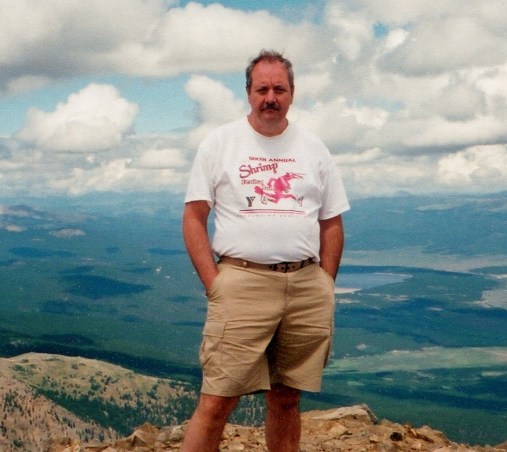
I only knew Roger a short while, and after he was already sick. But his story has changed my life. He died a year ago today.

IMG_0713

It was a perfect, spring day when Roger, my father-in-law, died. It wasn’t just the mingling energy of the cool air and warm sun that made it beautiful but the palpable sense of peace. Perfect is not a common adjective for death. It does not normally describe well at all a process that is so overwhelmingly unnatural. But death uncovered more for Roger than it buried. He suffered from ruthless Alzheimer’s for at least eight years. And he never did beat that undefeated soul-eater.  But wait, Roger’s life had been forever changed before it was slowly drained from him. Long before Alzheimer’s crept from the shadows, Roger had already cheated death out of a victim.

Alzheimer’s 

I don’t want to give you the wrong impression: Alzheimer’s is ugly. There is no dressing it up. At first it skirted around the edges, noticeable only in Roger’s mood swings or an overall melancholy. Something was wrong. Something essential was being siphoned away from him and he knew it. He ran smack into a sliding glass door while on vacation. That’s when, Karen, his wife, also began noticing things. His skills began to decline. Those too were only affected a little at a time. A draftsman working with numbers all his life, Roger was now struggling to count. Karen was faithful to give him simple math homework each day; the exercise might keep his mind keen. When I met Roger, months later, he could not solve 1 + 1 or even sign his name. Then his body began rebelling as he lost fine motor skills.

I remember one day as the two of us were searching the garage for something, his toes touched the edge of a two inch tall box. Suddenly, his arms shot out, his whole body stiffened, and he fell like a toppled statue down to the ground. It was the perfect freeze-tag pose. Like an App on the fritz, Roger’s addled brain met a problem it didn’t know how to handle, froze, and then rebooted.

He also struggled to find his words. My first impression of Roger was that he had the kind of aphasia of stroke victims. He was friendly, just quiet and worked hard to find the word he was looking for, sometimes spitting out a similar sounding but unrelated word. It is a trope that Alzheimer’s only affects the memory. Roger’s memory was quite good until he was closer to the end. It is true that Alzheimer’s extends to memory. But its reach is much more and much worse. It is a hardening and twisting of the brain—a slow, unobservable death.

See, you often hear people talk about their fight, battle, struggle, etc. with cancer. There is no such fight with Alzheimer’s. You’re not pitting your will against some aggressive opponent. You are slowly having your life sucked away by an unknown force. For all our progress and medical knowledge, no one really knows who the culprit is that is killing your brain or how to stop them. The doctors who saw Roger would rarely even admit he had Alzheimer’s, fearing, we assume, that any information would be misinformation and liable malpractice.

In April of 2014, Tessa and I told Roger and Karen we wanted to help however we could. We celebrated Christmas together in the same house that year as Roger and Karen moved up to be closer to us. We lived together in the same house as we went to post-grad seminary and Roger and Karen lived out their Alzheimer’s life. Soon after, Molly, Tessa’s sister, moved in as well. Once again, Karen was pro-active. They both ate healthy (especially “brain food” Karen had researched). They worked out together. They attended church and hosted people in their home. These were all exhausting tasks as our village pulled together to raise Roger again.


April 10

On April 10th three years ago, Nathan and Chyella and I boarded a plane to come to live in Madagascar as a family. We clung to God’s faithfulness as we embarked on a new family adventure.

On April 10th last year, my dad passed away. That morning, our home was awash with God’s faithfulness.

Dad had struggled with Alzheimer’s disease since at least 2012—my mom noticed signs much earlier. Everyone’s story with Alzheimer’s is different. For our family, God graciously allowed Dad’s decline to remain fairly slow, until a sharp plummet over Thanksgiving 2018, then a steep rush to the end the next April . . . But that final week—Dad’s final week on earth—all I remember, honestly, is peace.

My dad—funny, inquisitive, silly, tender-hearted—had in many ways been gone a long time. The man who remained was still Dad, though, and he was having a tough time. My mom and sister knew dad’s desire to remain at home, and faithfully cared for him for years, including the two years we lived in Madagascar. While we were gone, I was often wracked with uncertainty—and guilt. What if we should have stayed? What if God’s will demanded that I not spend Dad’s final days with him, offering him the deep love and care I felt for him? The Father has required much greater sacrifices of others—what would He ask of me?

Again, I can’t answer to others’ callings and decisions, only to my own. And God was incredibly merciful to me. He gave us two intense years in Madagascar. We got to work alongside our mentors and best friends during what would be their last years in Madagascar. We saw the young Mahafaly churches join the larger Malagasy Baptist Association. We had the opportunity to pour what we had gleaned from seminary into four Mahafaly church leaders who were committed to shepherding the rest of the churches.

Then, Thanksgiving 2018, Dad fell and was unable to stand or walk the rest of the day. This was a big shift for him, and Nathan and I both understood within minutes of my sister’s call what it meant for us. This was the clear sign I had been praying for—a marker of some kind along the uncertain path of Alzheimer’s that it was time to go. In six weeks, Chyella and I were back in the USA, our house in Madagascar was halfway packed up, and Nathan was wrapping up our ministry goals for a final month. I was to stay in the USA for a month and determine if we needed to return full-time. Soon, I felt sure we did. Nathan finished our packing and our work, and joined us. The day after he came, Dad fell again, and within a week was bedbound.

We had no idea how long this immobile stage would last. We were prepared—or thought we were—for much longer. But again, God was merciful. Dad passed within two months of his last fall. When the hospice nurse told us, Sunday night the 7th, that Dad was “actively dying,” a heavy, quiet peace settled over us all. His struggle was almost over.

We spent the next few days mostly in his room, taking turns at night. The hospice nurse encouraged us to give him some time alone, but we found we couldn’t. Calm hung in the house like a fog—those dewy, spring fogs that smell of fresh new life. Strange in a house awaiting death . . . but the truth is, we weren’t waiting on death. We were waiting on my Dad’s new life. When I was twelve years old, my dad trusted Jesus with my life, and his. He became a new person that day. On April 10th, that new person got to truly live for the first time. The moment when Dad passed from death to life, I know for certain Jesus was there in the room with us. He healed my Dad—forever—and took him on ahead of us. I’m as sure of that as I am anything else—and that’s where the peace came from.

Nathan and I thought we would look back on 2019 as one of the strangest years of our life. Now, of course, we—along with each of you and the rest of the world—feel that way (times 100) about 2020. These are very uncertain times. The path, and the outcomes, are not clear. But one thing I know: God is faithful.

If you’ve never trusted Christ as your Savior, please do. I would love to talk to you about it. Ultimately, the only peace we can have in the face of death comes in trusting Him. My family had peace at Dad’s death not because he was a great dad (which he was!) or because he did all the right things (which he didn’t!). We had peace because Dad had given his life to Jesus, and allowed Jesus to make him the new person he was created to be. Jesus blood washes away our wrongs, and His resurrection re-creates us to follow after Him—forever.

We don’t know what the ramifications of this pandemic will be worldwide . . . I believe they will be significant. But at this moment, we’re all—the whole world—united in this shared sense of uncertainty. What is going to happen? How will all this turn out? Though we never really know what the future holds, right now we all know we don’t know. But Someone does. He led me tenderly through years of uncertainty with my Dad’s illness. He’s ready to lead you too. Love you all.

0149 TES_0203rm

IMG_0713