Resource Spotlight: Undivided

If you’re part of the SBC you may be aware of the recent decisions of some to start calling themselves Great Commission Baptists. If you’re asking yourself, “Where did that come from?” or are just puzzled by the current cultural climate, particularly in the church, then I have some resources for you.

NAMB: Undivided

A friend just recently made me aware of an SBC effort to talk through several issues disturbing our society. As an international missionary constantly engaging in cultural issues here in Madagascar, I was stoked to hear that NAMB (our national baptist missionary sending branch) is trying to help people be on mission in American culture in this moment. I’ve found it really helpful just to hear the different voices as people seek to address what ails us from a biblical perspective. There are several sessions covering multiple topics but focusing on race and social engagement. Check out the trailer below.

History (American, Church, and otherwise)

So much of what I’m currently learning as pertains to current American moment comes back to not simply race, but history. We have Black History month as if that is somehow segregated from the rest of American history. It’s not. What some of us conceive of as one country is, as one of my black brothers pointed out, not United States but several “countries” of people with different versions of history. As a missionary, I would say we have to know these different versions of the story if we are going to engage people with the best story of Jesus.

Unfortunately, there is a version of the story that is pretty uncomfortable for the “American Church.” I put that in quotes, because what I have learned is that what I think of as the “American Church” is really a predominantly white church. I have been helped greatly by Jemar Tisby’s The Color of Compromise. He does an admirable job of condensing the American Church’s timeline into an historical survey that brings out the heavy silence from the church on racism. Historically speaking, there would be no Black Churches, Asian Church, Hispanic Churches, etc. if it were not for white Christians who would not accept their brothers and sisters who did not look like them as equals.

If you doubt that, or think of the Church’s role in things like slavery as just an unfortunate incident, then please read the Appendix to the Narrative of the Life of Frederick Douglass. I am thankful I was taught to view Douglass as a heroic figure. Yet, I was never aware of his scalding words on the “American Church” and our version of Christianity:

. . . between the Christianity of this land, and the Christianity of Christ, I recognize the widest possible difference—so wide, that to receive the one as good, pure, and holy, is of necessity to reject the other as bad, corrupt, and wicked. To be the friend of the one, is of necessity to be the enemy of the other. I love the pure, peaceable, and impartial Christianity of Christ: I therefore hate the corrupt, slaveholding, women-whipping, cradle-plundering, partial and hypocritical Christianity of this land. Indeed, I can see no reason, but the most deceitful one, for calling the religion of this land Christianity. I look upon it as the climax of all misnomers, the boldest of all frauds, and the grossest of all libels.

Frederick Douglass, Narrative of the Life of Frederick Douglass, 95.

He goes on, and I would encourage you to read it. From the very beginning of American history and therefore the history of the church in America, we have been a double-minded and divided people.

I hope that resources like Undivided can help us course correct. But if we don’t engage with other resources like The Color of Compromise or aren’t aware of our own complicated history of complicity, there’s no way we’ll be able to talk to each other, let alone understand one another.
Resource Spotlight: Politics

Yep, be very afraid, we’re dipping into politics. We know we’re all thinking about it. How can we not with social media lit up with opinions and ire and a presidential election around the corner? I’m not looking to fan any fires: if anything I’d like to recommend a couple of resources that I hope will if anything dampen our sound and fury while helping us discern our role as Christians in this time.

Jonathan Leeman @ Downtown Church

Jonathan Leeman from Capital Hill Baptist and 9Marks ministries has four sessions on the Church and Politics. He covers the Church’s distinct perspective on politics as people who follow King Jesus. The church is an explicitly political organization because we follow a king, not a party, platform, or president . . . the king of kings. He also discusses how to get along as church members with differing political views and gives some advice on thinking through voting as part of our role in American politics.

We do not agree with everything Leeman says. In fact, though Leeman is very thoughtful, helpful, and non-incendiary, it struck me how very unfair it is for me to expect one voice (be that a person, pastor, pundit, organization, church, etc.) to give me all that I need to be faithful to God in the political arena or even just the upcoming election.

I am very grateful for how Leeman deals with both his political agency and authority in his local church with the appropriate gravitas and humility. What struck me, however, is how little we have these discussions around politics together as Christians. One man, like Leeman, cannot possibly educate us and give us enough discernment for the job of political engagement. We talk about the great gift and responsibility of voting. But if it’s such an honor, why don’t we do a better job of educating ourselves on how to do it well together as Christians?

I think that’s the unique contribution of the next organization I want to recommend . . .

The (&) Campaign

The (&) Campaign is a non-partisan political movement designed to clarify the Church’s voice in politics. That I am aware of, they have a website, a podcast, and a book (below) that just came out. I’m reading through the book right now and I have found it very practical. It’s called Compassion and Conviction because they are trying to bridge the partisan political gap between a lack of compassion from political conservatives in the Church and a lack of conviction from political progressives in the Church. The faithful way of political engagement for Christians, they argue, is both compassion and conviction, a middle way . . . or perhaps a politic that looks radically different than any current, partisan options.

For people in the States, they also have local chapters people can join to discuss and mobilize for political action. We are not in the States; we’re only able to learn from afar through the podcast and book. Still, I’m extremely grateful for a para-church organization doing just that: gathering and organizing churches to give us a forum for political discussion and action. Trying to address what ails our nation is so much bigger than just voting in November. The Church cannot be part of the solution until we listen to each other (especially those with very different perspectives) and mobilize in our local communities. Voting is a big part of that; but it’s so much more. I hope these resources help us work together to become the alternative society God has brought us together to be.

Extra! Extra!

Some timely resources with some explanation . . .

  • The future of post COVID-19 missions
  • How statistics can be helpful (or not)!
  • Podcasts and leaders in digital ministry

COVID-19 and Missions

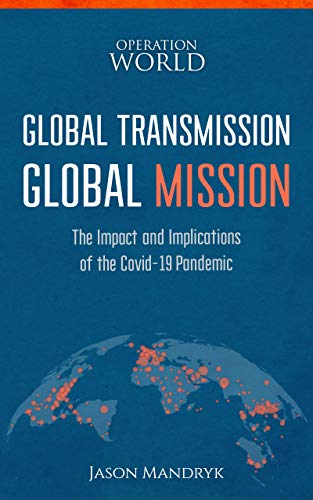
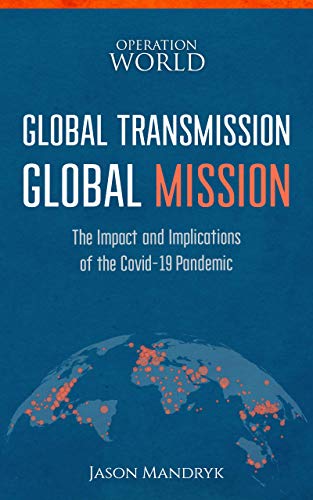
You may be familiar with Operation World for the global prayer resources they provide. This little book is really no different. Mandryk, in concert with voices of leaders from around the world, has compiled some, self-admitted, speculations about the mid to post Covid-19 World, especially when in comes to missions. Some of the more helpful bits to me were his reflections on how sending, training, and organizing missionaries will have to change.

I first came across this at lausanne.org and you can download it below.

I have found lausanne.org a natural place to peruse for resources on global mission during this time. Lausanne is an evangelical coalition of Christians (first founded by, among others, Billy Graham and John Stott). Take some time to explore all of their content, the variety of voices from around the world has made me wiser about our current moment.

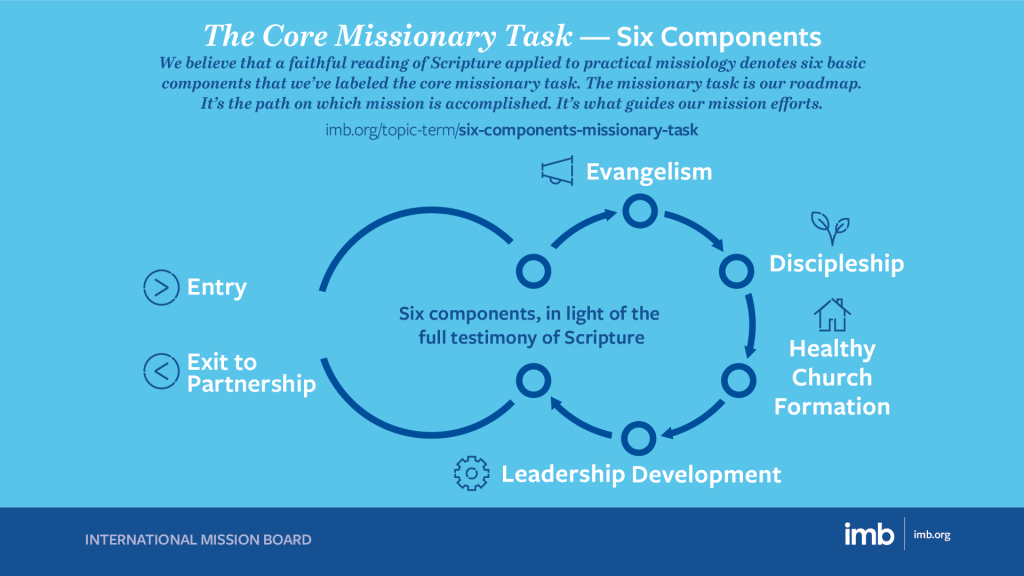
Also, as you think about missions, here’s an infographic from our organization to help you think about missions in your context. Breaking down the goal of missions into these categories has aided us as we follow along this progression with our church plants here in Madagascar.

As churches continues to decentralize their more and more, it becomes even more important for each of us as Christians to find our place in the Task picture above. No one Christian can complete the Missionary Task. It is actually a Church effort where everyone, whether accountant, artist or theologian, has a part to play in one or multiple sectors of this task.

Statistics

We’ve been working recently to learn better ways of gathering and reporting data for our mission here and I’ve been reminded many times of Kahneman’s warnings in Thinking Fast and Slow. A respected expert, Kahneman’s dense book walks through multiple ways we misunderstand and misapply statistics on a daily basis, especially because of media.

Kahneman worked as a researcher in the field of psychology, and is especially interested in decision theory. His thesis, over a lifetime of research, is that we are not rational thinkers. Instead, we resort to a plethora of what Kahneman calls heuristics (cognitive traps or biased ways of thinking). As he himself explains, “This is the essence of intuitive heuristics: when faced with a difficult question, we often answer an easier one instead, usually without noticing the substitution” (12-13). 

The novel corona virus has made everything more complex. But sometimes it looks like we’re replacing these complex questions with easier ones. Especially in the current onslaught of statistics in the media, you may find this book helpful. Kahneman winds through example after example of particular traps (heuristics) we use unaware: we are highly suggestible, we are naturally lazy thinkers, we abhor loss, we are overly optimistic, we don’t learn inductively, our intuitions suspect, our memory trumps experience, etc.

Throughout his book, Kahneman challenges the notion that we are rational thinkers. We need tools, strategies, and even better language to help us think things through. The best application, most likely, is to slow down in situations you recognize may incite cognitive traps instead of accepting the first answers that present themselves. So, instead of immediately sharing that scintillating new graph, we should think through whether something means what we think it does.

Digital Ministry

Speaking of statistics . . . a new podcast from Barna. For years, Barna has sought to equip church leaders with real time data. Barna’s ChurchPulse Weekly podcast is now what I listen to every week as I race around for groceries. Every week they seem to improve upon the last, digging deeper into data about church attendance, race, cultural trends, and digital ministry. They’ve also hosted a range of voices who have helped me think through our changing context here (even when the contexts are vastly different!) The most recent one was again on digital ministry.

122 | Looking Forward to 2023 ChurchPulse Weekly

Send us a textDavid Kinnaman and Carey Nieuwhof share insights and ideas about the future of the Church and some exciting news about what's next for the podcast. Stay tuned for more to come in the new year!   – Follow Barna at: Instagram: @barnagroup Twitter: @davidkinnaman | @barnagroup Facebook: Barna Group Youtube: Barna Group   Relevant Links: Barna Access Plus Gloo: Find out more about the He Gets Us initiative at hegetsuspartners.com/churches
  1. 122 | Looking Forward to 2023
  2. 121 | Key Trends and Insights: 2020-2022
  3. 120 | Stephen Chandler on Responding to Voices of Opposition in Ministry and How Selfishness Has Affected Church Culture
  4. 119 | Lisa Bevere on the Crisis in Discipleship, the Pressure on Leaders, and Deconstructing Versus Destroying
  5. 118 | Bryan Loritts on the Challenges of Fatherhood and Why Juneteenth Matters for the Whole Church

This is the second time they’ve hosted Nona Jones. She does a great job helping leaders on social media think not about mere “reaches” or “likes” but actual engagement for discipleship. I’ve dropped a more extended talk by her below if anyone is interested. She also has a book, From Social Media to Social Ministry, that I have not yet read, though I’m sure it’s also helpful based on what I’ve heard from her.

An extended sessions from Nona Jones on digital discipleship.