Back with the Mahafaly

Well, it’s been a while. Sometime soon we’ll try to go back through the past year and review how we got back here in Madagascar. But for now let us share about our Mahafaly friends:
IMG_4312

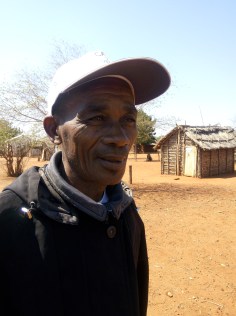
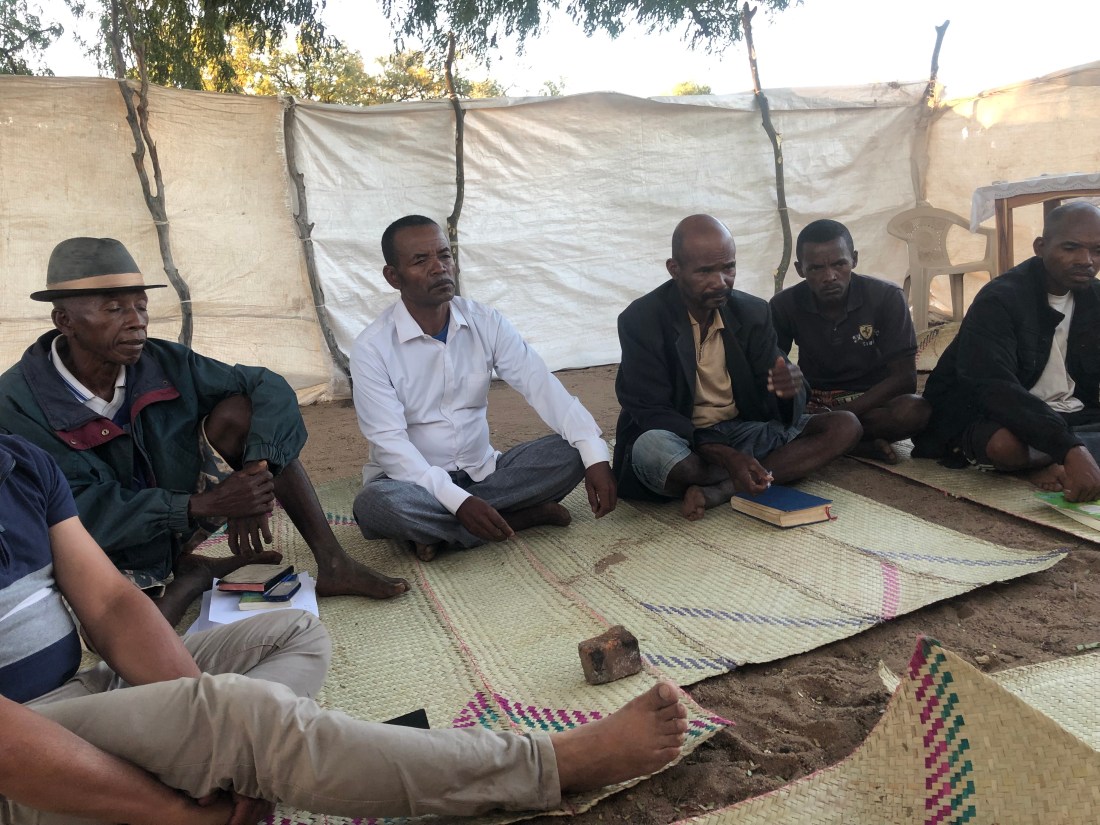
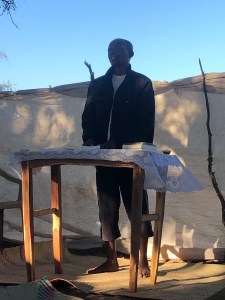
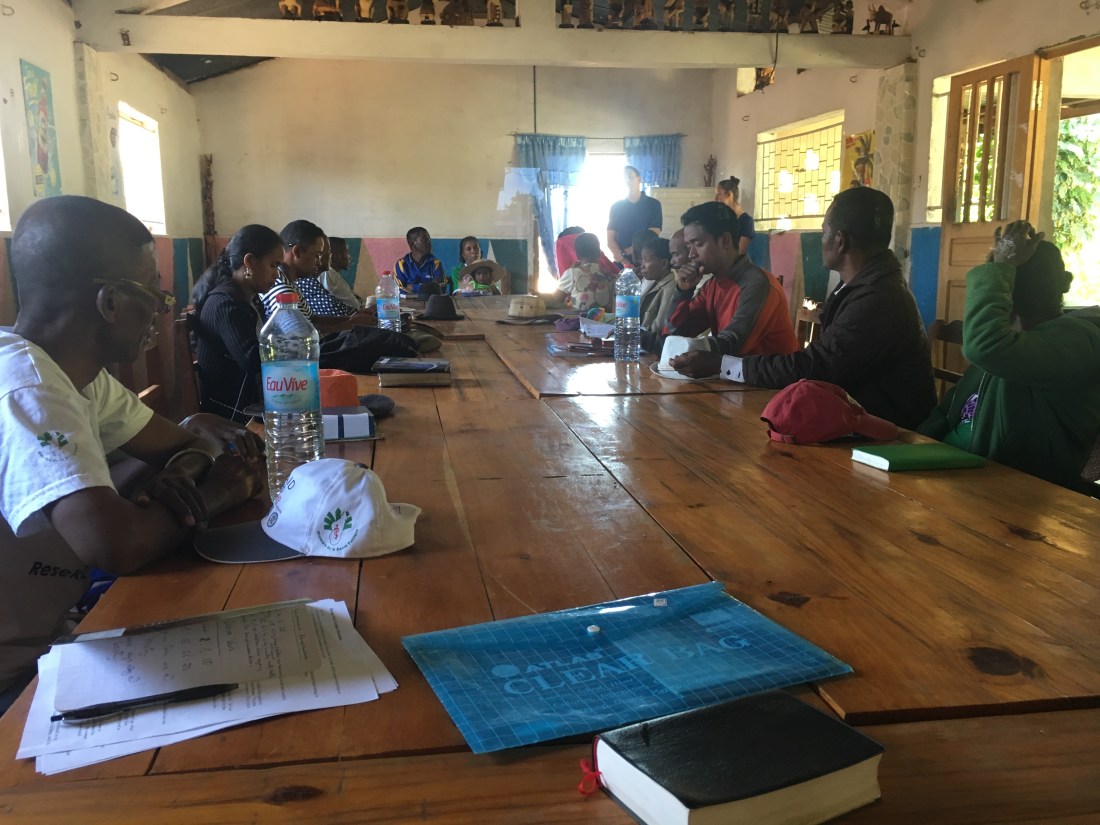
I (Nathan) had the privilege of traveling with our national partners from the Malagasy Baptist church here to check-in on the Mahafaly. In a kind of miracle, with only two or three phone calls months before our trip, several church leaders and their wives were already gathered and waiting for us in Kilimary. They served our team and led us in a reading of God’s Word as we sat and visited with them, sharing their testimonies with those who had not yet heard them. I was excited to see Emora, one of the four guys we spent the last two years training, reading and teaching from the Bible.
IMG_4181

The Mahafaly now have people like Emora who are being trained to teach themselves from the Bible instead of waiting on the arrival of the missionary for a word from God.As we sat and listened, a strange thing happened. Emora began passing our coffee cups and pouring coffee out of a large dirty bucket. For most of us the dirty bucket used to serve coffee to everyone would be strange, but it was Emora serving us that caught my eye. As Emora himself explained, “Mahafaly culture treats women very poorly.” Mahafaly culture is very patriarchal. Only women are allowed to serve. Chores like serving drink or food, washing clothes or washing dishes are unmanly and reserved for women. There is a very strong stigma against men who do these tasks. They are called lazy and weak and considered not manly enough to get a wife to do these things for them.

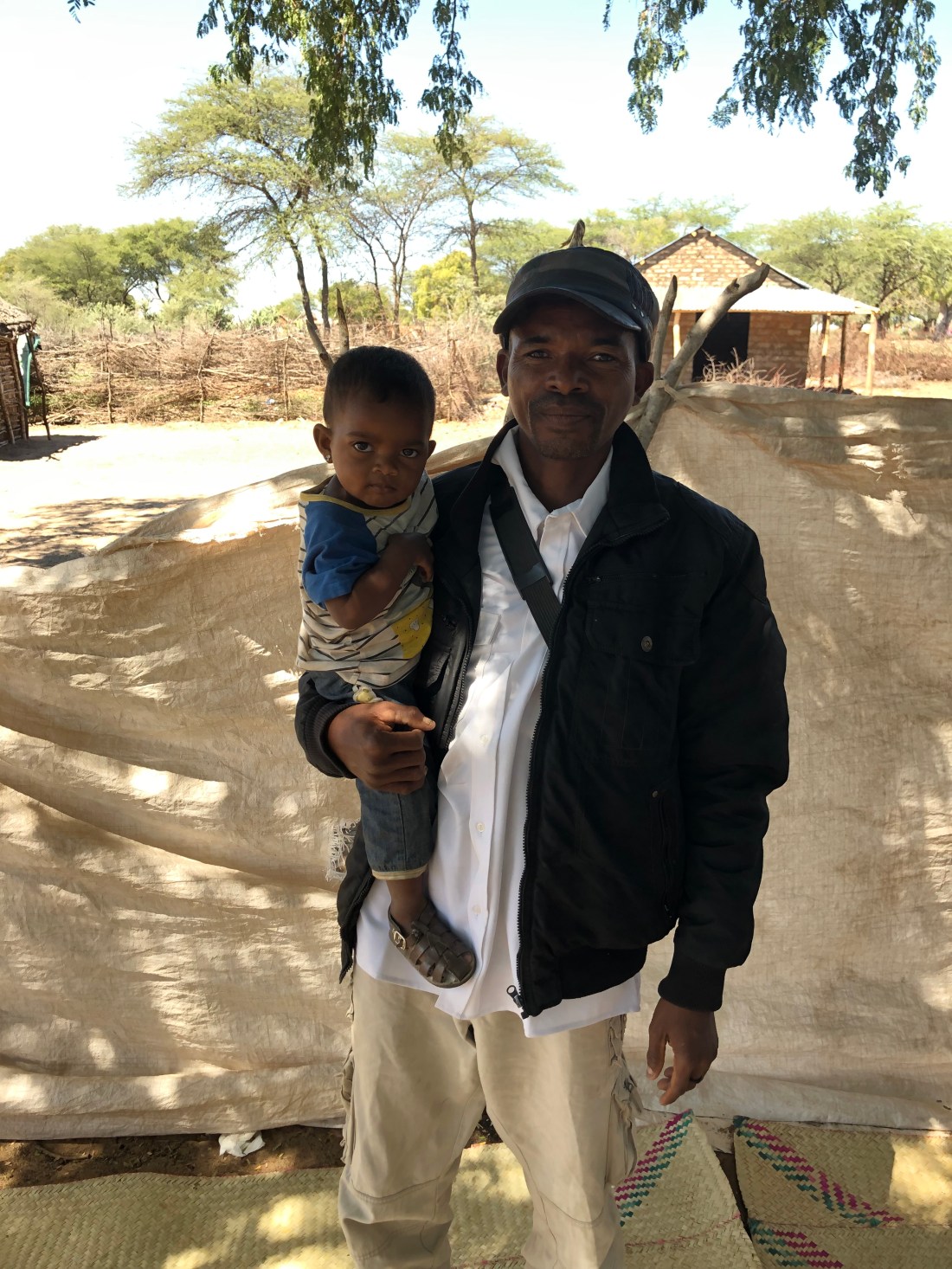
Our team spent a lot of time last year working with these guys to walk with them through God’s view of marriage found in the Bible. Implicit in biblical marriage is a loving adoration for your wife as an equal partner made in the image of God. Then, as Emora moved on to wash out all our coffee cups, he explained what happened when he and a few other leaders traveled three days north to the capital to attend a large Malagasy Baptist meeting. Suddenly when it came time for food there were women and men serving lunch for everyone. Then when it came time for coffee you served yourself! And everyone washed their own dishes! It was revolutionary for Emora to see equality between men and women, each respecting and serving the other, played out by the church. When Emora returned home he approached his wife and asked, “Would you like it if I helped out with washings and taking care of the kids?” He said he saw his wife’s eyes light up and her body grow visibly lighter. “Yes! Of course I would. I’m exhausted!” she said. Emora went on to say that whereas Mahafaly culture stipulated the women always serve the men, they now partnered together as husbands and wives to help each other and to serve others.

We watched the rest of that time as husband and wife came in and out of the tent, each serving with a new kind of joy. “Our customs were wrong,” said Emanda, another leader, “We are now Christians. We have a new fomba (i.e. culture or way of doing things).”

There are many debates about how missionaries and religion shape indigenous culture. What I saw on this trip was that God’s customs (his way of doing things as revealed in the Bible) and his church (where we put his way of doing things on display) are sometimes diametrically opposed to what we naturally think, feel, and believe according to our culture. But man is it a better way to live! In some way, we are all called into God’s culture: no longer as Americans or as Malagasy or as Mahafaly, but as Christians.
IMG_6934
Emora with his youngest daughter, Sambatra


The Lift of Love

Recently, I shared my testimony with a visiting team and was surprised to find myself reduced to tears thinking about God’s great love for me. Still reverberating in my soul is the deep truth that the great and good God loves me. As the son of a Southern Baptist pastor, I had memorized 1 John 1:9, “If we confess our sin he will forgive us and cleanse our sin.” “But what if I forget to confess?” I thought. Or what about the sins I don’t even know about? Never settle for one sentence from God; always keep reading to see all that he has said. Please do, because what he kept saying in 1 John set me free and still stirs my soul to praise: John says he’s writing “so that you may not sin,” but if and when anyone does sin “we have an Advocate with the Father, Jesus Christ the righteous one,” and His very body is the sacrificial exchange for our sins; not just for our sins but for the whole world (1 John 2:1-2). I knew as soon as I read it that I was free because of Jesus. And this has made all the difference.

I took another path starting that day that has led me to surprising ministry in Madagascar and many other good gifts, not least of which is a wonderful wife in Tessa. Yet, every single good thing in my life is from Jesus. I am not who I once was, but only because he changed my life trajectory. Any good that is part of my life or good things I have done all have their root in Jesus. “I have no good besides You,” (Ps 16:2). He is my good.

This morning, I again teared up as I suddenly began meditating on the hymn Love Lifted Me: 

I was sinking deep in sin,
Far from the peaceful shore,
Very deeply stained within,
Sinking to rise no more;
But the Master of the sea
Heard my despairing cry,
From the waters lifted me,
Now safe am I.

Love lifted me!
Love lifted me!
When nothing else could help,
Love lifted me.
Love lifted me!
Love lifted me!
When nothing else could help,
Love lifted me.

When he lifted me, I was slowly sinking beneath the weight of failure. I had failed the SAT scores several times, failed at love, and was sinking deep in the sin of pornography. I didn’t know it then, and I forget it now, but what my soul was screaming for was love. And Jesus, my Savior, heard that despairing cry from my soul that no one–not even I–could hear. His love lifted me.

I know He will never let me down. His love will continue to lift me and he will continue to be my song–the fuel and inspiration driving me onward. Surely good will come of this, because He is a good God and works all things–confusing, hard, uncomfortable, nerve-wracking, and down right sad as they may be–for our good.

Thank you all for praying for us. I have been drawn back to my first love again this morning (Rev. 2:4). His love, once again, has lifted me

Bring What You Got

Just this past week we took our annual trip downtown to hand out some rice for Christmas. It struck me, as we sat there this year watching Scrooge shut down the guys asking for a donation for the poor (you might remember something about “prisons,” and “workhouses,”) that we would soon be doing the same ourselves. I was overwhelmed with the poverty when I lived here before. More appropriately, I was overwhelmed with the type of poverty here. I’ve written before of the understanding here that everyone suffers. Those who suffer most are labeled mahantra or “beggars.” Many of these beggars would be in facilities for the handicapped were they born somewhere else. Here, they roam the streets in make-shift wheelchairs and crutches, sometimes literally holding their bodies together or contorting their limbs just to move along. Some carry extremely malnourished babies in their arms, skin drooping off their own bodies. All of this shocked and disturbed me into action when I lived here before.

By God’s prompting and guidance, I began meeting with these beggars and sharing stories from God’s word with them (along with a midday snack, basically). I did this as opposed to just giving money because I was furthered disturbed by perhaps the greatest suffering these people endure: shunning charity. People give them money or bread just to get them out of their face. Understand, these people have nothing to lose and act like it. They are relentless beggars. Those of you who have been here before know. I too have given out of that same distanced heart before. Yet, it struck me as I sat with these people that they were shunned by everyone, even each other sometimes. They needed friends. They needed relationships not hand-outs.

Again, through God’s leading I began bringing along friends from our church until our church adopted this group of beggars. Now, every Christmas and National Independence Days (the biggest celebrations of the year), our church brings what they have and shares with this group. But perhaps the biggest thing they share is relationship. They know each other now. It’s such a joy to have actual conversations with these people now instead of merely performing our mutually despised exchange.

Still, it is not all smiles and sweet conversations. We got mobbed this time by over a hundred angry beggars. There is still bitterness and in-fighting and pettiness galore. Actually there is a surprising amount of yelling. Families and friends can yell at each other too, right? But there is something else also: not another resentful, blank stare but true recognition of another human personality, requiring dignity, expression, gratitude, and questions about family . . . give and take.

Jesus once told his disciples to feed what was probably no-more than a hangry crowd of 5,000 with nothing more than what they had. It was a “bring what you got” sort of situation. That’s what our church did today. Ours wasn’t much either but we brought what we had and shared it with our begging friends. But first, we shared with them the story of the man called, Jesus, who called the poor and suffering “blessed” (Lk. 6:20). The God who chose to come and suffer as a man, dying in our place, who being rich became poor for our sake, knows what its like. He came to put us back into right relationship with himself and others. And just as the Feeding of the 5,000 reminds us, we have to “bring what we’ve got” in order to make that happen for others (to be in and to have relationships with others). Then, no matter how small “what we’ve got” is Jesus will bless it and share it and in the end we will find ourselves unexpectedly filled up as well.

Especially if all you have is yourself–your time, your attention, and your respectful presence to a human life gone unnoticed and unappreciated–bring that to Jesus and see what he does with that. In fact, that’s what he really wants when it comes down to it– your life. Having nothing but your naked, unspectacular life to offer to Jesus is something our beggar friends are faced with every day and that is a heck of a lot more than you or I remember most days. Maybe that’s why Jesus calls them “blessed.” At least, that is what we have found working with the “blessed ones” here in Madagascar.

Mahafaly Marriage Retreat

We have been talking since last year about our need to focus on marriage in our work among the Mahafaly. I am happy to now share about the Marriage Retreat last month. For the first time, the Mahafaly church leaders and their spouses came together for three days to grow closer together around God’s plan for marriage.

IMG_4185

First, some context: last year we set out on a follow-up trip with two of our leaders. The trip ended abruptly when we discovered that one of them was in the process of taking a new wife. As the story unfolded, we learned of his affairs with other women as well. Obviously, we did not continue on our trip. In a short time, another leader also took a new wife. What followed was a painful season as the Mahafaly leaders worked to truly practice what they have long studied about God’s plan for marriage. The other leaders have faithfully disciplined these two, and as a group are seeking to hold one another accountable. But we felt that we needed to hone in on the topic of marriage to help them see how to practice it culturally as new believers. God’s perspective on marriage and ours, whether Mahafaly or American, is vastly different.

fullsizeoutput_32f7

Everything went even better than expected at the marriage retreat. Above all, there was a spirit of gratefulness: from the hotel staff where we held the event to the participating couples. The mere fact we had prioritized marriage and family seemed to mean more than anything we could have said or taught. However, the teaching also had great impact. In particular, we concentrated on the one flesh relationship within marriage. Our couples, particularly the men, where challenged by God’s relationship with us as a model for our love for our spouse. Just as God is committed to never leaving us alone, so we are to never separate ourselves from our spouse. At the end of our time, all the couples declared together that they would never divorce each other.

IMG_20180916_103540
Efanake

One of the women who attended (Rasoafeno) brought her unbelieving husband. During our time her husband, Efanake, decided to follow Jesus. Continue to pray for him. As a witch-doctor he has yet to make the decision to burn his charms–the point of no return in this culture for surrendering all to Jesus.

Many of you gave financially toward hosting this event, providing for the meals and lodging that freed up these couples. We also prayed that God would allow the time to be led by Malagasy nationals and not by us as foreign missionaries. The truth of God’s Word is the same, and we felt confident on sharing on God’s plan for marriage from the Bible. But we desired Malagasy brothers and sisters to share God’s truth with grace, wisdom, and the cultural sensitivity. While Tessa and I as well as Grant and Jodie Waller each led different sessions, the time was spearheaded by our Malagasy friends and partners Olive and Narindra and Anthonny and Sandy.

We give glory to God for how everything came together. Last year, we began praying and asking you to pray about hosting a time that would allow the Mahafaly wives, especially, the time and environment to focus on their marriage. God gave us that special time.

Satan has been attacking marriages in general and specifically our leaders. We’ve seen this pattern developing not just among the Mahafaly, not just in the bush, but also in Toliara, in other denominations, and among other tribes as well. Please continue to pray for marriage here, especially for our leaders, and especially for two specific leaders. The two men from the opening story still need your prayers. Pray God would give these people tenderness and that the Holy Spirit would convict of sin and lead the marriages to restoration. We could not have one this alone and we are grateful to you, our friends here, and to God.

Don’t Grow Weary

I recently shared Jesus with a pousse-pousse (rickshaw) driver in town in Toliara who decided to accept Jesus’ blood on his behalf. We keep track of how often we share and how often people make decisions. According to our records, I have personally shared the gospel 142 times in the past six months. Counting this man, Solondraza, this is the 3rd  person we have seen decide to follow Jesus this year. Of course it doesn’t actually work like this, but statistically I shared the gospel 47 times before I saw anyone accept the offer. To this point, 3 men have made decisions and they have all been different:

First, there was Erik, also a pousse-pousse driver. He had stopped by our cell-group, heard the gospel, was convicted, but rejected the offer. Only later when he was at home at thought through what he had said again did he call out to Jesus. He told us the next week in our group what he had done.

We have been sharing with Efanake forever. He is husband to one of our women leaders who shepherds a cell-group of women out in the bush. Efanake is an ombiasa (witch-doctor), and is scared to let go of his proffession. Grant and I both have share with him numerous times. Only after he ran away from his wife, returned, and then joined her at a recent marriage retreat did he make a decision.

Solondraza was just ready. As I got out of the pousse we talked about churches. He immediately shared with me that he did Catholic mass but felt like there was more. I shared with him how Jesus sacrificed himself once and for all time for his sins and only by submitting to Jesus and receiving his blood could he be free. He immediately asked what he needed to do. God had already prepared his heart.

We consider ourselves to be serving God in a very open environment. It is very easy to talk about spiritual things here. And still it takes our time, effort, and endurance to continue sharing the gospel in hopes that people accept. I am encouraged to see the variety of ways God works to bring people to himself: One guy needed to mull over things a spell. One couldn’t run away from God. One was already hungry for more. I do wish people accepted the offer more often. But I am encouraged to not grow weary in our labor here (Galatians 6:9).

I encourage you to not grow weary where God has you. It is worth it every time to stand and pray with someone and feel the spiritual jolt in the air as a dead man comes to life. This is not our work; we only cast the net. And I am encouraged (and encourage you also) to keep casting, even to cast more often, to find the 1 in the 47 that God is preparing.


Suffering and Mission

Part of what we are doing right now is crafting and translating stories from church history into the Mahafaly dialect. We want to connect them to what God has been doing through the church through the years. We are now working through the story of William Carey, the so-called father of modern missions.

There were a couple of insights from that session I wanted to share with you. In the story, we pointed out that Carey was poor but taught himself constantly in order to be a better missionary. The word “mission” we ended up translating in Malagasy as “God’s work to be done.” Basically, because there was work to be done, Carey, despite his poverty was doing what needed to be done in order to do God’s work still to be done.

But our Mahafaly partner and friend, Edia, raised his eyebrows. “What do you mean he was poor?” I went on to describe that Carey was bi-vocational, working for free as a pastor and making his money as a cobbler. He also struggled to put food on the table, did not have ongoing educational opportunities, and often sacrificed food, clothes or other belongings if he wanted to buy a new book. I already knew it was coming as the words left my mouth. What I had just described was almost everyone’s life here. Edia said, “Carey wasn’t poor. He was just suffering. People here say every day, ‘Yeah, I’m suffering, but I’m not poor.'”

(Turns out, the word for “poor” here is better translated for us as “beggar,” someone who is no longer working but solely depending on others for survival. The “poor” or “beggars” here are very different. Almost all are physically or mentally handicapped. Everyone else is only suffering.)

That is one of the greatest lessons I, personally, have taken from our time here: Everyone suffers. We forget, having built our lives around comfort, that we live in a dying world, where most struggle to survive, and all of us suffer. It’s been that way since we fell from grace.

But even by their own standards, the South is suffering badly. The rains have come less and less over the past five years. Now, the Mahafaly are in a crushing drought. They are facing a year in which none of their crops produced. The only food right now is coming from a crop harvested a couple years ago in another area of the south. Therefore, stale, old cassava (from another area, from another year) is their only food source at the market now. What happens when that runs out? In times past they have harvested food from the forest. But deforestation and a slowly intensifying drought (linked to said deforestation) have also drained the dwindling forest.

This year, US Aid invested $4.3 million for 1,870 metric tons of food to help the South. That’s after pouring $39 million into the Southern drought crisis since 2015. Recently, we heard the story of a young, single mother. Her joke of a husband left her and their young child to find a better life. Having no food and no husband to get any food, she cooked the only thing she could–tree leaves. It is a huge problem we are constantly trying comprehend and help address. It is a new level of suffering for the Mahafaly.

And yet, just like Carey, the Mahafaly are doing what needs to be done in order to do God’s work still to be done. That young mother was helped by one of our churches (and God provided for her). Even as some move away to find work, they take the gospel with them. More churches and more Bible studies continue to be started. Leaders continue to go on empty stomachs and teach those new in the faith. Are they worried? Yes. Do they understand why this is happening? No. Do they even doubt God’s plan? Oh yes. But they learned a long time ago–and not from us–that suffering is inevitable but survival is a choice.

Please, do not misunderstand, the Mahafaly are not victims. The believers here struggle to be sure, but they do believe God has a plan to turn this evil for their good. And they work hard to do his work. They can’t stop the drought; none of us can. But they believe what God has said: There is beautiful new world coming back with Jesus, free of all suffering. And in the meantime, there is God’s work still to be done in making sure everyone knows about that–that everyone who will can be there.


Charms

In Madagascar, a witch hunt is not a fiction. I do not have in mind taking these people to jail or burning them at the stake, but witches do exist here. In every bush village, in every bustling town, even in other countries there are Malagasy witch-doctors (ombiasa). They are normal-looking people, but their methods are strange. They shake old bones in a cup like Yahtzee and scatter them over the ground. They bind together human hair, mud, scraps of books, and goat poop. They slit the throat of animals and pour their blood out in oblation. They drink until they lose themselves and the spirits begin speaking through them.

Here the situation is very simple: everyone will tell you that the ombiasa gets his or her power from the spirits. Most are more honest and say the power comes from evil spirits. And, as our own folk tales go, there is always a price to pay in a deal with the devil. You can give the ombiasa money, or a goat, or a cow if it’s a big ask, but you are going to give up something. Sometimes it may even be a child. But unlike Johnny and his fiddle, these stories never end up well. The devil always get his due.

Several ombiasa, thanks be to God, are now following Jesus. One of them is in the group of leaders we are training. He recently asked, “So what about in America. Do you all have witch-doctors there?”

It is not the first time I’ve gotten that question. But it always vexes me. On the surface there is nothing similar. Maybe it’s different where you are but I’ve never lived near the local witch. When someone has a problem or gets sick, they do not immediately run to the local ombiasa. Or do they? Surely there must be some cross-over.

Think about it again. Listen to the job description of an ombiasa: They offer healing and power–the chance to be or to have who you want to be or what you want to have. They make charms for sick stomachs. They make charms that make people fall in love with you. They make charms to curse your enemy. They make charms to help you get pregnant. There are even charms to get you that car you want, or more money.

Are we sure we don’t have anyone in America who fits this job description? True, we don’t carry around sacks of hair and goat poop around our necks thinking they’re making us better people. But one look on YouTube or even eavesdropping in a coffee shop will remind you that we do indeed have a professional we go to for power. Oh now, we don’t call it power. But that’s what it is. We want healing, so we take the miracle pill. We want to be our best self, so we listen to our trainer or our therapist. We want be spiritually healed, so we give money to the man on TV.

The reason it always vexes me when they ask about our witch-doctors is that I feel, deep down, like we should be way past witch-doctors. Of course we’re better than that! But I don’t think we are.

The answer is, perhaps, more clear here in Mada. Those who are still hanging on to their charms cannot be baptized. They are hanging on to a way of life that is the end of Satan’s leash. Until they cut that leash and throw themselves into Jesus’ arms we know they are not ready to follow him. That’s not to say they don’t still struggle with health, or money, or their marriage. They simply stopped going to the professional and started going to God for the answers. And they are better for it.

Because the gospel does not ask for payment up front. None of us can afford the cost of true change. The catch is that Jesus paid up front for us. We can boldly approach God, free of cost. But only if we cut the leash and throw ourselves into Jesus. But that’s not just here in Madagascar. What does that look like where you are?

Teams

We’ve been hosting some different volunteer teams throughout April and May. It is always a joy to have people visiting. We are helped by having new eyes on God’s work here and love the camaraderie as well. Short-term teams generally require a lot of energy, but these teams blessed us and our people far beyond any of our efforts hosting. Thankfully, both these teams came ready to learn and ready to serve the people living here, which are two main ingredients for a great time.

fullsizeoutput_25e7

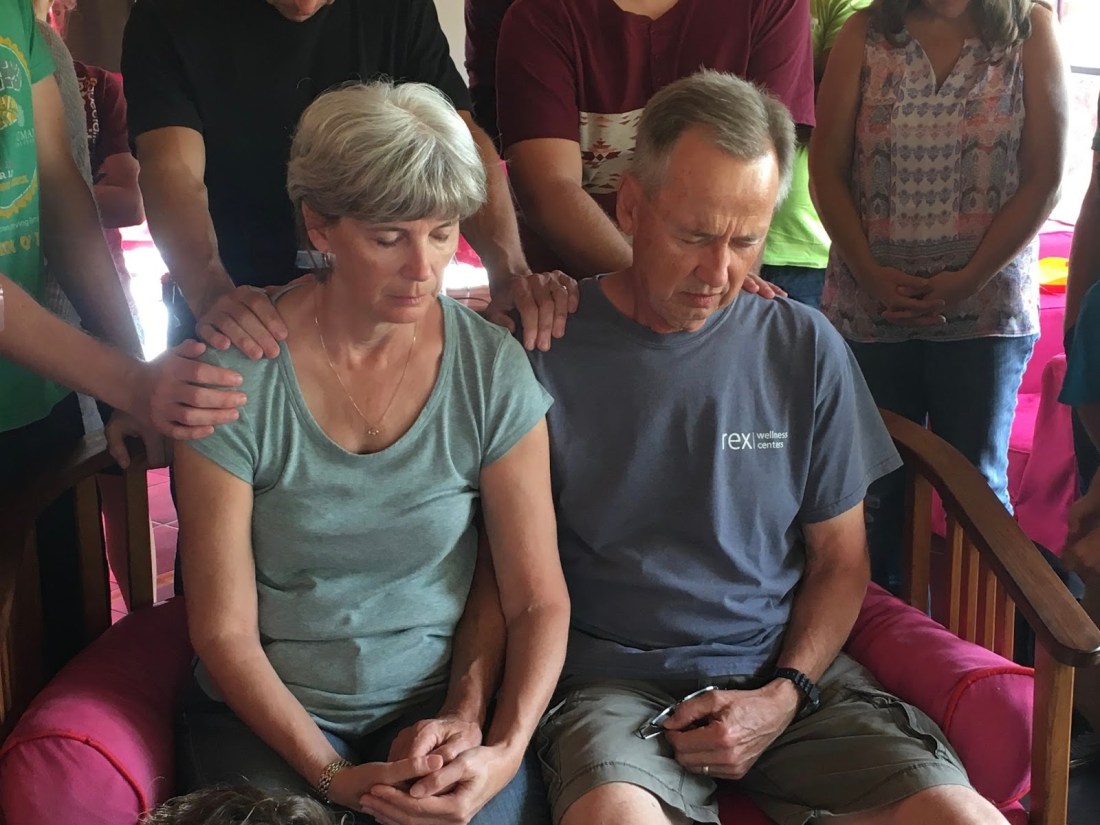
In April, we had Bill and Judy Grimme with us from Graceland Baptist Church. Both Bill and Judy have been here many times before. This time they came to attend the Baptist meeting we wrote about last time. They later shared their testimony as a married couple as a way to facilitate discussion among our churches about the importance of unity in marriage. It was very impactful conference and our pastors especially felt very affirmed and also prodded to strengthen marriages in our area. All along the way, Bill and Judy also assisted us, checking in on us and our own marriages as well as serving as mentors, which they have done throughout the 10 odd years they’ve been connected here.

IMG_4062

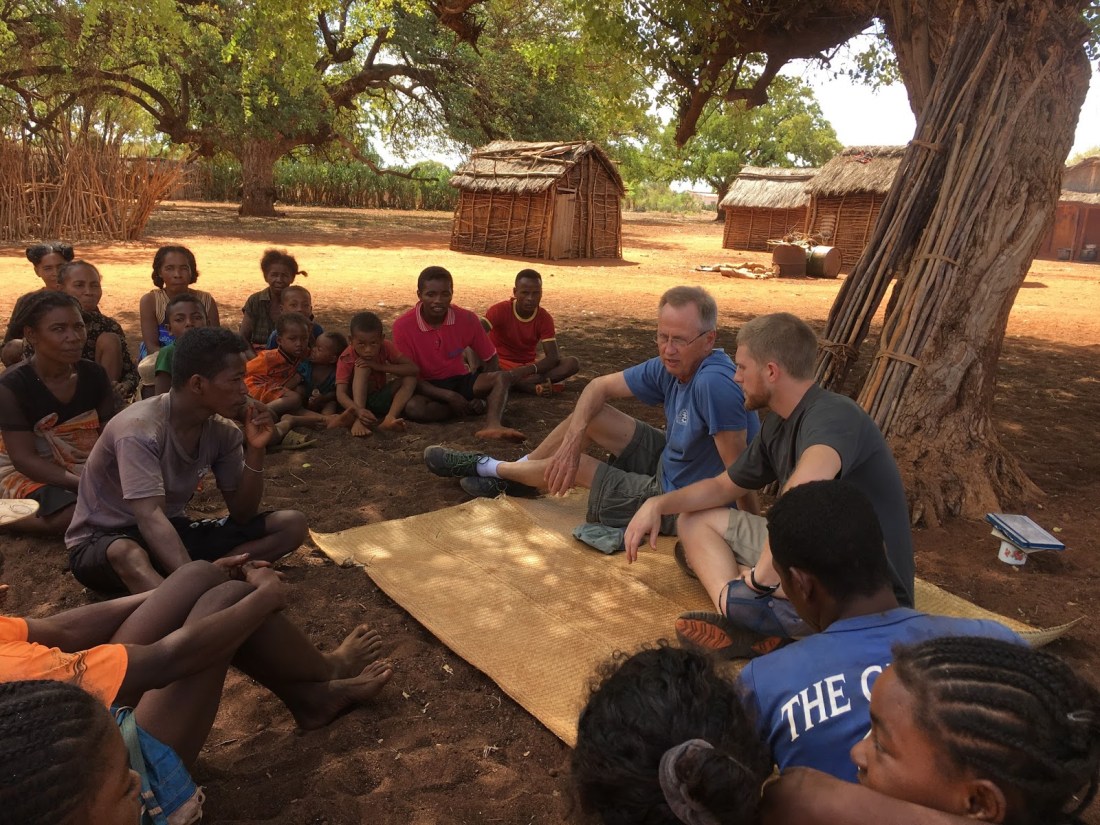
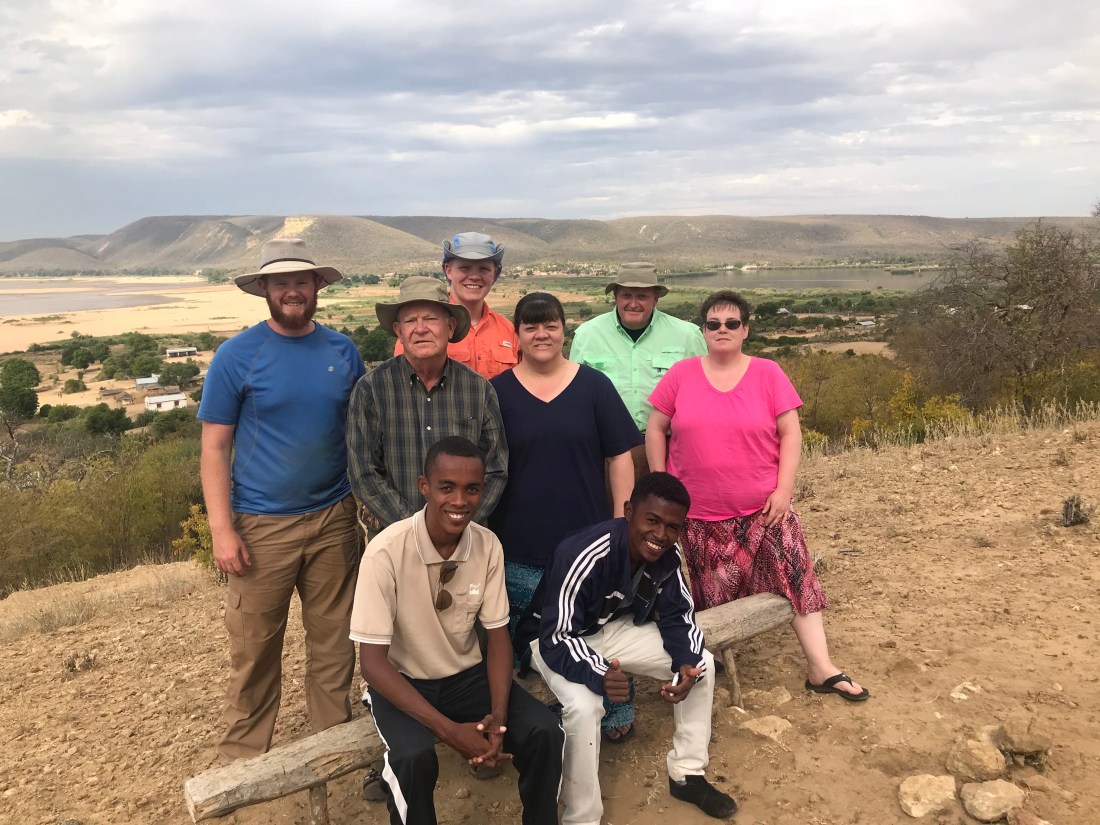
Then in May we received Elko Baptist Church, which was led by Nathan’s father, Pastor Tom Baker. We were impressed with how well the team handled their first trip. For the majority of the team, this was their first time out of the country! We were honored by their trust in us and their eagerness to step into the unknown with open hearts and minds. Not only did they help us with various repairs, medical visits and trainings, as well as teaching (whether teaching English or Pastor Tom getting to preach in our church), but their mere presence in a drought-struck field or a ill-stocked clinic meant more than words can say to our Mahafaly family here. They have shown great faithfulness even now, back in the US, continuing the relationships they started here with texts and messages to new friends.

IMG_3045.jpg

We also enjoyed having Nathan’s two brothers, Adam and Benjamin, for two weeks after. Having them here was, obviously, a blast! Plus, they got to experience life out in the bush staying out by themselves in Kilimary for a day. They now have some new brothers/uncles out there, definitely the highlight of their trip. We all miss all these people very much–especially Chyella who loved the attention, company, and getting to kiss everyone goodnight.

We now look forward to very soon hosting another couple of teams from our sending church in Raliegh, Southbridge. Summer is always fun as the weather cools down and visitors come. Our spirits are refreshed and we receive these teams as one of God’s many blessings working here in Madagascar and among the Mahafaly.

Together

29683325_10215201077122194_1421500966669739561_n

Sometimes the smallest moments have huge implications. As we sat in a room of representatives from almost a hundred Malagasy Baptist churches, the Mahafaly ministry changed–and a chapter of the ministry closed, opening a new one.

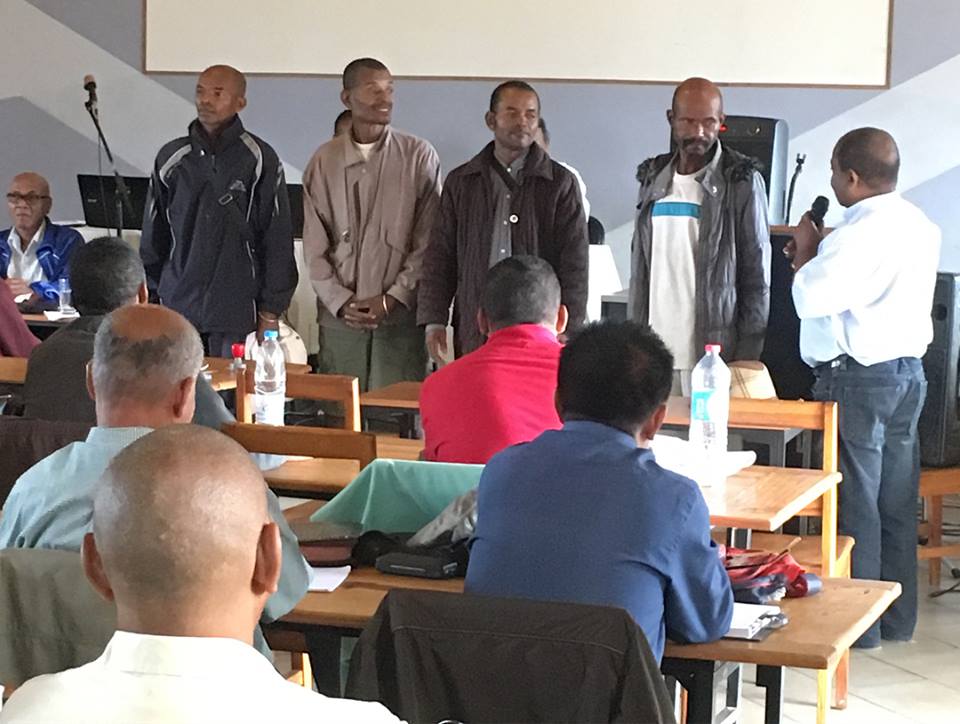
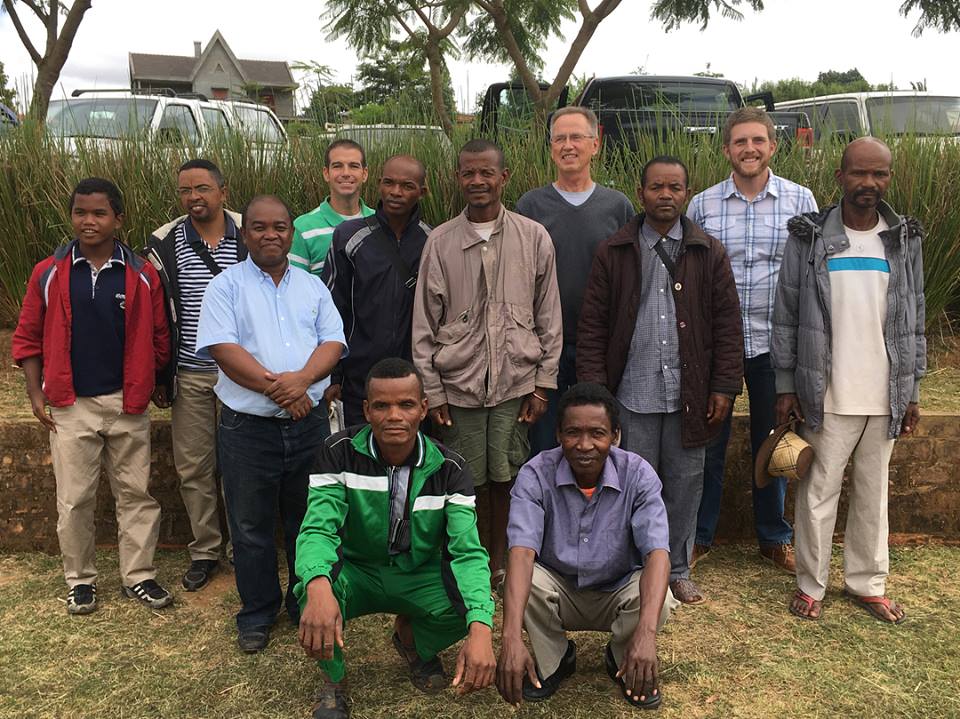
We sat in the back of that room in Antananarivo, the capital of Madagascar, watching as Kilimary, Besatra, and Andremba (the first three churches planted by Grant and Jodie Waller) were officially entered into the Baptist Association here in Madagascar (FBBM). Tears were shed as, one by one, hands went. Those hands were affirming Grant and Jodie’s work over the nearly 10 years it has taken to get to this moment. But those hands were also taking responsibility. The Baptist association has now officially recognized the Mahafaly churches as part of their family. Four Mahafaly men, some of whom traveled as far as they ever have in their lives, stood before the room and introduced themselves. They were all extremely humbled and grateful for the welcome they received from family they often forgot they had.

So many things happened in those moments that it’s hard to explain. Imagine some Hispanic farmers from California standing before and being accepted into a Baptist church in Nashville. And imagine the Baptists being ready to humble themselves to relate to and learn from those farmers as equals. That is what was happening as we watched: unity of the body of Christ across socioeconomic, linguistic, world-view, cultural, and historical barriers.

In so many ways we see God’s hand guiding everything to this moment and beyond: the Baptist association has planted 80 churches in 200 years; the Mahafaly have planted nearly 200 churches in less than 5. In the context of Madagascar, most Baptist churches are based out of the most prosperous places on the island; the Mahafaly are in the poorest, drought and famine stricken area. The Baptists are more progressive; the Mahafaly are rooted in the past.

The work is far from over. This new relationship will create new possibilities and new problems for both the FBBM and our Mahafaly churches. Our Mahafaly brothers and sisters are now connected to non-Mahafaly in a way they never have been before; the FBBM now has responsibility for fellow believers very different from them yet who in many ways surpass them.

Our joy will be to walk with both these groups, helping them to work together to reshape systems, ways of thinking, minds and, ultimately, to help these groups reach their island with the gospel . . . together.

11206088_10215201076802186_1446705530349162523_n

Uprooted

IMG_2439Nathan and I both served as journeymen. He lived here in Toliara for two years; I lived in Madagascar for five years–both as singles. I loved my time–I had a long honeymoon phase. Nathan, not so much. He really struggled to adjust and with his purpose. In time, though, he gave himself fully to the work of God here and in his life, and he thrived. But, different as our experiences were, we would both agree: the hardest and worst part was going back home.

Why? What was hard about it?

At least for us, three things were extra hard: pace of life, purpose, and community. The pace of life here in Toliara is different–much slower. We weren’t ready for the extreme busyness of life in the US right now. Also, living here, our entire lives were focused on one purpose: God’s work among our people. When we went back to the US, we were trying to find jobs, praying about marriage, looking at school . . . wandering a little, with no clear direction about what was next. Finally, life here in Toliara drove us into deep community with our team. We needed each other every day. In the US, people don’t live like that. People handle their own stuff–they aren’t in each others’ homes and business as much. We missed that.

The reality is, we weren’t really healthy for at least a year after we got back. During that year, we hurt a lot of people–including each other. These are facts, not excuses.

I can’t speak for everyone’s experience, and I don’t want to make generalizations. For me, though, moving to Madagascar meant giving myself to a new culture, language, and group of people. When you go overseas as a family, you bring the core elements of your identity with you: husband, wife, father, mother. You also bring your most significant relationships. When you go as a single, maybe you have a chance to give yourself more fully–not as a virtue, but more as a necessity. You have no identity, you have no relationships. Leaving creates a huge vacuum, and you’re driven to fill it with language acquisition and cross-cultural and team relationships.

I found this drive to be a blessing–I was deeply transformed by my time in Madagascar. But, then, when it was time to leave, I felt myself uprooted–torn abruptly from relationships I had worked so hard to build.

Please don’t misunderstand–I was so thankful to return to my friends and family in the US. But, when I returned, things were different. People were different. People had changed–me included. I had missed experiences that I could never get back.

I used to think, “No, it’s no real sacrifice to go.” But that simply isn’t true. No, we don’t go overseas on ships in our own coffins, and we yes, we do have much greater access to family and friends at home than any missionary generation before. What we experience pales in comparison to the struggles of those earlier generations. But still, there is a sacrifice. You can’t be in two places at once. You, and your friends and family, change while you’re apart–and you can’t go back.

When you come back, also, you have to find your purpose again. And decision-making is affected too. You’ve spent the last two years teaching yourself to question your assumptions and learn from a new culture–well, that makes you second-guess your own inclinations for a while.

We’ve talked to many others who share these struggles. We’ve felt the deep, loving care of those who stuck with us, even when we were at our worst–thank you. The one thing I can say for sure is that when I was really, really struggling, I knew with all my heart that Christ was calling me to Himself. He was calling me to find my identity in Him, to run to Him with my uprooted heart and confused feelings; He was calling me to cling to Him. And for some time, I refused. It was His fault I was feeling so bad, anyway–I wasn’t going to let Him back in. He called and I resisted, for months. Even years.

So, if you’re the friend or family member of someone who’s served overseas, trust them. Listen to them. Invite them into your home. Love them even while you’re not yet sure who they’ve become.

If you’re the one who’s come back–if you feel God calling you, don’t resist. Run to Him.